

More news on this day
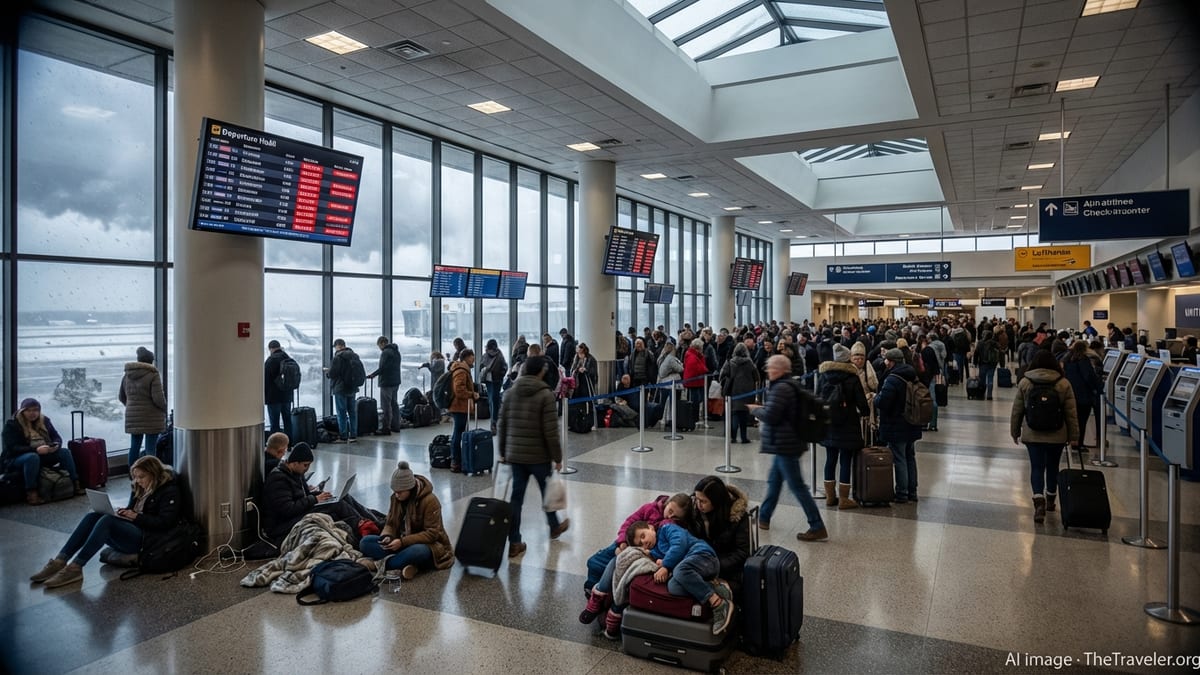
Hundreds of travelers were left stranded at Washington Dulles International Airport on Monday as 58 flights were delayed and 27 cancelled, part of a broader wave of disruptions hitting United Airlines, Delta Air Lines, American Airlines, Lufthansa and other major carriers across the United States and key international routes.
Severe Weather and System Strain Snarl Operations
The latest disruptions at Washington Dulles come as airlines and airports across the U.S. Northeast continue to grapple with the impact of a powerful winter storm system that swept through the region over the weekend and into Monday. The storm has triggered thousands of cancellations and delays nationwide, stretching crew resources and backup aircraft capacity for carriers already operating near winter peak.
At Dulles, a mix of low visibility, high winds and lingering de-icing backlogs forced ground operations to slow, pushing morning and midday departure banks behind schedule. Airport staff said some flights that initially appeared as delayed were ultimately scrubbed as turnaround times grew untenable and arriving aircraft were diverted or held at origin airports.
Industry analysts note that the storm struck at a time when many airlines have tightly scheduled fleets and crews to meet strong winter and early spring demand. That leaves limited slack in the system to absorb weather shocks, meaning a relatively small number of initial delays can quickly cascade into wider network disruption.
Major Airlines Hit Across U.S. and Transatlantic Routes
United Airlines, which operates a significant hub at Washington Dulles, reported delays and cancellations across its schedule, including key routes linking Dulles with Chicago, Newark, San Francisco and London. Several hourly shuttles to New York area airports were also affected, stranding passengers traveling onward to Europe and the U.S. Midwest.
Delta Air Lines and American Airlines reported operational challenges not only at Dulles but also at their East Coast strongholds, including New York’s LaGuardia and John F. Kennedy airports, as well as Chicago O’Hare. Reduced arrival rates and runway constraints at these hubs led to rolling ground delay programs that rippled into the Washington region.
Lufthansa and other European carriers serving Dulles and New York were forced to retime or cancel select transatlantic services, particularly late afternoon and evening departures. Passengers booked on flights to London, Frankfurt and other major European gateways faced extended waits as crew duty-time limits and aircraft repositioning complicated recovery efforts.
Travelers Face Long Lines, Limited Rebooking Options
Inside the Dulles terminal, passengers described long queues at airline service counters and crowded gate areas as travelers waited for updated departure times or sought alternative itineraries. With many flights into New York, Chicago and other major hubs operating at or near capacity, same-day rebooking proved difficult for some stranded customers.
Families returning from school breaks, business travelers aiming to reach Monday meetings and international passengers with tight connection windows were among the hardest hit. Some reported being offered routings that involved overnight stays or indirect connections through secondary hubs as airlines attempted to patch together available seats.
While most carriers activated weather waivers allowing customers to change travel dates without penalty, those trying to rebook for later the same day or the following morning often encountered limited seat inventory. Airport hotels near Dulles and downtown Washington saw a spike in last-minute demand as travelers opted to wait out the disruption on the ground rather than camp overnight in terminal seating areas.
Knock-On Effects in Washington, New York, London and Chicago
The problems at Dulles formed just one part of a wider patchwork of disruptions across key domestic and international gateways. In the Washington region, operations at Reagan National Airport were also slowed at times by weather and air traffic management initiatives designed to safely space arrivals and departures in reduced visibility.
New York’s major airports, already operating close to capacity even in fair weather, faced periodic ground stops and flow restrictions that created bottlenecks for flights from Washington, Chicago and other feeding hubs. Airlines were forced in some cases to prioritize long-haul departures over shorter regional links, further complicating options for displaced Dulles passengers.
In Chicago, where winter weather regularly challenges operations, knock-on delays affected connecting passengers headed onward to Washington and the East Coast. Transatlantic services between hubs such as Washington, New York and London experienced rolling delays as carriers waited for inbound aircraft and crews to arrive from storm-affected U.S. cities.
Airlines Outline Recovery Plans as Passengers Seek Clarity
By late Monday, airlines serving Washington Dulles said they were working to stabilize schedules and reposition aircraft and crews for the next day’s operations. Carriers indicated that early morning departures on Tuesday would be critical in determining how quickly normal patterns could be restored, particularly on transatlantic and high-frequency shuttle routes.
Airport officials advised passengers to arrive early, allow extra time for check-in and security screening, and remain in close contact with their airline via mobile apps and email alerts for real-time updates. Travelers were also encouraged to verify the status of both departing and connecting flights before heading to the airport, as residual delays in New York, Chicago and other hubs could continue to affect Dulles-bound services.
While conditions were expected to gradually improve as the storm system moved offshore and runways were fully cleared, the scale of the disruption underscored the vulnerability of tightly wound airline networks to major weather events. For the hundreds of passengers still waiting at Dulles and other airports late into the evening, the focus remained on finding an available seat and finally getting airborne after a long and uncertain day of travel.