

More news on this day
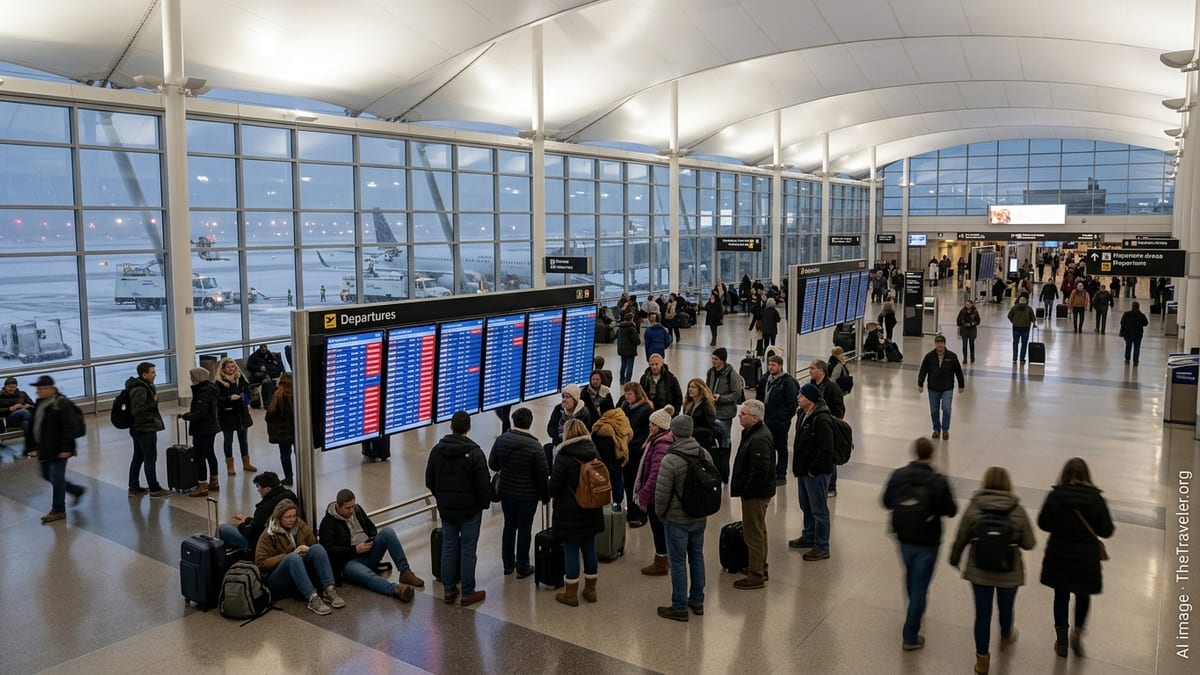
Passengers at Denver International Airport faced hours-long disruptions as stormy late-winter weather and knock-on operational issues triggered widespread delays and at least seven cancellations affecting Delta Air Lines, Southwest Airlines and Alaska Airlines flights across Denver, Chicago, New York and other major U.S. cities.
Get the latest news straight to your inbox!
Weather Turmoil Turns Denver into a Bottleneck
Denver International Airport has repeatedly emerged as a flashpoint for winter travel disruption in 2026, and the latest bout of delays underscores how quickly the nation’s third-busiest hub can become gridlocked. A combination of late-season snow, shifting winds and low visibility conditions forced ground holds and reduced arrival rates, leaving aircraft and crews out of position across carriers.
Publicly available aviation and weather data indicate that storms moving across the Rockies and central United States have periodically slowed operations at Denver through March, echoing earlier winter systems that brought heavy snow and high winds to the region. Reduced runway capacity at Denver has a cascading effect for airlines that rely on tightly timed turnarounds, particularly when multiple carriers share the same constrained airspace.
Reports from passengers and aviation observers describe crowded concourses, long lines at rebooking counters and travelers camping overnight in terminal seating areas as flights were rescheduled into the early morning hours. Even where aircraft were available, crews timed out under federal duty rules, forcing additional schedule changes and cancellations.
The disruptions at Denver also complicated connections to and from other weather-affected hubs in the Midwest and Northeast, where ongoing winter weather and thunderstorms have periodically affected on-time performance throughout March.
Delta, Southwest and Alaska Struggle to Keep Schedules Intact
Delta Air Lines, Southwest Airlines and Alaska Airlines each reported operational impacts tied to the latest round of disruptions, with at least seven combined cancellations and dozens of delays across their networks. While the total represents a small share of daily departures, the clustering of problems at key hubs amplified the effect on travelers.
According to airline operations dashboards and flight-tracking services, Delta’s network has been strained by weather-related constraints at Denver and connecting hubs such as Minneapolis and New York, where storms and strong winds have periodically slowed arrivals and departures. Delays on select Denver routes pushed aircraft and crews behind schedule for onward flights, contributing to missed connections and longer recovery times.
Southwest, which relies heavily on quick turnarounds and point-to-point flying, experienced rolling delays on Denver and Chicago routes as the carrier cycled aircraft through deicing, ground stops and air traffic flow programs. When disruption hits multiple stations in its network at once, recovery can take several flight cycles, leaving passengers on later departures waiting for aircraft and crews to arrive.
Alaska Airlines, with a smaller but growing footprint at Denver and Midwest gateways, saw select services affected as well. Publicly available information shows that the carrier made targeted cancellations and schedule adjustments to preserve the rest of its operation, resulting in some travelers being rerouted through alternate hubs or pushed to next-day flights.
Ripple Effects from Chicago, New York and Other U.S. Cities
While Denver served as a central bottleneck, the disruption extended to other major U.S. airports including Chicago and New York, where ongoing seasonal storms and congestion have challenged airline reliability. Flight-tracking data show that delays on Denver-bound or Denver-originating flights translated into late arrivals and departures at airports such as Chicago Midway, Chicago O’Hare, New York LaGuardia and New York JFK.
In Chicago, changing weather patterns and intermittent snow bands have periodically reduced visibility and required deicing, slowing ground operations for all carriers. When combined with delays on inbound legs from Denver or other western gateways, this contributed to late-evening departures and missed connections, particularly for short-haul flights scheduled tightly together.
New York’s constrained airspace added an additional layer of complexity. According to published coverage, air traffic management programs in the busy Northeast corridor have resulted in holding patterns and flow restrictions when storms and low ceilings arrive, forcing operators to accept departure slots that may not align with their planned rotations. When a delayed inbound from Denver arrives at a congested New York airport, the onward aircraft may miss its next scheduled departure window, adding yet another delay to the tally.
Other cities across the central and eastern United States experienced related knock-on effects, with smaller regional airports seeing late-night arrivals and unscheduled overnight stays as crews reached duty limits or airports reduced operating hours. In some cases, aircraft were repositioned away from storm-affected airports to protect the broader network, leaving certain routes temporarily unserved.
Stranded Travelers Navigate Limited Options
For passengers, the operational complexities behind the scenes translated into long waits, changing itineraries and difficult choices at the gate. Accounts shared on public forums describe travelers in Denver, Chicago and New York facing overnight stays in terminals or nearby hotels as they waited for new departure times to be confirmed.
Airlines have published varying customer service commitments for significant delays and cancellations, and recent consumer guidance from federal agencies highlights the differences between carriers when it comes to meal vouchers, hotel accommodation and rebooking assistance. In practice, travelers affected by this latest disruption reported a mix of experiences, with some receiving same-day rebooking and others struggling to secure alternative flights on busy routes.
With spring break and late-winter travel demand remaining strong, many affected flights were operating close to capacity, leaving limited open seats for last-minute changes. This made it harder for airlines to re-accommodate stranded travelers, especially families and larger groups needing multiple adjacent seats on the same departure.
Airport staff and airline agents worked through long queues as they processed rebookings and answered questions, while self-service tools and apps played a growing role in helping passengers monitor reassignments and standby lists. However, when weather and air traffic constraints limit the total number of flights that can safely operate, digital tools can only speed communication, not restore lost capacity.
Growing Scrutiny of Airline Resilience in Peak Seasons
The latest issues at Denver and other U.S. hubs add to a series of recent high-impact winter weather events that have tested airline resilience and recovery planning. Industry analysts note that severe storms, power disruptions and winter blizzards this season have collectively resulted in thousands of delays and cancellations, with passengers shouldering much of the inconvenience.
Publicly available policy documents and oversight reports show increasing attention on how airlines handle mass disruptions, including their procedures for notifying passengers, providing refunds when required and offering optional vouchers or rebooking on later services. Consumer advocates argue that clearer, more consistent rules would help travelers better understand their rights before they arrive at the airport.
At the same time, airlines continue to emphasize the safety-first nature of delay and cancellation decisions, especially in complex weather patterns over Denver and other high-altitude or congestion-prone airports. Carriers are investing in upgraded deicing facilities, more robust crew scheduling systems and closer coordination with air traffic management in an effort to shorten recovery times after major storms.
For now, travel experts advise passengers with connections through Denver, Chicago or New York during active storm systems to build extra time into itineraries, monitor flight status frequently and remain flexible about routing as airlines adjust schedules in response to shifting weather and operational constraints.