

More news on this day
Travelers at Buffalo Niagara International Airport faced a difficult start to the week as a powerful East Coast winter storm triggered 33 flight delays and 24 cancellations on Monday, disrupting operations for Delta Air Lines, American Airlines, United Airlines, Southwest Airlines and several regional carriers on routes linking Buffalo with New York City, Chicago, Atlanta and other major Northeast hubs.
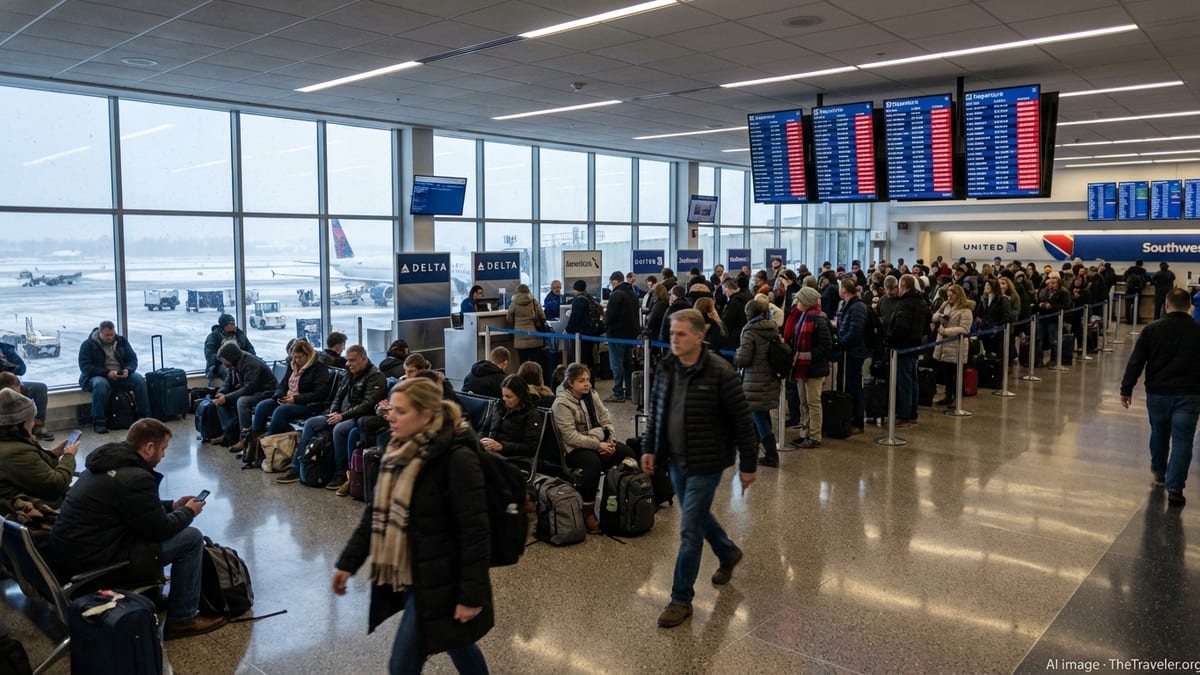
East Coast Blizzard Sends Disruptions Rippling Through Buffalo
The severe winter system that swept up the Eastern Seaboard on February 23 pushed bands of heavy snow and high winds across New York State, forcing airlines to trim schedules and slow operations at Buffalo Niagara International Airport. While New York City’s major airports recorded the highest number of cancellations, Buffalo’s role as a key feeder and connecting point meant local passengers quickly felt the storm’s impact.
Airport officials reported that a combination of low visibility, strong crosswinds and air traffic control flow restrictions into New York City and other East Coast hubs contributed to Monday’s disruption pattern. Airlines initially preemptively cancelled some services as forecasts worsened, then added rolling delays as conditions fluctuated throughout the day.
By late evening, departure and arrival boards at Buffalo showed a patchwork of delayed and cancelled flights, particularly on high-frequency corridors to New York City, Chicago and Atlanta. Many affected flights were either inbound from, or bound for, airports under blizzard warnings, making it difficult for airlines to reposition aircraft and crew.
Major Carriers Hit on Key Business and Leisure Routes
Delta Air Lines, American Airlines, United Airlines and Southwest Airlines were among the hardest-hit carriers at Buffalo, as the storm disrupted their network operations and key connecting banks. Delta and American saw interruptions on routes feeding into their hubs in New York City and Charlotte, while United’s Chicago services and Delta’s and Southwest’s Atlanta connections also encountered cascading delays.
Flights to and from New York City area airports experienced some of the longest disruptions, as LaGuardia and John F. Kennedy International dealt with hundreds of cancellations and diversions. Those problems quickly spilled over to Buffalo, where aircraft scheduled to arrive from the New York region were either held on the ground, diverted elsewhere or scrubbed entirely from the timetable.
Chicago and Atlanta links, important for both business travelers and leisure passengers heading to warmer destinations, were similarly affected. Some services managed to depart with extended ground delays after waiting for arrival slots and de-icing clearance, while others were cancelled outright when crew duty-time limits and equipment availability became insurmountable challenges.
Passengers Face Long Lines, Rebookings and Overnight Stays
Inside the terminal, long queues formed at airline service counters as travelers scrambled to secure new itineraries. Many passengers were offered same-carrier rebookings later in the week, while others were rerouted through alternative hubs that remained less affected by the storm. With peak winter schedules already tightly packed, open seats were limited on several popular routes.
Families returning from school break trips reported spending hours in line to rebook, while business travelers described juggling last-minute virtual meetings and schedule changes from crowded gate areas. For some, delays stretched beyond three hours, crossing the threshold commonly used by regulators to classify significant disruption and prompting questions about compensation and accommodation policies.
Hotels near the airport saw a rise in last-minute bookings as evening cancellations mounted. Local transportation providers also reported increased demand, with some stranded travelers opting to rent cars or share rides to reach nearby cities not as heavily impacted by the storm, including destinations in Pennsylvania and Ohio.
Operational Strain Highlights Winter Vulnerabilities
The day’s disruption underscored the vulnerability of tightly interconnected air networks during intense winter weather. Buffalo Niagara International, which already experiences above-average delay times during the coldest months, was once again reminded of how quickly storm-related problems at downline hubs can transform into local gridlock when aircraft and crews are stranded far from their next scheduled flights.
Ground operations were tested by the need for repeated de-icing, reduced taxi speeds and extra time for runway and ramp clearance. Each step added minutes to turn times, amplifying delays across subsequent departures. Even flights not directly bound for the worst-hit cities occasionally departed late as airlines waited for connecting passengers from other storm-affected services.
Aviation analysts note that while airlines have become more proactive in cancelling flights ahead of major storms to avoid widespread last-minute chaos, the trade-off can still be painful for travelers in secondary markets like Buffalo. Proactive cancellations reduce the risk of aircraft and passengers being stranded mid-journey, but they concentrate disruption into short, intense windows of travel difficulty.
What Travelers Can Expect in the Days Ahead
With the storm system expected to gradually weaken as it moves offshore, airlines at Buffalo Niagara International are working to restore normal operations and reposition aircraft and crews. Industry observers say that while the worst of the cancellations may be behind passengers, residual delays and occasional schedule changes are likely to persist for at least another day as carriers clear backlogs.
Travelers booked on near-term departures from Buffalo to New York City, Chicago, Atlanta and other major Northeast destinations are being urged to check flight status frequently and to use airline apps for rebooking where possible. Some carriers are waiving change fees for affected itineraries, allowing passengers to shift travel to later in the week without penalty, subject to seat availability.
For those still in transit, the experience at Buffalo Niagara International this week is a reminder of the importance of flexible itineraries, adequate layover times and contingency plans during the heart of winter storm season. As airlines and airport crews continue cleanup and recovery efforts, the region’s travelers will be watching closely to see how quickly one of upstate New York’s most important air gateways can bounce back from its latest weather-driven test.