

More news on this day
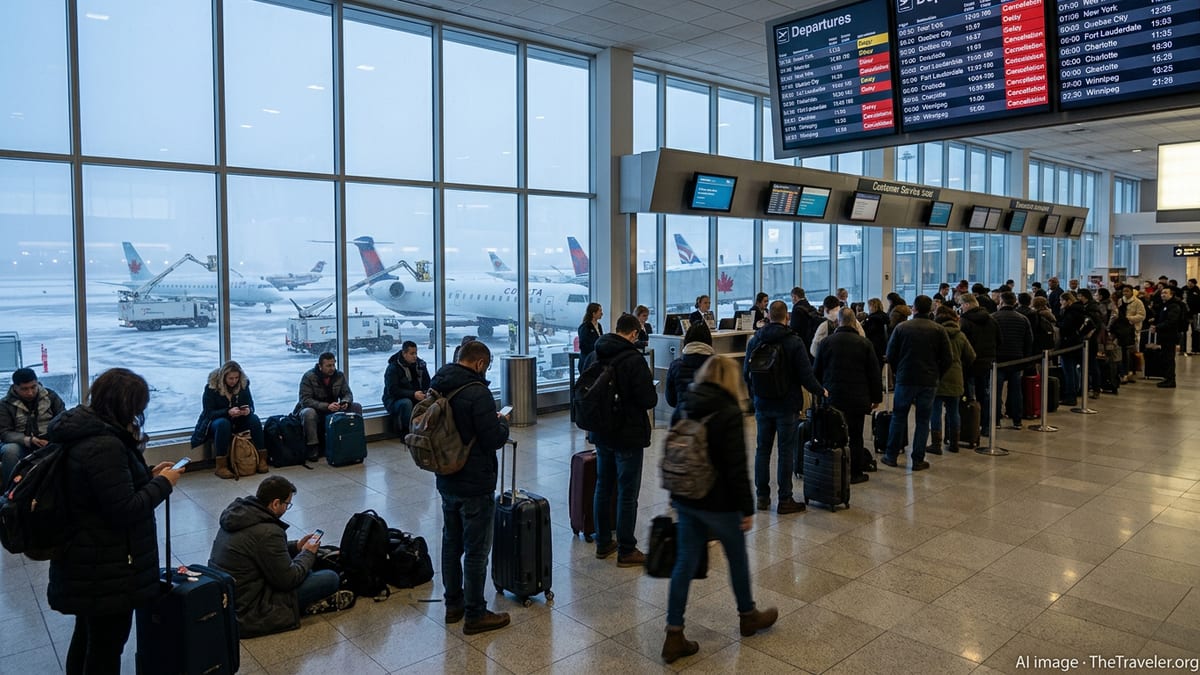
Passengers at Montréal–Trudeau International Airport faced a day of disruption as multiple flights operated by Air Canada, Jazz, PAL Airlines and WestJet were grounded or heavily delayed, affecting connections to major Canadian and U.S. cities as well as popular sun destinations.
Get the latest news straight to your inbox!
Weather System Triggers Wave of Cancellations
Publicly available flight-status boards and aviation tracking data for Friday, March 20, 2026, show a cluster of cancellations and extended delays at Montréal–Trudeau International Airport, coinciding with the aftermath of a powerful mid-March storm system over North America. The pattern indicates that at least six departures and arrivals operated by Air Canada and its regional partners Jazz and PAL Airlines, along with WestJet, were grounded, with knock-on delays spreading across much of the schedule.
The disruption follows days of unsettled conditions linked to a large-scale storm complex that affected parts of southern Canada and the northeastern United States, bringing periods of snow, freezing rain and low cloud ceilings at various hubs. Aviation data suggests that weather-related air traffic control programs and de-icing operations contributed to slower turnarounds and capacity constraints, particularly on transborder and east coast routes.
While each airline lists individual reasons on its own status tools, the timing and geographical spread of the irregular operations point to a mix of adverse weather, congested airspace and aircraft repositioning challenges, rather than a single technical or labor issue.
Key Routes Hit: New York, Washington and Cancun
According to airport departure and arrival information, flights linking Montreal with major U.S. business centers such as New York and Washington were among the most affected. Morning and midday services to New York-area airports and Washington were shown as cancelled or delayed by several hours, forcing travelers to rebook or reroute through alternative hubs.
Leisure routes were also impacted. At least one Air Canada or Air Canada Rouge service between Montreal and Cancun was listed as cancelled, with additional southbound flights to sun destinations showing late departures and schedule changes. These disruptions came at the tail end of the busy winter travel period, when aircraft on vacation routes are often operating at or near full capacity, leaving fewer spare seats for re-accommodation.
For many passengers, the combination of grounded flights and reduced same-day alternatives meant missed connections onward to Europe, the Caribbean and other North American cities, as well as an increased reliance on overnight stays and next-day departures.
Regional Links to Quebec City, Moncton and Other Centers Affected
Regional services operated under the Air Canada Express banner by Jazz and PAL Airlines, which connect Montreal with smaller centers, were not spared. Flight information displays showed cancellations and notable delays on routes to Quebec City and Moncton, as well as schedule pressure on other short-haul sectors within Quebec and Atlantic Canada.
These regional flights play a critical role in feeding Montreal’s broader domestic and international network. When a number of them are grounded or delayed on the same day, travelers connecting through Montreal to larger hubs can struggle to secure timely replacement options. In some cases, public information indicates that travelers were shifted to later departures or rerouted via Toronto or other airports, extending overall journey times.
The operational strain was visible in longer turnaround times on aircraft that did operate, along with shifting gate assignments and revised departure estimates across the board. Even flights that ultimately departed close to schedule often showed earlier rolling delays on airport boards before being updated.
Airlines Implement Rebooking and Passenger Support Measures
In response to the irregular operations, Air Canada, Jazz, PAL Airlines and WestJet all directed passengers via their online tools and mobile apps to check flight status frequently and avoid heading to the airport without confirmed itineraries. Publicly available guidance from the carriers outlines rebooking options in the event of cancellations or significant delays, including the possibility of same-day changes where seats are available and, in some circumstances, re-routing through partner airlines.
Canadian air passenger protection regulations set out entitlements for travelers depending on whether a disruption is considered within an airline’s control or due to external factors such as weather or air traffic control constraints. Information published by regulators and consumer resources notes that controllable delays can trigger obligations for meal vouchers, hotel accommodation and compensation, while weather-related incidents typically focus on rebooking and refunds rather than cash payments.
Given that many of the Montreal disruptions on March 20 were aligned with broader weather and airspace challenges, the level of compensation available to individual passengers is likely to vary case by case, based on the precise cause coded for each flight and the size of the carrier involved.
Advice for Travelers Passing Through Montreal in the Coming Days
Travel and aviation advisories suggest that residual delays are possible in the wake of major storm systems, even after the most severe weather has passed, as airlines reposition aircraft and crews and work through backlogs of displaced passengers. For those scheduled to travel through Montréal–Trudeau over the coming days, experts commonly recommend allowing extra time, monitoring flight status closely and considering flexible routing options where possible.
Online tools offered by airlines and the airport provide relatively up-to-date departure and arrival information, though sudden changes can still occur close to departure as conditions evolve. Travelers with tight connections, particularly to long-haul international flights or cruises, are often advised to consider earlier feeder flights into Montreal or to schedule an overnight buffer to reduce the risk of missed departures.
The events at Montreal highlight how quickly a combination of late-season weather and operational complexity can ripple across multiple carriers and destinations. For passengers, advance planning, careful reading of fare rules and a clear understanding of their rights under Canadian and international regulations remain key to navigating an increasingly volatile travel environment.