

More news on this day
Hundreds of travelers moving through Calgary International Airport on March 30 faced a fresh wave of disruption as publicly available tracking data showed 93 delayed departures and arrivals along with five new cancellations, affecting flights operated by United Airlines, Air Canada, WestJet, Jazz and several smaller carriers on routes linking Canada, the United States and Mexico.
Get the latest news straight to your inbox!
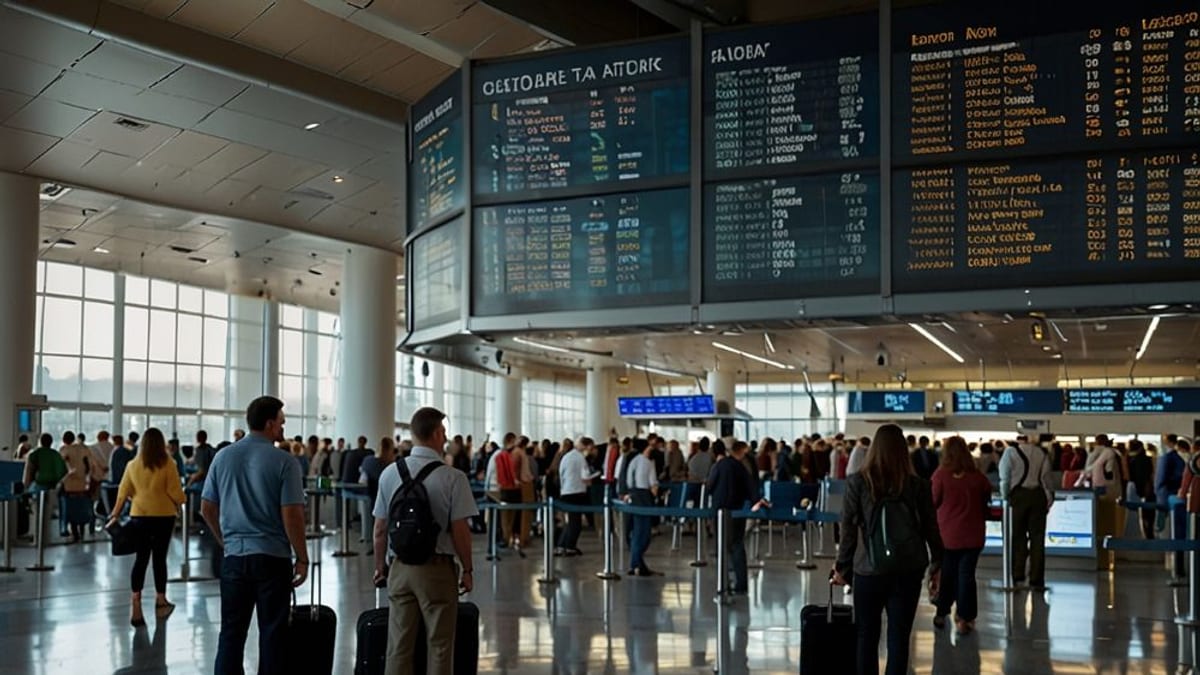
Image by Travel And Tour World
Weather Shock Compounds Ongoing Scheduling Strains
Operational data and traveler reports indicate that the latest disruption at Calgary follows closely on the heels of a fast-moving late March snow system that caught airlines and airport operations off guard. Earlier in the week, a sharp band of snow over southern Alberta led to ground stops and runway slowdowns, creating a backlog that has continued to reverberate through weekend schedules.
According to airport performance dashboards, flights touching Calgary on March 30 were still recovering from that weather shock, with many departures pushed back by an hour or more and some international rotations struggling to reset to their normal timing. This lingering impact meant that even when skies cleared, airlines were left with aircraft and crews out of position, particularly on longer-haul and cross-border routes.
Publicly available meteorological information for Calgary shows that late-season snow and quickly shifting temperatures are common in March, but the intensity and timing of this week’s system appear to have intersected with already tight airline schedules. Industry observers note that modern hub operations are highly sensitive to such shocks, with even brief runway restrictions in a hub city able to ripple across networks for days.
Travelers posting on social platforms over the past several days have described long tarmac waits, multiple rolling delay notifications and late-day cancellations as operations struggled to stabilize. While some flights departed close to schedule on March 30, data suggest that a significant share of passengers at Calgary still encountered measurable disruption.
United, Air Canada, WestJet and Jazz Among Most Affected Carriers
Publicly available flight-tracking boards on Sunday highlighted United Airlines, Air Canada and its regional partner Jazz, along with Calgary-based WestJet, among the most affected carriers. The 93 delays and five cancellations were spread across domestic Canadian, transborder and sun destination services, including flights to Vancouver, Phoenix, Chicago and Cancun.
Air Canada and Jazz, which together handle a large share of regional and transborder traffic at Calgary, showed clusters of delays on short-haul links to Vancouver and connecting hubs in the United States. These regional services are often used as feed into longer international flights, so late departures from Calgary can translate into missed onward connections in cities such as Vancouver and Chicago.
WestJet, which treats Calgary as a primary hub, also appeared prominently in the delay statistics. The airline operates a dense schedule of domestic and leisure-oriented flights from the city, including to Phoenix and Cancun during the spring travel period. When an inbound aircraft arrives late, subsequent rotations often slide further behind schedule, creating what airline analysts describe as a domino effect that can extend into late-night departures.
United Airlines services linking Calgary with US hubs, notably Chicago, were similarly impacted as the carrier navigated both Calgary-related issues and broader North American congestion. With Chicago O’Hare functioning as a major transfer point for United, any delay on the Calgary leg can jeopardize onward connections to destinations throughout the United States and beyond.
Key Routes Hit: Vancouver, Phoenix, Chicago and Cancun
Among the most closely watched routes on March 30 were services from Calgary to Vancouver, Phoenix, Chicago and Cancun, all of which are critical links in the spring travel season. Vancouver flights serve as vital connectors for both Air Canada and WestJet passengers, feeding international services to Asia and Europe as well as domestic links along the Canadian west coast.
Reports from airline schedule data show that several Calgary–Vancouver flights operated behind schedule on Sunday, with knock-on effects for travelers connecting onward at Vancouver International Airport. Even modest delays of 45 to 90 minutes can be enough to force passengers onto later transpacific or domestic departures, stretching total journey times deep into the night or into the following day.
Southbound leisure routes to Phoenix and Cancun, popular with Canadian travelers seeking warmer weather, also recorded delays and isolated cancellations. Publicly available information from recent weeks has already pointed to pressure on Mexico-bound schedules, with carriers working through a mix of winter weather constraints in Canada and busy airport operations at resort destinations. Sunday’s additional delays at Calgary added yet another complication for holidaymakers at the tail end of school break periods in some provinces.
The Calgary to Chicago link, served by United and codeshare partners, likewise faced schedule challenges. With Chicago acting as a gateway to extensive domestic and international networks, disruption on this corridor can have outsized consequences, stranding travelers in intermediate hubs or requiring complex rebookings onto alternative routings through other Canadian or US cities.
Passengers Confront Long Lines, Missed Connections and Limited Options
As delays accumulated through the day, passenger accounts described crowded departure halls, extended check-in lines and full phone and chat queues as travelers attempted to secure new itineraries. Many of those affected were connecting through Calgary from smaller Canadian cities or returning from vacation destinations, leaving limited immediate alternatives once flights began to push into later time slots or drop from the boards.
Travel discussion forums over the past week have been filled with first-hand accounts of travelers missing legal minimum connection times in Calgary after weather-related or operational delays, reflecting broader stress across airline networks. Some posts describe passengers being rebooked a day or more later, particularly on high-demand routes where remaining seats were already scarce heading into the weekend.
Publicly available guidance from regulators and consumer advocates notes that compensation and care standards differ depending on whether delays stem from factors within an airline’s control, such as crew scheduling or maintenance, or external issues like severe weather and air traffic restrictions. The mixed nature of Calgary’s current disruption, combining a recent snow event with ongoing operational strains, is likely to complicate how airlines apply their own policies in individual cases.
In the meantime, airport and airline self-service tools, including mobile apps and kiosks, continued to play a central role on Sunday as passengers sought to monitor flight status changes in real time and secure scarce seats on remaining departures. Travel experts commonly advise that those facing multi-hour delays or overnight disruptions document their expenses and keep all communications in case they pursue claims later under airline or credit card trip interruption protections.
Broader Network Risks as Spring Travel Builds
The Calgary disruption arrives as North American carriers move into a heavier spring schedule, with more frequent services on cross-border and leisure routes. Operational histories from previous years show that late winter and early spring can be particularly fragile periods for airline reliability, as carriers ramp up capacity while still contending with volatile weather across Canada and the northern United States.
Industry data from recent seasons indicates that when irregular operations occur at a hub like Calgary, knock-on effects are felt far beyond the immediate region. Flights between Canada and US cities such as Phoenix and Chicago, as well as sun destinations like Cancun, can see their on-time performance deteriorate for several days while aircraft and crews are repositioned and schedules gradually realign.
Analysts note that carriers serving Calgary have already been under scrutiny for their handling of delays and cancellations over the past two years, as passengers increasingly share experiences on social platforms and consumer forums. Public records of recent enforcement actions under Canadian air passenger regulations underscore the growing regulatory focus on how airlines support customers during widespread disruption.
With Sunday’s 93 delays and five new cancellations adding to that pressure, travelers and observers alike will be watching closely in the coming days to see how quickly airlines can stabilize their operations at Calgary and restore more predictable links across the Canada, US and Mexico markets connected through Vancouver, Phoenix, Chicago and Cancun.