

More news on this day
Winter Storm Hernando has triggered a wave of transatlantic flight cancellations between Ireland and the United States, as Aer Lingus, Delta Air Lines, United Airlines and American Airlines scrub services into New York, Newark and Boston, leaving Dublin Airport crowded with stranded passengers and city hotels on high alert for an abrupt surge in emergency bookings.
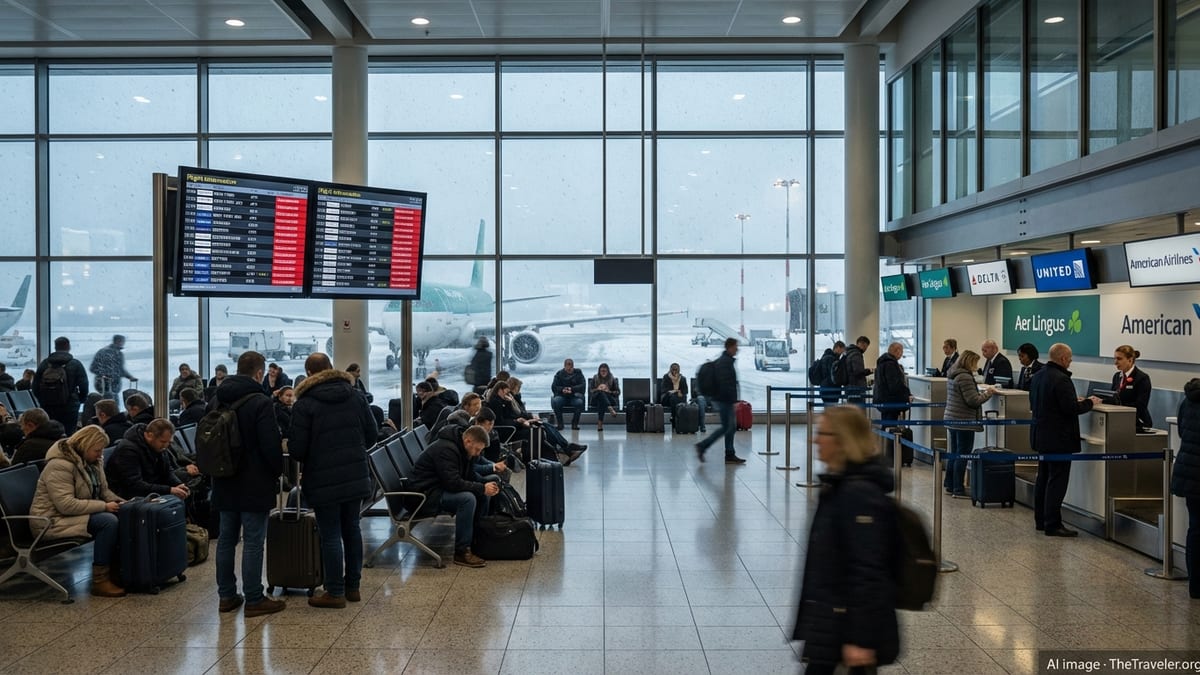
Storm Hernando Slams Northeast Hubs and Halts Ireland Links
The fast-deepening winter system now known as Storm Hernando is sweeping across the US Northeast, bringing blizzard conditions, whiteout visibility and wind gusts strong enough to shut down major aviation corridors from New York to Boston. Meteorologists describe the event as a classic nor’easter, with bands of heavy snow and ice converging over the densely trafficked New York metropolitan area and New England just as the busy late-winter transatlantic schedule peaks.
As conditions deteriorated through Sunday and into Monday, airport authorities at John F. Kennedy, Newark Liberty and Boston Logan International imposed ground stops and runway closures, forcing airlines to preemptively cancel thousands of flights. Among those heavily affected are the trunk routes connecting Dublin with New York, Newark and Boston, long a critical bridge for business travelers, tourists and Irish diaspora communities. Aircraft and crews destined for Ireland never left their US gates, severing the normal daily pattern of crossings.
For passengers at Dublin Airport, the disruption has been immediate and highly visible. Overhead departure boards have filled with red "canceled" notices beside key US flights, as ground staff redirect lines of travelers seeking rebooking or refunds. With many long-haul aircraft out of position on the far side of the Atlantic, airline operations managers warn that the knock-on impact will extend well beyond the heaviest snowfall, likely affecting schedules for several days.
Major Carriers Cancel Transatlantic Services From Dublin
Aer Lingus, the largest carrier on the Ireland–US corridor, has been forced to cancel multiple services from Dublin to New York and Boston after inbound aircraft from the United States were unable to depart storm-hit airports. Its flagship services to New York and its key morning and early afternoon departures to Boston have been among the worst affected, leaving hundreds of passengers scrambling to rearrange trips originally planned around business meetings, family events and connecting flights to other destinations.
US majors are following similar playbooks. Delta Air Lines has announced it expects operations at its hubs in New York and Boston to be largely suspended into Tuesday, sharply curtailing transatlantic connectivity. Delta’s nonstop Dublin routes into New York JFK and Boston Logan have seen cancellations and significant delays, with the airline issuing broad travel waivers to encourage passengers to move their journeys outside the storm window without paying change fees.
United Airlines, which funnels much of its Ireland–US traffic through Newark Liberty, is also canceling Dublin services as the blizzard closes in. With Newark among the hardest-hit airports and thousands of flights scrubbed across the New York region, United has prioritized safety and network stability over maintaining international frequencies, warning that recovery will take time as aircraft and crews are repositioned. American Airlines, for its part, has halted several services into its key East Coast gateways, including flights connecting Dublin with New York and other US cities via northeastern hubs, and is likewise issuing flexible rebooking options.
Collectively, these cancellations represent a rare simultaneous pullback by all four dominant transatlantic carriers on the Ireland–US market. At Dublin, that has translated into a sudden thinning of long-haul departures, with airlines focused on consolidating remaining services, protecting passengers already mid-journey and preserving aircraft for the rapid ramp-up once the weather clears.
Thousands of Travelers Stranded Between Dublin and the US
The disruption has left thousands of travelers stranded on both sides of the Atlantic. At Dublin Airport’s Terminal 2, normally calibrated to the steady rhythm of morning and early afternoon departures to North America, long queues have formed at airline service desks as passengers seek clarity on whether they will travel today, tomorrow or later in the week. Families returning to the United States after school breaks, business travelers with time-sensitive meetings and tourists trying to connect onwards to Caribbean and domestic US destinations are all competing for limited alternative seats.
Airline agents have been urging passengers to make use of self-service tools and mobile apps where possible, as call centers and airport counters struggle with volume. Many carriers are offering rebooking within a several-day window without additional fees, but available seats are rapidly filling as canceled passengers are rolled onto later flights. Those traveling as part of tour groups or with complex, multi-stop itineraries face particular complications, as downstream hotels, tours and connecting flights ripple out of alignment.
On the US side, Irish-bound passengers are encountering packed terminals and overnight delays in makeshift conditions. With airport hotels around JFK, Newark and Boston Logan nearing capacity, some travelers are bedding down in gate areas while they await confirmation that their Dublin-bound flights will operate once runways are cleared. Transport to and from the airports is heavily constrained, with local authorities warning against non-essential road travel due to snowfall rates and drifting.
Travel insurers and consumer-rights advocates are advising affected passengers to keep detailed records of expenses such as meals and emergency accommodation, in case they are eligible for reimbursement under policy terms or relevant air passenger regulations. However, as the storm is classified as an extraordinary weather event, compensation rules differ significantly between jurisdictions, and many travelers are discovering that not all inconvenience costs will be covered.
Dublin’s Luxury Hotels Brace for a Wave of Displaced Guests
As flights are scrubbed and itineraries unravel, Dublin’s hospitality sector is bracing for an abrupt and unplanned influx. Flagship properties such as The Shelbourne, overlooking St Stephen’s Green, and The Westbury, just off Grafton Street, have moved into contingency mode, anticipating a spike in last-minute bookings from passengers stranded in the capital or unexpectedly routed through Dublin due to diversions and missed connections.
Revenue and front-office teams at these hotels are closely monitoring airline schedules and airport bulletins, adjusting inventory and pricing as they seek to balance demand from disrupted travelers with existing reservations from conferences, weddings and high-end leisure guests. Staff are preparing for late-night check-ins and early-morning departures as passengers accept any available rooms before racing back to the airport to catch newly assigned flights.
In many cases, guests arriving under these circumstances have not planned to spend time in the city at all, and arrive with no prior hotel bookings, local knowledge or winter clothing suitable for an extended stay. Concierges at upscale properties, as well as reception teams at mid-range hotels near the airport, are being asked to provide not only rooms but also guidance on rebooking flights, securing essential toiletries and navigating transport between the city center and Dublin Airport in winter weather.
Behind the scenes, operations managers are reviewing staffing rosters, housekeeping schedules and food-and-beverage logistics to cope with a potentially uneven surge in occupancy. If the storm’s impact on transatlantic patterns lasts several days, Dublin’s hotels could witness a short, intense spike in demand, followed by a temporary lull as the usual flow of incoming visitors from the United States takes time to normalize.
Airport Operations Under Strain but Focused on Safety
Dublin Airport officials say their primary concern remains the safe handling of aircraft and passengers rather than preserving schedule punctuality at all costs. The airport itself is not in the path of the US blizzard, but the disruption at arrival airports has effectively locked a key portion of its long-haul fleet out of the rotation, with knock-on effects for stands, gates and ground-handling resources.
Snow and ice operations at New York, Newark and Boston mean that many aircraft which would normally land in Dublin early in the morning never depart the United States. Without those arrivals, return trips from Dublin cannot operate as planned. Ground teams in Ireland have responded by reallocating gates and adjusting turnaround windows for flights still operating to other destinations, while coordinating closely with airline control centers on which transatlantic departures can be saved, consolidated or must be written off entirely.
Passengers have been advised to arrive early but to avoid turning up at the airport without checking flight status first. Digital displays and public address systems within the terminal are being used to deliver frequent updates, but sudden changes in the storm’s intensity and the decisions of US air-traffic controllers can alter plans within minutes. In such a dynamic environment, airlines and airport authorities alike are emphasizing that safety will override commercial considerations, and that no departure will be allowed if weather or runway conditions are judged marginal on the US side.
Security and immigration checkpoints are also experiencing uneven flows. With some flights canceled outright and others delayed by several hours, queues can swell unexpectedly when multiple departures are rescheduled into similar timeframes. Airport management is urging patience as staff are reassigned to choke points, and is reminding travelers that liquids, electronics and document checks remain strictly enforced despite the operational turmoil.
Economic Shock for Airlines and Dublin’s Visitor Economy
While the immediate human impact of stranded travelers is most visible, the financial shock of Storm Hernando is rapidly mounting across the aviation and tourism sectors. Airlines that rely on high-yield transatlantic traffic during winter shoulder months now face the loss of several days’ worth of revenue on some of their most lucrative routes. Fuel, crew and aircraft-positioning costs will increase as carriers reroute planes and staff to restore the network, eroding margins already under pressure from volatile fuel prices and competitive fares.
For Dublin’s visitor economy, the storm’s effects are more complex. On the one hand, hotels and restaurants stand to benefit from sudden extra nights booked by passengers stuck in the city. Luxury properties such as The Shelbourne and The Westbury may see a short-term boost in occupancy from business travelers who trade airport hotels for central city comfort while they wait out the storm. On the other hand, many of these guests will be highly price sensitive and reluctant to spend freely on dining or entertainment, knowing they face unplanned expenses and uncertain reimbursement.
Tour operators, guides and attractions that depend heavily on American visitors could also see a dip in attendance if cancellations coincide with multi-day itineraries beginning in Dublin. Groups who miss their initial arrival window may be forced to shorten or abandon planned activities such as day trips, guided tours and cultural experiences, instead devoting their time to rearranging flights. In the aggregate, that may translate into lost ticket revenue and lower ancillary spending across the city.
Local business groups note that disruptions of this scale highlight the vulnerability of Ireland’s open, globally connected economy to extreme weather events occurring far beyond its borders. As transatlantic routes have expanded in recent years, the country has become more exposed to shocks at distant hubs, whether from storms, air-traffic control issues or other operational crises.
What Passengers Can Expect in the Coming Days
Forecasts suggest that the heaviest snow and high winds associated with Storm Hernando will ease after Monday night, allowing airport crews in New York, Newark and Boston to begin the arduous process of clearing runways, taxiways and ramps. However, aviation experts caution that recovery will not be immediate. With aircraft and crew schedules deeply disrupted, airlines will need at least several days to rethread their operations, meaning residual delays and cancellations on Ireland–US routes are likely to persist into midweek.
Passengers scheduled to travel between Dublin and the United States in the coming days are being urged to monitor airline apps and text alerts closely, and to verify flight status before setting out for the airport. Many carriers have extended change-fee waivers and are allowing one-time rebooking into alternative dates or even different airports, subject to availability. Those with flexible plans are advised to move travel to later in the week, reducing pressure on already constrained early recovery flights.
Travelers already holding boarding passes for near-term departures should be prepared for longer-than-usual airport waits, potential gate changes and last-minute schedule revisions. Airport and airline staff recommend packing essential medications, chargers, snacks and warm clothing in carry-on bags in case travelers face extended periods in terminals or on aircraft waiting for de-icing and takeoff clearance. For those who do find themselves stranded overnight, a growing but finite pool of hotel rooms in Dublin will be available, though prices may rise as demand spikes.
Despite the frustrations, safety experts stress that the widespread cancellations represent a deliberate decision to avoid undue risk during one of the season’s most severe storms. As Storm Hernando gradually loosens its grip on the northeastern United States, airlines, airports and Dublin’s hospitality sector will be working in lockstep to restore the vital transatlantic bridge that links Ireland so closely with New York, Newark and Boston.