

More news on this day
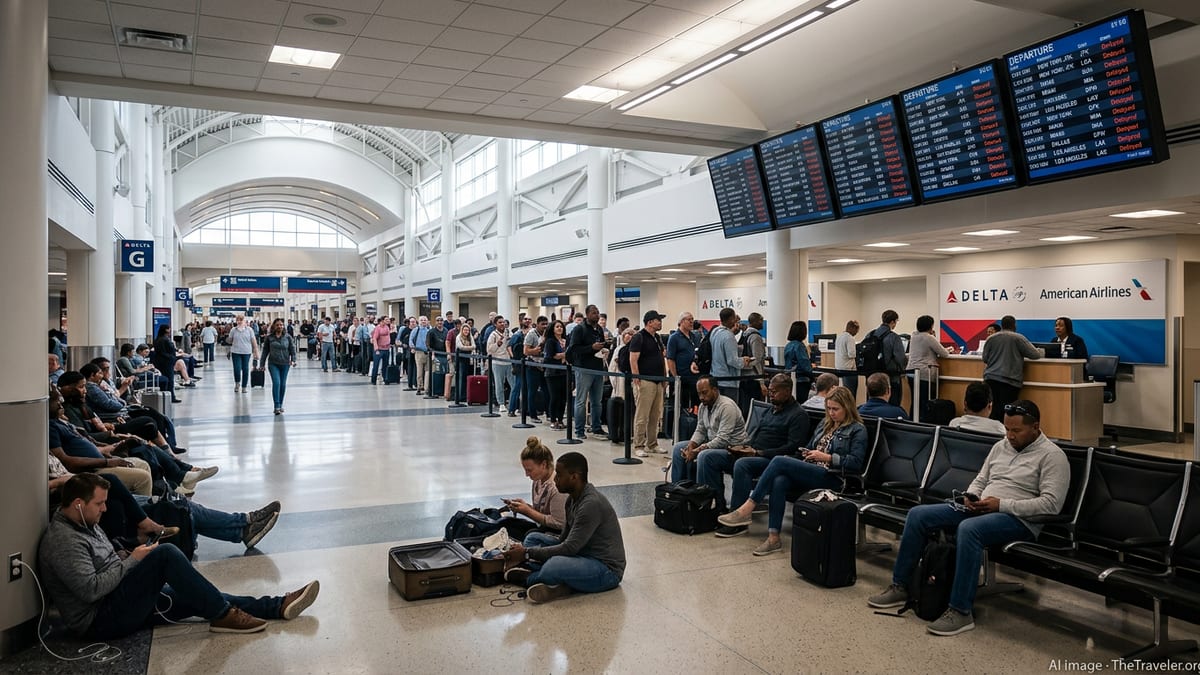
Travelers at Detroit Metropolitan Wayne County Airport faced a difficult start to the weekend as publicly available tracking data showed 116 flights delayed and seven canceled, disrupting Delta Air Lines, Spirit Airlines and other carriers on busy domestic and international routes.
Get the latest news straight to your inbox!
Operational Strain Ripples Across Key Hubs
The disruption at Detroit Metro emerged against a wider backdrop of operational strain across the U.S. air network, where recent data and coverage have highlighted elevated delay levels at major hubs. Recent tallies of national performance pointed to thousands of delayed flights in a single day, with Chicago, Atlanta, Denver, New York and other large airports experiencing significant knock-on effects that can reverberate through connecting points such as Detroit.
In Detroit’s case, the latest snapshot indicates that the majority of impacted services fall into the delayed category, with only a smaller share canceled outright. Aviation data services generally classify a delay as any departure or arrival operating 15 minutes or more behind schedule, a threshold that can nonetheless translate into missed connections and extended time in terminals for passengers.
Industry analyses of Detroit Metro’s recent performance suggest that, under typical conditions, the airport maintains on-time rates close to 80 percent, with relatively modest cancellation levels compared with some peers. That context underscores how a cluster of 116 delays in a short window stands out from routine fluctuations and points to system-wide pressures rather than local infrastructure problems alone.
Travel publications and transportation statistics have also emphasized that airline scheduling practices and crew rotations play a significant role in delay patterns. Aircraft and crews cycling through hubs in the eastern United States can be thrown off by adverse conditions or congestion hundreds of miles away, which then materializes as late departures and arrivals at airports like Detroit.
Delta and Spirit Among Carriers Most Affected
Delta Air Lines, which operates a major hub at Detroit Metro, appears among the most affected carriers in the current round of disruptions. Publicly accessible timetables and route maps show that the airline runs dense schedules from Detroit to New York, Atlanta, Chicago and Los Angeles, meaning that even modest operational hiccups can cascade into multiple delayed departures and arrivals on any given day.
Spirit Airlines, a notable presence in the Detroit market with a focus on price-sensitive leisure routes, also appears in disruption tallies. Low cost carriers typically operate tight aircraft utilization patterns, with limited slack built into their schedules. As a result, a single delayed aircraft can affect several subsequent legs, compounding the impact for travelers waiting to depart Detroit for destinations such as Los Angeles or to connect onward through major hubs.
Other carriers serving Detroit, including large U.S. network airlines and regional operators feeding into their hubs, are also part of the current disruption picture. Routing structures that lean heavily on connections through Atlanta, Chicago, New York and Toronto expose Detroit-based itineraries to congestion or weather challenges at those nodes. When combined with high spring demand, relatively small schedule adjustments can translate into a sizeable number of delayed flights across the day.
Consumer travel coverage over recent months has highlighted that, nationwide, delays now significantly outnumber outright cancellations on typical disruption days. The situation at Detroit fits that pattern: most flights are eventually operating, but often far behind schedule, leaving passengers contending with uncertainty and shortened connection windows.
Key Routes to New York, Atlanta, Chicago, Toronto and Los Angeles Hit
The latest data indicate that routes linking Detroit to fellow hub markets have been especially disrupted. Connections to New York area airports and Atlanta are central to the national networks of major U.S. carriers, meaning any slowdown at those airports can quickly be reflected in Detroit’s departure boards. Travelers heading for business centers in Manhattan, midtown Atlanta or Chicago’s Loop face not only delayed departures but also the risk of missed meetings and rebooked itineraries.
Chicago, a historically congested hub, continues to influence reliability across the Midwest. Recent reporting on Federal Aviation Administration capacity measures at Chicago’s primary airport has drawn attention to underlying constraints in air traffic control staffing and runway availability. These conditions can tighten available slots and reduce resilience when weather or traffic spikes occur, amplifying the effect on feeder flights from and to Detroit.
Internationally oriented routes are not immune. Toronto’s role as a key cross-border hub means that delays on Detroit to Toronto services can interfere with onward connections to cities across Canada and Europe. Similarly, long-haul itineraries routed through Los Angeles can be compromised if Detroit departures run late, potentially forcing passengers into overnight stays or lengthy layovers while they await the next available long-distance flight.
For many passengers, the practical impact is hours spent at Detroit’s terminals monitoring gate information screens and mobile apps as revised departure times shift. Families beginning spring holidays, students heading back to campus and business travelers attempting tight turnarounds all find themselves competing for scarce rebooking options at peak times.
Weather, Network Complexity and Seasonal Demand
While specific causes for each individual delay vary, recent weather patterns across the eastern United States have emerged as a recurring backdrop. Springtime thunderstorms and lingering frontal systems have been cited in numerous operational summaries over the past week, affecting large corridors of airspace used by flights linking Detroit with New York, Washington and other Atlantic seaboard cities.
Airline network complexity adds another layer. A single aircraft might be scheduled to operate multiple legs in sequence, perhaps starting the day at a southern hub, continuing through Detroit to Chicago, and then onward to Los Angeles. If that first leg is disrupted by weather or congestion, the reverberations can be felt hours later and thousands of miles away, including at Detroit Metro where passengers may never directly encounter the original problem.
Seasonal demand trends also contribute. Early April sits within a busy period for both business travel and school-related trips, with conferences, sporting events and family visits encouraging higher load factors. Reports on national travel patterns indicate that airlines have been operating near or at capacity on many routes, leaving less room to accommodate displaced passengers when delays or cancellations occur.
Historical delay statistics from transportation agencies and aviation analysts show that, although Detroit has often fared better than some coastal hubs, it is far from immune when the broader system comes under strain. The present episode of 116 delayed flights and seven cancellations at a single airport highlights how tightly interconnected U.S. air travel has become.
Guidance for Affected Travelers
Consumer advocates and travel publications responding to recent disruption cycles across the country have repeatedly underscored the value of real-time monitoring and flexible planning. For passengers currently in Detroit or scheduled to depart later in the day, these sources recommend checking airline apps and airport status tools frequently, rather than relying on boarding passes issued hours earlier.
Travel coverage also notes that passengers experiencing significant schedule changes should retain receipts for meals, transportation and lodging incurred while waiting for rebooked flights. Depending on the specific airline policies and the origin of the disruption, such documentation can be important if travelers later pursue reimbursements or travel credit.
Analysts further suggest that travelers with tight connections through Detroit consider building in additional buffer time when itineraries pass through multiple busy hubs on the same day. When delays cluster at a major connecting point like Detroit Metro, passengers with more generous layovers are better positioned to make onward flights even if the initial segment arrives late.
As operations gradually normalize, Detroit’s performance metrics and national delay data will likely be scrutinized by airlines, regulators and passenger rights groups alike. For now, the visible queues at gates and the large block of delayed departures on departure boards at Detroit Metro Wayne County Airport capture a familiar picture of strain across the U.S. air travel system.