

More news on this day
Thousands of air travelers across Europe faced unexpected overnight stays and mounting uncertainty this weekend as strong winds and heavy rain linked to Storm Regina disrupted operations at major airports, triggering more than 360 flight cancellations and over 3,000 delays from Istanbul to London, Cologne, Prague and Munich.
Get the latest news straight to your inbox!
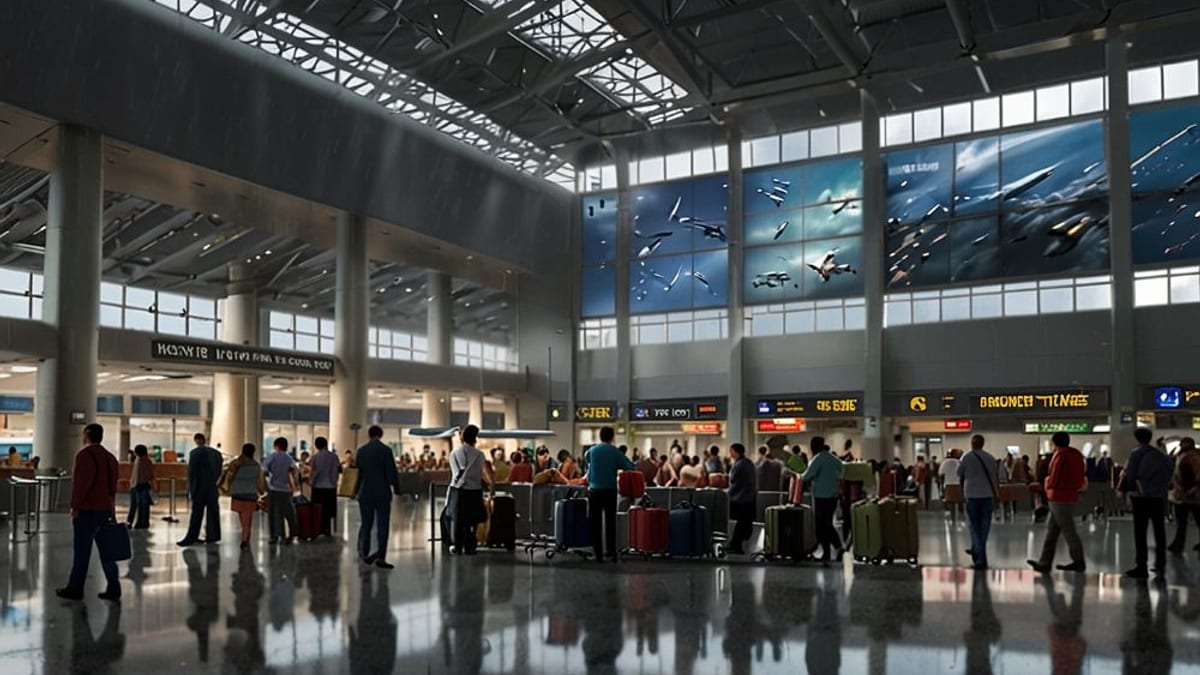
Image by Travel And Tour World
Storm Regina Batters Key European Aviation Hubs
Published aviation data and weather reports indicate that Storm Regina, which intensified over the first days of March, has combined powerful wind gusts with intense rainfall across large parts of southern and central Europe. The severe weather has placed particular strain on busy hubs in Turkey, the United Kingdom, Germany and the Czech Republic just as early spring travel demand begins to rise.
Operational summaries from flight-tracking platforms show that Istanbul, London, Cologne, Prague and Munich have all reported waves of disruption as the storm system moved across the continent. At various points during the weekend, arrival and departure banks were compressed into narrowed operating windows, creating congestion on the ground and in surrounding airspace.
Across these airports, more than 360 flights were canceled and in excess of 3,000 were delayed, affecting passengers on both short haul and long haul services. The figures reflect a combination of outright weather stoppages, temporary runway restrictions and flow-management measures in European airspace designed to keep operations within safe limits when winds and visibility deteriorate.
While some airports continued to operate at reduced capacity, the cumulative effect of rolling delays, aircraft out of position and crew duty-time limits pushed many carriers to preemptively cancel rotations, leaving travelers scrambling for alternatives or compelled to wait out the storm in terminals and nearby hotels.
Airlines From Low Cost To Full Service Hit Hard
The disruption has cut across much of the European airline sector, with low cost operators and full service carriers both heavily affected. Publicly available flight logs show large numbers of affected services for Pegasus Airlines and Turkish Airlines at Istanbul, while easyJet and Ryanair operations at London and regional German airports also recorded significant schedule changes.
In Turkey, the scale of Istanbul’s role as a regional hub has amplified the impact. Many passengers transiting between Europe, the Middle East and Asia saw their itineraries unravel as onward connections were missed or proactively canceled in anticipation of further weather-related constraints. Some travelers reported being rebooked on later services, while others faced longer waits as available seats quickly filled.
In the United Kingdom, London’s major airports experienced a mix of delays and cancellations that rippled through low cost short haul networks. Disruptions to one rotation often cascaded into subsequent flights, particularly for carriers with tight turnaround schedules. Similar knock-on effects were seen in Germany, where operations at Cologne and Munich were disrupted at multiple points during the day, complicating fleet and crew planning for airlines based there.
Schedules for additional European airlines operating to and from Prague and other affected airports were also reshuffled as carriers consolidated lightly booked departures, adjusted aircraft types or rerouted aircraft to less weather-affected hubs. The result was a patchwork of last-minute timetable changes that left many passengers relying on airport departure boards and mobile notifications for real-time updates.
Passenger Experience: Crowded Terminals And Limited Options
Scenes from social media posts and local news coverage showed crowded departure halls, long customer service queues and improvised sleeping areas as travelers waited for rebooking options. With hotel capacity around some airports quickly tightening, many passengers remained inside terminals overnight, camping out near check-in areas and departure gates while monitoring for new departure times.
For some travelers, especially those with time-sensitive plans such as business commitments or onward long haul connections, the lack of immediate alternatives proved particularly frustrating. Weather-driven cancellations typically limit the scope for compensation, and seat availability on later flights was constrained as airlines attempted to clear backlogs while continuing to operate a reduced schedule.
Families traveling with young children and elderly passengers appeared especially affected, as they navigated crowds and lengthy waits for assistance. Reports from several airports noted extended lines for food, water and basic supplies at peak disruption periods, underscoring how quickly airport infrastructure can be stretched when large volumes of passengers are unexpectedly stranded.
Despite the difficulties, operational and safety data confirm that flights which did operate did so under enhanced weather-related procedures, including increased separation between departures and arrivals and occasional temporary suspensions while crosswind or visibility thresholds were briefly exceeded.
Regulatory Protections And What Travelers Can Expect Next
The current wave of disruption has renewed discussion around passenger entitlements under European and national regulations. In the European Union and the United Kingdom, frameworks such as EU261 and UK261 set out rights to care and, in some cases, compensation for delays and cancellations. However, severe weather is commonly categorized as an extraordinary circumstance, which typically reduces the likelihood of financial compensation even as airlines remain expected to provide assistance such as meals and accommodation where reasonably possible.
In Turkey, domestic passenger-protection rules provide a separate layer of coverage for flights touching Turkish airports. Publicly accessible regulatory summaries indicate that these local rules also distinguish between operational issues and events deemed outside airline control, such as major storms, when determining eligibility for compensation or rerouting support.
Travel industry observers note that once conditions improve and winds associated with Storm Regina ease, the clearing of the backlog may still take one to two operating days, depending on aircraft and crew availability. Airports and airlines are expected to prioritize long haul services and heavily booked routes first, gradually restoring full schedules as capacity allows.
Prospective passengers are being encouraged by consumer advocates and travel forums to monitor airline apps, confirm flight status before leaving for the airport, and build additional buffer time into itineraries where possible. As climate-related volatility continues to influence European weather patterns, analysts suggest that episodes of concentrated disruption such as this one may become more common during the shoulder seasons, increasing the importance of flexible tickets and robust contingency planning for travelers.