

More news on this day
Hundreds of air travellers were stranded at Quebec City Jean Lesage International Airport on Tuesday as a powerful winter storm sweeping across eastern Canada triggered 19 flight delays and five cancellations, disrupting key routes operated by Air Canada, WestJet, Porter Airlines and other carriers across Quebec City, Montreal, Toronto, Ottawa and regional hubs.
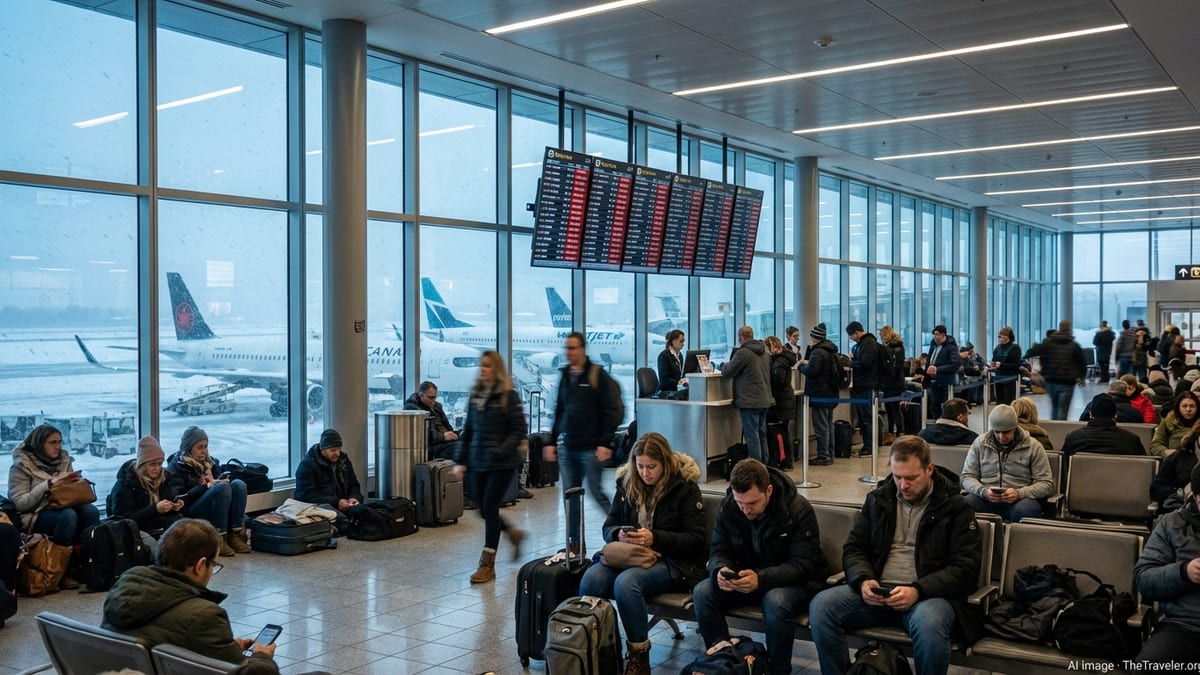
Storm-Snarled Schedules Hit Quebec City Hub
Operations at Quebec City Jean Lesage International Airport slowed to a crawl as blowing snow, reduced visibility and shifting winds forced airlines and air traffic controllers to trim schedules and extend turnaround times. By midday, the airport’s departure and arrival boards showed a patchwork of delays, cancellations and gate changes that left passengers crowding concourses and lining up at service counters.
Arrivals from Montreal, Toronto and Ottawa were among the first to be affected as aircraft inbound from storm-hit cities in Ontario and the northeastern United States arrived behind schedule or were held at origin. That knock-on effect quickly spread to Quebec City’s departures, where aircraft and crew were no longer in the right place at the right time, pushing early-morning slippages into longer mid-day and evening delays.
Airport staff worked to keep runways and taxiways clear, rotating plows and de-icing trucks in a continuous operation, while ground handling teams tried to move baggage and passengers through heavy snowfall and biting wind. Public announcements urged travellers to remain patient, monitor flight status displays and contact their airlines before attempting to rebook at the airport.
For many passengers, the disruption meant missed connections, last-minute hotel stays and scrapped plans. Families traveling at the end of a school break mingled with business travellers desperate to reach meetings in Toronto and Ottawa, all watching the boards as already-delayed flights edged back another 30 or 60 minutes at a time.
Air Canada, WestJet and Porter Adjust Schedules and Policies
Air Canada, WestJet and Porter Airlines were among the most heavily affected carriers as the storm system hammered a broad swath of eastern Canada and the northeastern United States. With operations tightly interlinked between Montreal, Toronto, Ottawa and regional airports in Quebec, a delay or cancellation at one end of a route quickly cascaded through the network.
Air Canada responded by consolidating some frequencies and placing larger aircraft on select services in an effort to accommodate displaced passengers where runway and gate availability allowed. The airline also encouraged customers booked on Tuesday and Wednesday to use digital tools to rebook onto later flights, in order to ease pressure on airport counters.
WestJet and Porter similarly warned of ongoing disruption on flights touching Montreal and Toronto, where weather conditions and congestion at larger hubs slowed recovery efforts. Both carriers advised travellers to leave extra time to reach the airport, check in online where possible and remain flexible with travel dates if their plans allowed.
Across all three airlines, fee waivers were in place on many impacted routes, allowing affected passengers to move travel to later in the week without the usual change penalties, subject to seat availability. While such measures helped some travellers salvage their journeys, limited remaining capacity on already busy routes meant others faced lengthy waits for the next available seat.
Ripple Effects Felt Across Montreal, Toronto and Ottawa
The disruption at Quebec City was one visible point in a much wider web of weather-related flight chaos stretching across major Canadian and northeastern U.S. airports. Overnight and early-morning cancellations at Toronto Pearson and Montreal–Trudeau reduced the number of aircraft and crews available to feed Quebec City-bound services later in the day.
In Montreal, snow and gusty winds slowed de-icing operations and lengthened taxi times, narrowing the number of takeoff and landing slots airlines could use during peak periods. Toronto faced its own weather challenges, including freezing precipitation and low cloud, which forced air traffic control to increase separation between aircraft and capped hourly arrivals and departures.
Ottawa, a key link in eastern Canada’s domestic network, experienced a mix of delays and selective cancellations as carriers prioritized mainline routes and longer-haul flights. That triage left some shorter regional hops, including certain rotations to and from Quebec City, vulnerable to being scrubbed when aircraft and crew capacity tightened.
The combined impact meant travellers on routes that would normally see frequent departures suddenly had far fewer options. Passengers hoping to reroute through other hubs often discovered that alternative flights were already full or subject to their own weather-related uncertainties, leaving them effectively stranded until operations could stabilize.
Travellers Endure Long Waits and Uncertain Plans
Inside the terminal at Quebec City Jean Lesage International, the human cost of the storm-related disruption was evident. Lines at airline counters snaked down the concourse as travellers waited to rebook, request vouchers or seek information about baggage that had gone astray amid gate and aircraft swaps.
Parents tried to keep children occupied with tablets and snacks on crowded departure lounge floors, while solo travellers clustered around scarce power outlets to charge phones and keep watch on airline apps. Some passengers, resigned to extended waits, stretched out across seats or improvised makeshift beds from coats and carry-on bags.
Local hotels near the airport reported a spike in last-minute bookings, and taxi ranks saw waves of passengers leaving to seek overnight accommodation when it became clear that no more flights would depart for their destinations that day. Others chose to stay in the terminal, fearing that morning departures might fill before they could return from off-airport lodgings.
Airport information staff and volunteers fielded questions about everything from public transit and rental cars to meal options and quiet spaces to rest. While many travellers praised individual staff members for patience under pressure, frustration levels rose each time a long-awaited boarding call was replaced by another delay announcement.
Outlook for Recovery and Advice for Future Travellers
With the storm system expected to ease late Tuesday into Wednesday, airlines planned a gradual return to more regular operations. However, industry analysts noted that stranded aircraft and crew displacements could take several days to unwind fully, meaning residual delays and isolated cancellations were likely to persist even after skies cleared.
Quebec City Jean Lesage International Airport urged travellers with upcoming departures this week to confirm flight status before leaving home and to consider carrying essential medications, chargers and a change of clothes in hand luggage in case of unexpected overnight stays. Officials also encouraged passengers to register for airline text or app alerts to receive real-time updates on gate changes and schedule adjustments.
Travel experts said the latest disruption underscores how vulnerable tightly timed regional networks are to large weather systems that affect multiple hubs simultaneously. When storms sweep across Quebec, Ontario and the northeastern United States, there is limited spare capacity for airlines to reroute traffic without triggering bottlenecks somewhere else in the system.
For those planning winter travel through Quebec City and other eastern Canadian airports, the episode serves as a reminder to build flexibility into itineraries, avoid last-minute tight connections and factor in the possibility that severe weather can upend even the best-laid plans with little warning.