

More news on this day
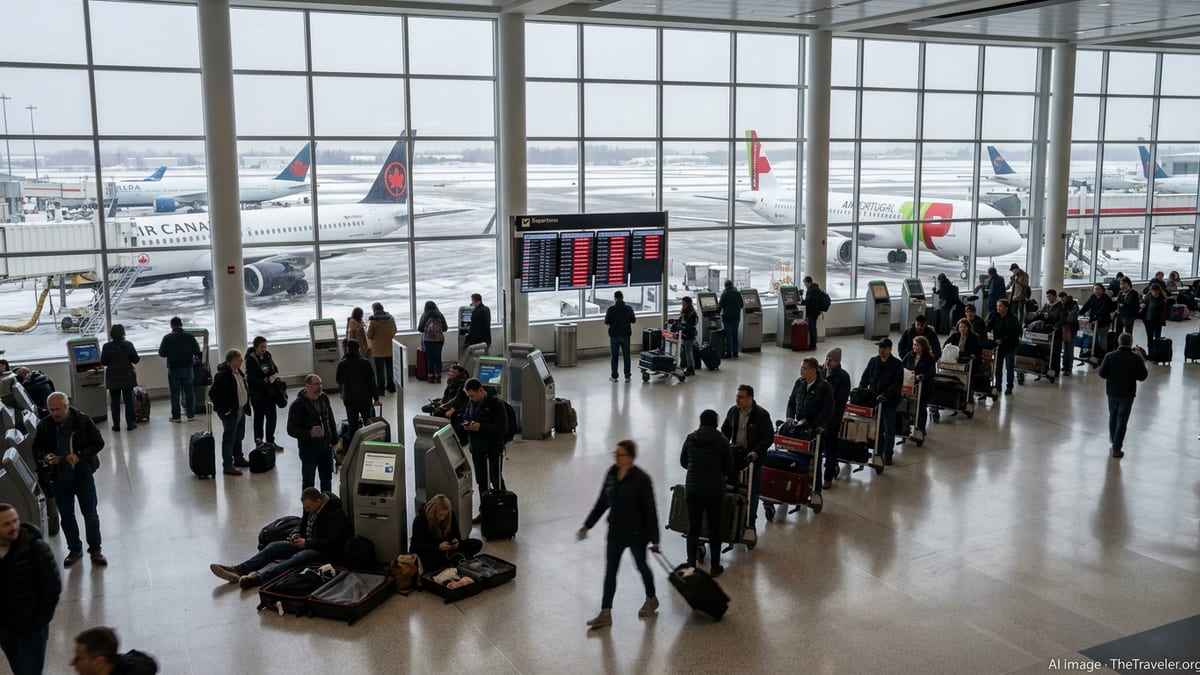
Travelers moving through Toronto Pearson International Airport are facing significant disruption after a fresh round of weather-related and operational challenges led to 27 flight cancellations affecting major global carriers and passengers bound for destinations across the United States, Canada, the Caribbean, Europe and the Middle East.
Get the latest news straight to your inbox!
Major Carriers Hit as Operations Tighten at Canada’s Busiest Hub
Publicly available flight status boards for Toronto Pearson on Tuesday indicate that at least 27 departures and arrivals have been canceled across a mix of domestic, transborder and long-haul international routes. The disruptions are concentrated among large network airlines, including WestJet, Air Canada, Emirates, Qatar Airways and Lufthansa, as well as several codeshare and partner services operating under their flight numbers.
The cancellations follow a period of highly constrained operations at Pearson, where winter weather and ground-handling limitations have periodically reduced runway capacity and slowed aircraft turnaround times. Airport and airline data show that when conditions tighten, carriers often trim schedules to maintain safety margins and preserve on-time performance for remaining flights, leading to sudden cancellations clustered around peak travel banks.
In practice, that means some of the highest-profile services into and out of Toronto have been affected. Long-haul flights connecting Pearson with major hubs in Europe and the Middle East, along with key leisure and business routes to the United States and the Caribbean, feature prominently among the flights removed from today’s boards.
While 27 cancellations represent only a fraction of total daily movements at one of North America’s busiest airports, the knock-on impact for affected passengers is significant, particularly for those facing missed connections or limited same-day rebooking options.
Transatlantic and Gulf Connections Disrupted
The latest round of cancellations is being felt most acutely on high-demand international corridors linking Toronto with Europe and the Gulf region. According to published schedules and live status information, services operated or marketed by Air Canada and Lufthansa between Toronto and major European gateways have seen selected departures scrubbed, forcing travelers to rebook on later flights or alternative routings via other hubs.
Similarly, long-haul flights between Pearson and the Middle East, including routes involving Emirates and Qatar Airways, have been affected. These services typically carry a mix of business travelers, tourists and diaspora passengers connecting onward to South Asia, Africa and the wider Middle East, magnifying the disruption when a single leg out of Toronto is canceled.
International travelers are especially vulnerable to these kinds of schedule shocks because many itineraries depend on precise connection windows. When one flight is removed from the schedule, downstream segments on partner airlines can be jeopardized, leaving passengers facing extended layovers, overnight stays or, in some cases, full itinerary reissues.
The impact is not limited to those starting or ending their journeys in Toronto. For travelers transiting through Pearson en route from the United States or the Caribbean to Europe or the Gulf, a canceled Toronto sector can unravel an entire multi-leg trip, with re-accommodation complicated by tight capacity during the busy late-winter travel period.
North American and Caribbean Travelers Caught in the Ripple Effect
While the headline cancellations involve marquee intercontinental flights, a substantial share of the disruption is hitting short- and medium-haul traffic connecting Canada with the United States and the Caribbean. Flight-status reports show WestJet and Air Canada among the carriers most affected, with passengers traveling between Toronto and key U.S. gateways as well as winter-sun destinations among those seeing their flights removed from the schedule.
Industry experience suggests that when Pearson’s operations slow, airlines often prioritize retaining a core schedule of trunk domestic routes and selected long-haul flights, while canceling or consolidating some transborder and leisure services. That pattern appears to be playing out again, with several Canada–U.S. and Canada–Caribbean flights grounded even when weather at the origin or destination is comparatively benign.
For travelers, the practical consequence is a patchwork of options. Some are being shifted onto later departures the same day, others onto flights operated by partner airlines, and a portion are being rebooked one or more days later when seats become available. Passengers connecting onward from Toronto to smaller Canadian cities or U.S. regional airports are facing particular challenges, as limited frequencies and high load factors reduce rebooking flexibility.
Travel forums and recent published coverage of similar disruption periods at Pearson highlight recurring pain points for affected passengers, including long waits to speak with customer-service agents, difficulties securing hotel accommodation during overnight delays and uncertainty around eligibility for refunds or compensation under Canadian air passenger regulations.
Weather, Ground Constraints and Aircraft Positioning All Play a Role
Although the immediate triggers behind each individual cancellation vary, today’s pattern at Toronto Pearson follows a familiar playbook shaped by winter weather, complex hub operations and aircraft positioning challenges. Recent cold snaps and snow events in southern Ontario and across central Canada have periodically reduced visibility, required intensive de-icing and slowed the work of ground crews responsible for turning aircraft between flights.
When ground operations stretch beyond normal turnaround times, airlines must decide whether to accept cascading delays or proactively trim the schedule. Cancellations, while disruptive for those on the affected flights, can help carriers stabilize broader operations by freeing up gates, crews and aircraft. However, that strategy relies on robust rebooking capacity, which can be limited when flights across the network are already heavily booked.
Another factor is the positioning of aircraft and crews. Disruption at other Canadian and U.S. hubs can leave planes and staff stranded away from Toronto, removing them from the rotation that feeds Pearson’s domestic, transborder and international banks. Published analyses of previous irregular operations at Pearson note that even after runways reopen and weather improves, lingering equipment and crew imbalances can continue to force cancellations for several days.
For passengers, the result is a disruption pattern that may appear inconsistent: a flight is canceled despite seemingly clear weather at both ends of the route, or a morning departure operates while an afternoon service on the same city pair does not. In many cases, the explanation lies not in local conditions, but in how a specific aircraft and crew sequence fits into a larger, stressed network.
What Stranded Passengers Are Being Advised to Do
Public guidance from airlines and travel industry advisories around similar events at Toronto Pearson emphasize that affected passengers should act quickly once a cancellation appears on their booking or on airport departure boards. Same-day rebooking inventory can vanish fast, particularly for long-haul flights to Europe and the Middle East where aircraft capacity is finite and alternative routings may require seats across several connecting legs.
Most airlines operating at Pearson now offer rebooking tools through their websites and mobile apps, allowing travelers to change flights without visiting a check-in desk. Industry commentary indicates that using these digital channels, where available, is often faster than waiting in line at the airport or calling overstretched contact centers, especially during widespread disruption.
Travel experts also recommend that passengers monitor both the airline’s own status pages and independent flight-tracking services, as schedules can shift multiple times within a short window. Those with tight onward connections, particularly to smaller regional destinations or onward intercontinental services, are being encouraged to proactively seek earlier alternatives rather than banking on minimum connection times.
Consumer advocates note that rules governing care, refunds and, in some circumstances, compensation for cancellations departing from Canadian airports are defined under federal air passenger regulations. Travelers are being urged to retain boarding passes, screenshots of flight status changes and any receipts for out-of-pocket expenses, in case they later decide to file a claim once immediate travel has been resolved.