

More news on this day
A fast-moving late-winter storm has triggered 223 flight cancellations and extensive delays across six major U.S. airline hubs, disrupting travel plans for thousands of passengers and adding fresh strain to an already turbulent season for air travel.
Get the latest news straight to your inbox!
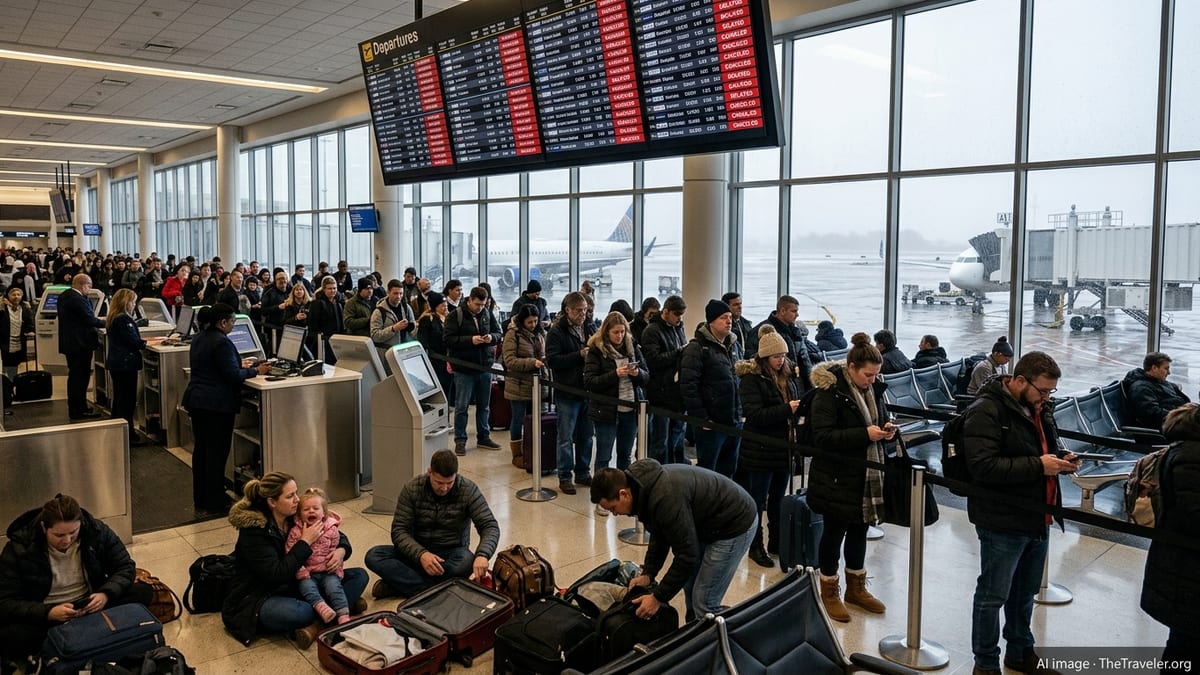
Six Key Hubs See Operations Slashed
Publicly available flight tracking data shows that the latest wave of cancellations is concentrated at six of the country’s busiest connecting airports, where even limited disruptions can quickly cascade across the network. Major hubs in Atlanta, Chicago, Dallas, Denver, New York and Charlotte recorded the bulk of the 223 cancellations, alongside hundreds of additional delays as airlines attempted to reroute aircraft and crews.
The affected hubs serve as critical junctions for domestic and international traffic, meaning that disruptions at these airports rarely remain local. Travelers reported missed connections, forced overnight stays and rebookings spread over several days, reflecting how quickly a day of heavy cancellations can ripple out through an interconnected system.
According to published coverage and real-time tracking boards, mid-morning and early afternoon departure banks were hit hardest as airlines adjusted schedules in response to deteriorating weather conditions. Some carriers opted to proactively trim flights out of their largest hubs in an effort to contain knock-on delays later in the day.
By early evening, operations had begun to stabilize in some markets, but residual delays and scattered cancellations were still visible across the national network, particularly on routes connecting smaller cities to the six main hubs.
Weather and Winds Drive the Latest Wave of Cancellations
Meteorological reports indicate that the immediate trigger for the latest disruptions was a strong late-season storm system sweeping across large sections of the central and eastern United States. High winds, low visibility and bands of heavy rain and snow combined to slow airport operations, forcing wider spacing between aircraft and periodic ground stops at several busy fields.
These conditions came on the heels of multiple severe winter events in January and February that had already tested the resilience of U.S. carriers. Earlier storms this year led to several days where thousands of flights were canceled nationwide, offering a preview of how quickly extreme weather can bring the system close to a standstill.
Aviation analysts note that while individual storms are temporary, the pattern of repeated weather shocks is placing sustained pressure on airlines. Each new round of cancellations requires a careful reset of aircraft rotations and crew schedules, making it harder for operations to return to normal between events.
The latest 223 cancellations therefore represent more than a one-day inconvenience. For some travelers, they are part of a series of disruptions stretching across multiple trips this season, especially for those who regularly connect through the most weather-prone hubs.
Thousands of Passengers Scramble to Rebook
While the headline number of cancellations is significant, the true scale of the disruption is measured in the number of people affected. With many of the canceled flights operating on busy trunk routes into and out of major hubs, each individual cancellation represents hundreds of displaced passengers seeking alternatives.
Reports from airports and social media posts from travelers describe long lines at customer service desks and gate counters as people tried to secure rebooked itineraries. Some were offered same-day alternatives via other hubs, while others were placed on flights departing one or two days later, particularly on already crowded routes.
Mobile apps and websites became critical tools for many passengers, with airlines encouraging customers to rebook digitally where possible. Public information indicates that most major carriers issued weather-related travel waivers covering the affected hubs, allowing travelers to change flights without additional fees, subject to seat availability.
Nonetheless, options remained limited for travelers with fixed schedules, especially those connecting to cruises, tours or international departures. Travel advisers are increasingly recommending that passengers build extra buffer time into itineraries during peak disruption seasons, particularly when connections at multiple hubs are involved.
Airlines Balance Recovery With Future Reliability
Operational data and recent industry coverage suggest that U.S. airlines are attempting to strike a balance between restoring disrupted schedules quickly and preventing further breakdowns later in the week. One strategy involves canceling a block of flights early, often on shorter domestic legs, to free up aircraft and crews for higher-demand routes and long-haul services.
Airlines have also been working to reposition aircraft overnight into less weather-affected hubs, creating more flexibility to restart operations as conditions improve. However, crew duty-time limits and the complex rotation of aircraft through multiple cities can slow this recovery, particularly after an intense day of cancellations like the current event.
Industry observers point out that staffing levels and fleet utilization have left carriers with less slack to absorb shocks than before the pandemic. When a storm or air-traffic control constraint hits one or two hubs, it can quickly reduce the margin for error at others, leading to widespread delays even where local weather remains calm.
For frequent travelers, these dynamics translate into a heightened risk that a single-day disruption can extend for several days in the form of rolling delays, aircraft swaps and last-minute schedule adjustments.
What Travelers Can Expect in the Coming Days
Looking ahead, forecast models for the current storm system indicate that conditions should gradually improve across key hubs within the next 24 to 48 hours. Airlines are expected to restore most of their scheduled flights as crosswinds ease and visibility improves, but lingering disruptions are likely as carriers work through backlogs of displaced passengers.
Travel experts recommend that passengers with departures over the next few days monitor their flight status frequently, arrive at the airport early, and remain flexible about routing changes that may involve unexpected connections through alternate hubs. Same-day standby lists are anticipated to be longer than usual as travelers seek to move onto earlier flights.
For the broader U.S. air travel system, the episode adds to a growing body of evidence that major weather events can trigger cascading disruptions across hub-and-spoke networks, even when the raw number of cancellations, such as today’s 223, appears modest compared with historic storms. The concentration of traffic at a handful of mega-hubs means that any significant operational shock at one often reverberates quickly through the others.
As airlines, regulators and airports evaluate performance after this latest wave of cancellations, the experience of thousands of stranded passengers at six key hubs is likely to sharpen ongoing discussions about resilience, staffing, infrastructure and the evolving risks posed by increasingly volatile weather patterns.