

More news on this day
Air travel across the United States faced another punishing day of disruption today, with tracking services showing 415 flight cancellations and 3,963 delays affecting major hubs including Atlanta, Dallas, Chicago, Houston, Los Angeles and San Francisco.
Get the latest news straight to your inbox!
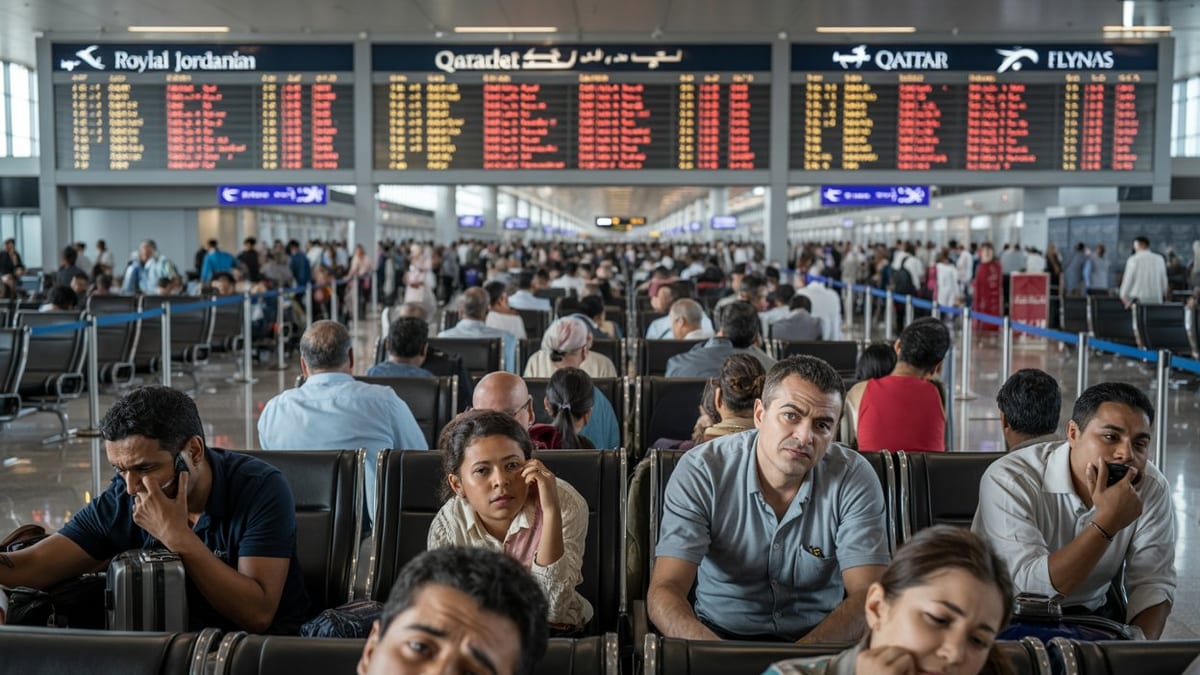
Major Hubs From Coast to Coast Hit by Cancellations
Publicly available flight-status dashboards for April 4 indicate that the wave of disruption was concentrated at the country’s largest connecting hubs, where weather and congestion quickly translated into systemwide knock-on effects. Atlanta, Dallas, Chicago, Houston, Los Angeles and San Francisco all reported clusters of canceled and heavily delayed flights, rippling through domestic and international networks.
Data compiled from aviation-tracking platforms shows that these six airports alone accounted for a significant share of the 415 cancellations, as ground delay programs, reduced arrival rates and aircraft repositioning constraints cut into available capacity. Secondary hubs and mid-sized airports then absorbed the fallout, as late-arriving aircraft and crews triggered rolling delays across the day.
The disruption followed several days of elevated operational strain across the national network, with earlier April reporting already highlighting severe delays at Chicago and Houston and persistent constraints at Los Angeles and San Francisco related to both traffic volumes and airfield work. Today’s figures place this latest episode among the more intense disruption spikes of the spring travel period, even if they remain short of the worst winter-weather meltdowns seen earlier in the year.
Flight data also suggests that early-morning cancellations at some hubs were followed by a second wave later in the afternoon and evening as thunderstorms, lingering low clouds and congestion pushed crews toward duty-time limits. Once those limits were reached, airlines had limited flexibility to recover the schedule, leaving some aircraft on the ground and travelers scrambling for alternatives.
American, Delta, Spirit and Regional Partners Bear the Brunt
According to aggregated airline-operations data and published aviation coverage, major U.S. carriers including American Airlines, Delta Air Lines and Spirit Airlines shouldered a large portion of today’s cancellations and lengthy delays, alongside regional operators such as PSA Airlines and SkyWest Airlines that feed traffic into the big networks.
American and Delta, both with sizable operations at hubs like Atlanta, Dallas, Chicago and Los Angeles, saw a mix of mainline and regional flights scrubbed as thunderstorms and air-traffic flow limits took hold. Regional affiliates, which operate a high volume of shorter flights with tight turn times, proved especially vulnerable to cascading delays once the first rotation of the day slipped behind schedule.
Spirit, which concentrates much of its flying at large, congested airports in Florida, Texas and major coastal cities, also faced disruption as delays at connecting hubs fed into its point-to-point network. Low-cost airlines often run aircraft more intensively to maximize utilization, leaving little slack when weather, congestion or minor technical issues force a change of plan.
Operational data reviewed across multiple hubs indicates that SkyWest and PSA, two of the largest regional operators in the United States, recorded notably high disruption rates relative to their schedules. Regional carriers are particularly exposed during nationwide events because they rely on tight crew pairings and aircraft swaps, so one grounded flight in a major hub can strand an aircraft and crew far from where they are needed for the next segment.
Weather, Runway Projects and Airspace Constraints Combine
Reports from meteorological services and air-traffic bulletins point to a familiar mix of triggers behind today’s numbers. Thunderstorms over parts of Texas and the central United States prompted ground stops and lengthened spacing between arrivals and departures at Dallas and Houston, while unsettled spring weather and low ceilings constrained operations at Atlanta and Chicago.
On the West Coast, San Francisco continued to face throughput limits related to runway work and cautious spacing procedures in marginal weather, which reduced arrival rates and fed delays across airlines serving the airport. Los Angeles, already running near capacity during peak hours, saw minor timetable irregularities expand into wider disruption as late arrivals forced aircraft into holding patterns and crews bumped up against their scheduled duty times.
Airspace congestion added another layer of complexity, as traffic management initiatives designed to keep flows safe and orderly further reduced available capacity. Measures such as metered arrivals, reroutes around storm cells and temporary altitude caps allowed flights to continue operating but stretched flight times and ground queues, contributing to the near-4,000 delay tally.
Industry analysts note that the U.S. system currently has limited margin for error, with airlines operating fuller schedules than in previous years and many airports relying on air-traffic staffing patterns that leave little room to absorb sudden weather or equipment issues. As a result, even relatively routine spring weather systems can generate outsized disruption when they intersect with peak travel periods.
Spring Travel Demand Magnifies the Impact on Passengers
The timing of today’s disruption coincides with one of the busiest leisure-travel stretches of the year, as spring-break trips, late-season ski holidays and early warm-weather getaways converge. Passenger loads on many routes are running near or at capacity, limiting options for same-day rebooking once a flight is canceled.
Travel-industry reports indicate that thousands of travelers found themselves facing missed connections, overnight stays and rebookings into later weekend departures as airlines worked through the backlog. At several hubs, lines at customer-service desks grew quickly after the first wave of cancellations, with some passengers reporting limited availability on alternative flights to key domestic and international destinations.
Because airlines generally prioritize keeping aircraft and crews in position over canceling large numbers of flights outright, many travelers encountered long on-the-ground waits or extended gate holds instead of immediate scrubs. This strategy can help protect the broader network, but it often translates into multi-hour delays for individuals on affected flights and increases the risk that later connections will be missed.
The disruption has also highlighted familiar challenges for passengers with complex itineraries, including those connecting from domestic hubs to transatlantic or Latin American services. When a short-haul feeder flight from a city like Houston, Dallas or Chicago is delayed or canceled, travelers can lose access to once-daily long-haul departures, forcing lengthy rebookings or complete changes to travel plans.
What Today’s Numbers Signal for the Coming Weeks
Travel analysts argue that today’s 415 cancellations and 3,963 delays are part of a broader pattern that has been building through late March and early April, in which modest weather systems and local operational issues are producing disproportionate nationwide effects. With airlines running tight schedules and several major airports managing runway work or infrastructure projects, relatively small disturbances can quickly cascade.
Available on-time performance data for the first days of April already shows repeated spikes in disruption, particularly at Chicago, Houston, Los Angeles and San Francisco, with other hubs such as Boston, Philadelphia and Denver also experiencing intermittent waves of delays. The spring calendar suggests that elevated travel demand is likely to continue, especially around weekends and holiday-adjacent periods.
In this context, today’s figures may serve as an early warning for the upcoming summer peak, when thunderstorm activity historically intensifies and schedules grow even denser. Industry specialists caution that without additional staffing, infrastructure improvements or schedule adjustments, the national network could see more days in which several hundred cancellations and thousands of delays become the norm rather than the exception.
For now, travelers planning journeys through major U.S. hubs in the coming weeks are being encouraged by consumer advocates and travel planners to build in extra time, favor earlier departures where possible and monitor flight-status tools closely as departure day approaches. As today’s nationwide numbers illustrate, even a single day of mixed weather and modest airspace constraints can leave a wide swath of the country’s air travelers unexpectedly grounded.