

More news on this day
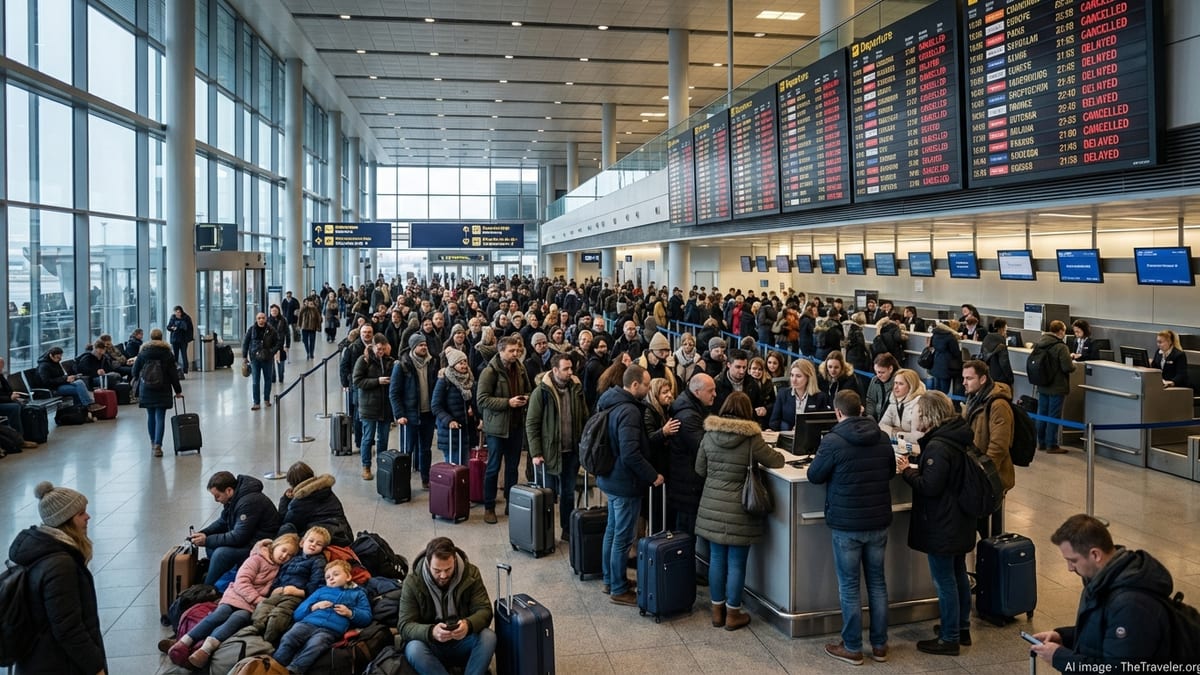
Thousands of air travellers across Europe faced long queues, missed connections and overnight airport stays today as more than 59 flight cancellations and 392 delays hit key hubs in Paris, Milan Malpensa and Oslo, forcing major carriers including Lufthansa, SAS, easyJet, Air France and Finnair to suspend or significantly curtail services across Italy, France and Norway.
Weather System and Industrial Action Combine to Cripple Schedules
The latest wave of disruption stems from a powerful winter weather system sweeping across northern and central Europe, bringing snow, freezing rain and high winds that have repeatedly forced air traffic controllers to slow operations at already crowded hubs. Airports serving Paris and Oslo have reported runway clearance challenges and temporary reductions in take off and landing slots, which quickly cascaded into backlogs of delayed aircraft and crews.
In Italy, a new round of labour unrest has compounded the impact. A nationwide strike involving air traffic and ground handling staff has led airlines to preemptively cancel or consolidate services to and from Milan Malpensa, one of the country’s key international gateways. Carriers are warning that even flights that operate may face extended turnaround times as reduced staffing and weather-related safety checks slow boarding, baggage handling and de-icing.
Airlines say the combination of adverse weather and industrial action has left them with little operational flexibility. With aircraft and crews out of position across the continent, planners have been forced to trim schedules at short notice, prioritising long haul routes and essential connectivity while cutting frequencies on some intra European services.
Major Airlines Suspend and Cut Back Routes
Lufthansa, SAS, easyJet, Air France and Finnair are among the hardest hit carriers, each implementing a mix of outright cancellations, temporary suspensions and reduced frequencies on routes linking Italy, France and Norway. Short haul services between Paris Charles de Gaulle, Milan Malpensa and Oslo Gardermoen have seen targeted suspensions at peak disruption hours, as airlines seek to stabilise the rest of their networks.
Low cost giant easyJet has trimmed flights on popular city pairs into northern Italy, where strike action and weather have overlapped, while also cautioning that rolling delays are likely throughout the day as aircraft cycle through congested airports. Scandinavia focused SAS and Finnair have reported disrupted rotations on services to and from Oslo and other Nordic hubs, prompting selective suspensions and the consolidation of lightly booked flights.
Air France has concentrated cancellations on short haul regional services out of Paris, aiming to protect long haul departures and key European trunk routes. Lufthansa, managing its own weather challenges at German hubs, has pulled some connecting services into Paris and northern Italy in order to maintain minimum staffing and aircraft availability for intercontinental operations.
Passengers Stranded as Knock On Effects Spread
The flight reductions have left terminals crowded from early morning as passengers queued to rebook or seek accommodation. At Paris and Oslo, information desks were quickly overwhelmed, with many travellers turning to airline apps and social media channels for real time updates on flight status and re routing options. Lines at customer service counters stretched through departure halls in both Milan Malpensa’s terminals, where strike disruptions have been most acute.
With many same day alternatives sold out, travellers with non essential itineraries have been urged to postpone trips or accept routings involving additional stops and longer layovers. Families on winter holidays and business travellers alike have reported waits of several hours before securing new itineraries, while some have opted to abandon trips entirely in favour of refunds or travel vouchers.
Rail and road networks around the affected airports have also been strained as passengers scramble for alternative transport. In parts of France and northern Italy, icy conditions and earlier weather related train delays limited overland options, further heightening pressure on airline rebooking systems and airport facilities.
Airlines Activate Rebooking, Refund and Duty of Care Policies
In response to the escalating disruption, the affected carriers have activated their irregular operations playbooks, introducing flexible rebooking windows and waiving change fees for many passengers due to travel during the worst of the disruption. Travellers whose flights are cancelled outright are being offered the choice of re routing at the earliest opportunity or requesting full ticket refunds, subject to each airline’s specific conditions.
Airlines are also reminding passengers of their rights under European air passenger protection rules, including entitlement to meals, refreshments and hotel accommodation in certain circumstances when long delays or cancellations occur. However, compensation payments may depend on whether the underlying cause is deemed extraordinary, such as severe weather, or related to factors within an airline’s control.
Operational teams are prioritising vulnerable passengers, including those with medical needs and unaccompanied minors, for earlier rebooking and closer support. At the same time, carriers are asking travellers who do not need to fly immediately to make changes online, in order to ease the burden on airport staff and call centres.
What Travellers Should Do If Their Flight Is Affected
For passengers with upcoming trips through Paris, Milan Malpensa or Oslo, industry experts recommend checking flight status repeatedly on the day of departure, rather than relying on information received at the time of booking. Schedules are being adjusted in real time, and a flight shown as on time early in the day may be delayed or cancelled later as conditions evolve and aircraft rotation problems mount.
Travellers are encouraged to allow extra time at the airport in case of longer queues at check in, security and boarding, particularly where staff shortages and weather related procedures such as de icing are in effect. Those with tight connections should consider asking airlines to rebook onto earlier feeder services or onto itineraries with longer layovers to reduce the risk of misconnecting.
Airports and carriers alike stress that the situation remains fluid, with further disruption possible as the weather system moves across the continent and labour actions in Italy continue to affect staffing levels. While operations are expected to gradually recover once conditions improve, residual delays and scattered cancellations could persist for several days as airlines work to reposition aircraft and crews and clear the backlog of stranded passengers.