

More news on this day
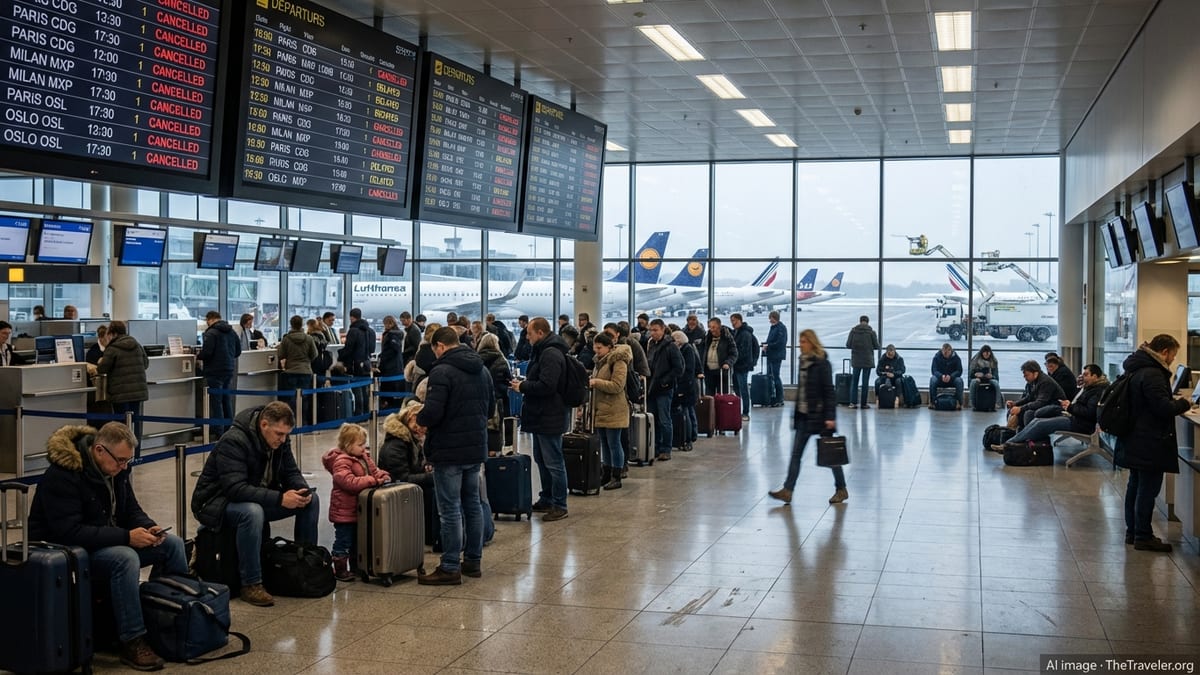
Major European hubs in France, Italy and Norway are facing another day of severe disruption, with more than 59 flight cancellations and 392 delays reported across Paris, Milan Malpensa and Oslo as leading carriers including Lufthansa, SAS, easyJet, Air France and Finnair suspend or sharply cut services in response to winter weather and labour unrest.
Key Hubs Buckle Under Cancellations and Rolling Delays
Operational data from European aviation monitors on Thursday indicates that a fresh wave of disruption has hit Paris Charles de Gaulle, Milan Malpensa and Oslo Gardermoen, compounding a turbulent fortnight for air travel across the continent. At these three airports alone, more than 59 flights were cancelled and close to 400 services delayed within a 24 hour period, as airlines struggled to keep schedules intact amid snow, freezing rain and knock-on congestion from earlier storms.
Paris Charles de Gaulle has borne a significant share of the disruption, with several departures and arrivals scrubbed and more than 200 services running late after earlier systems delays and constrained runway capacity. Milan Malpensa, already under pressure from recent nationwide industrial action in Italy, has reported mounting cancellations and delays as carriers trim frequencies and reposition aircraft. In Oslo, fresh bouts of wintry weather and airspace flow restrictions have left Norway’s main international gateway managing a mix of late-running Nordic and continental European flights.
Across the network, aviation analysts note that the disruption figures underestimate the true scale of the problem for passengers. A single cancellation at a hub such as Paris or Milan can unravel multiple onward connections, leaving travelers stranded far from their intended destinations or forced into lengthy overnight stays.
Major European Airlines Forced to Trim Schedules
Flag carriers and low cost airlines alike have been forced to suspend or consolidate flights serving France, Italy and Norway. Air France has cancelled a string of short-haul rotations into and out of Paris, while also warning of residual delays on transatlantic services as aircraft and crews fall out of position following earlier weather-related disruption in North America and northern Europe.
Lufthansa has scaled back frequencies on select routes linking its German hubs with Paris and Milan, citing a combination of air traffic flow restrictions, crew availability and the persistent risk of de-icing delays. In Scandinavia, SAS has cancelled and retimed multiple departures on its Oslo services, with impacts spreading to Copenhagen and Stockholm as aircraft are rerouted around pockets of bad weather and congestion.
Low cost carriers are also under strain. easyJet has reported dozens of delayed departures across its European network in recent days, including services into Milan and Paris, as the airline grapples with tight turnaround times in challenging weather. Finnair, which relies heavily on Nordic hubs to feed both European and long haul routes, has curtailed some flights and issued broad delay advisories for connections passing through Oslo and other northern gateways.
Storm Systems, Strikes and a Stretched Air Traffic Network
The latest disruption follows a series of strong winter systems that have battered both northern and central Europe, bringing heavy snow, strong winds and poor visibility to key aviation corridors. Earlier in the week, airports from Frankfurt to Stockholm reported hundreds of delays and diversions, while Paris and Oslo each logged multiple cancellations as snow and freezing rain moved through.
In Italy, the impact of adverse weather has been compounded by industrial action among air transport workers. Recent nationwide strikes by crew and ground handling staff have triggered widespread cancellations at airports including Milan Malpensa, with ripple effects spilling over to neighboring hubs as airlines reshuffle fleets and protect core routes. Operational planners say the combination of weather and labour unrest is particularly challenging, since contingency capacity that might normally absorb weather-related delays is instead being used to cover strike-hit schedules.
Europe’s tightly interconnected air traffic network has magnified the effect of every cancellation and long delay. A delayed departure from Oslo can cause a missed connection in Paris, which in turn strands passengers bound for Milan or other Mediterranean destinations. Air traffic control flow measures, imposed to keep congested airspace safe as weather systems move through, are further slowing recovery by spacing out departures and arrivals.
Passengers Face Long Queues, Missed Connections and Hotel Scrambles
For travelers on the ground, the statistics translate into long queues at check in, packed rebooking desks and anxious waits at departure gates. At Paris Charles de Gaulle, passengers reported waits of several hours to be reprotected after missed onward connections, with some being routed via alternative hubs or rebooked to travel a full day later than planned. In Milan, crowding has built up at customer service counters as travelers seek clarity on whether flights will operate during windows affected by strikes or weather holds.
Oslo Gardermoen has also experienced knock-on pressure, with departing passengers facing last minute gate changes and rolling departure time revisions as aircraft arrive late from elsewhere in Europe. For many, last minute cancellations have meant scrambling for hotel rooms near airports already under strain, or trying to rearrange rail and ferry links at short notice.
Travel agents and online booking platforms report a surge in calls from customers seeking alternative routings that avoid the worst affected hubs. However, with wide-reaching disruption across multiple countries, options are limited and often involve circuitous itineraries or long ground transfers between airports and rail hubs.
What Stranded Travelers Can Do Right Now
Consumer advocates are urging passengers caught up in the disruption to act quickly but methodically. Travelers are advised to monitor airline apps and airport departure boards closely, as schedules are being updated frequently throughout the day. Where flights are cancelled, passengers should use digital self-service tools where possible to rebook, as phone lines and airport counters are experiencing heavy demand.
Under European passenger protection rules, many travelers departing from or arriving in the European Union may be entitled to meals, refreshments and accommodation when delays stretch into the night, as well as the option to reroute or receive a refund on unused segments. Eligibility for monetary compensation depends on the cause of the disruption and the amount of notice provided, with severe weather often classified as an extraordinary circumstance but airline-controlled issues, such as certain staffing or operational problems, falling more clearly within compensation rules.
Experts also recommend that travelers document their experience, keeping boarding passes, booking confirmations and receipts for any out-of-pocket expenses such as hotels, meals or surface transport incurred as a direct result of a delay or cancellation. These records can prove vital when making claims with airlines or travel insurance providers once the immediate disruption has passed.