


More news on this day
Severe thunderstorms over southeast England triggered major disruption at London’s Heathrow and Gatwick airports on Saturday, with more than 600 flights delayed, dozens cancelled and delays stretching for hours across Europe’s busiest air corridor.
Get the latest news straight to your inbox!
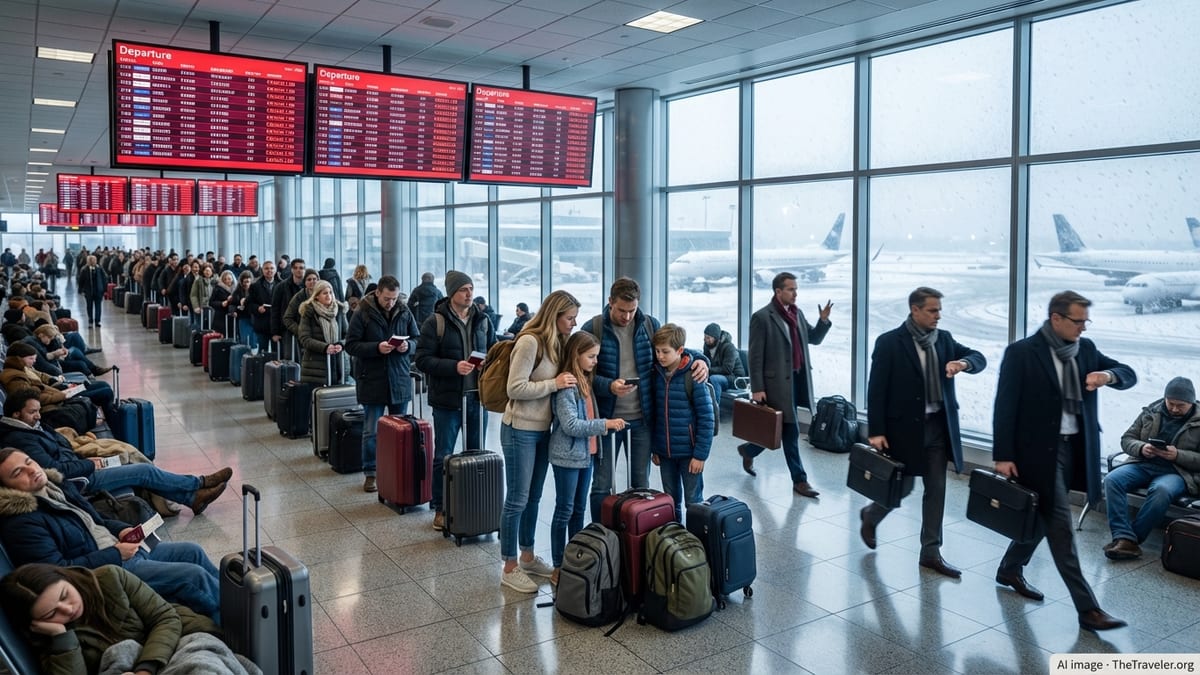
Weather Front Turns Heatwave Into Travel Chaos
The disruption followed an abrupt change in weather on 27 June, when a prolonged heatwave gave way to intense thunderstorms over London and parts of northwestern Europe. Publicly available data from flight tracking platforms showed hundreds of flights at Heathrow and Gatwick pushed back from their scheduled times as storm cells moved across key approach and departure routes.
Tracking services indicated that delays at each airport quickly ran into the hundreds, with Heathrow and Gatwick emerging as the only UK hubs experiencing what Eurocontrol classified as heavy weather related disruption. Some services were held on the ground for several hours as air traffic control reduced the rate of departures and arrivals to maintain safe separation in poor conditions.
Media reports described a pattern familiar from previous severe weather episodes in the region, with aircraft assigned extended holding times, diversions into continental Europe and the diversion of some inbound services to other UK airports where conditions were more stable. While many flights eventually departed, dozens of cancellations were recorded across both airports as schedules became too congested to recover within the day.
More Than 600 Flights Affected at London’s Busiest Hubs
By late afternoon on Saturday, aggregated figures from aviation data services suggested that well over 600 flights in and out of Heathrow and Gatwick had been delayed. Some outlets cited totals that climbed higher as the day progressed and later services were affected by the ripple effects of the initial storm band.
At Heathrow, live dashboards monitored by news organisations showed several hundred delayed movements and a growing list of cancellations as airlines trimmed operations to cope with reduced airspace capacity. Gatwick experienced a similar pattern, with reports noting that an evening departure board still showed extensive knock-on delays hours after the most intense storms had passed.
Passengers reported waits of four to six hours in some cases, with individual services pushed back deep into the evening. Data shared in published coverage highlighted examples such as holiday flights from Gatwick to Mediterranean destinations shifting from late morning to early evening departures, illustrating the scale of the backlog at the height of the disruption.
Air Traffic Restrictions and Operational Strain
Publicly available statements and media summaries indicated that temporary air traffic restrictions were introduced over southeast England as storms intensified, limiting how many aircraft could safely land or take off in a given period. These measures curbed airport throughput and had immediate consequences for tightly timed summer schedules.
Industry analysis noted that Heathrow, already operating close to full capacity on most summer days, is particularly vulnerable when even minor constraints are applied. With spacing between arrivals increased during thunderstorms and some approaches temporarily suspended, holding patterns quickly filled and airlines were forced to delay or cancel rotations.
Gatwick faced similar pressures, with reports pointing to sequences of delays that cascaded through the day as aircraft and crews were left out of position. Some aircraft that ultimately departed late were then unable to complete all their planned sectors, further reducing available capacity for subsequent services and contributing to late night arrivals.
Passengers Face Long Waits and Limited Options
The weather related disruption unfolded at the height of the weekend travel period, affecting holidaymakers and connecting passengers across Europe and beyond. Social media posts and accounts referenced in news coverage described travellers held on grounded aircraft, stuck in departure lounges or diverted to other airports as the storm front passed.
Some passengers reported being seated on aircraft for several hours while awaiting revised departure slots, with crew duty time limits eventually forcing a small number of flights to be cancelled outright. Others described missed onward connections and the need to rearrange hotel stays when late arrivals made original plans impossible.
Travel industry guidance reminds passengers that, while severe weather events are classed as extraordinary circumstances for compensation purposes in many jurisdictions, airlines are still expected to provide basic care such as refreshments, communication support and accommodation in the case of significant overnight disruption. Consumer groups often advise keeping receipts for any essential expenses incurred during such events.
Broader Questions Over Weather Resilience
The scale of the delays at Heathrow and Gatwick has renewed attention on the vulnerability of major hub airports to increasingly volatile weather patterns. Recent planning and sustainability documents for London’s airports have highlighted extreme rainfall and convective storms as growing operational risks, particularly during peak summer travel seasons.
Aviation analysts note that when multiple storm cells sit over southeast England and adjacent European airspace, there are limited alternative routings for flights serving London. In such conditions, even robust contingency plans can be tested, and recovery can take many hours as aircraft, crews and passengers are gradually reallocated.
While Saturday’s disruption is expected to ease as the storm system moves on, schedule data suggests that early departures on subsequent days can still be affected while airlines reposition aircraft and work through backlogs. Travellers with upcoming flights through Heathrow and Gatwick are being advised in public reports to check their flight status regularly, allow extra time at the airport and prepare for potential last minute changes as operations stabilise.