

More news on this day
Travelers across the United States faced widespread disruption after severe weather around Houston’s George Bush Intercontinental Airport led to 70 flight cancellations and 223 delays, rippling through United Airlines and other carriers serving major hubs including Atlanta, Newark, LaGuardia and Orlando.
Get the latest news straight to your inbox!
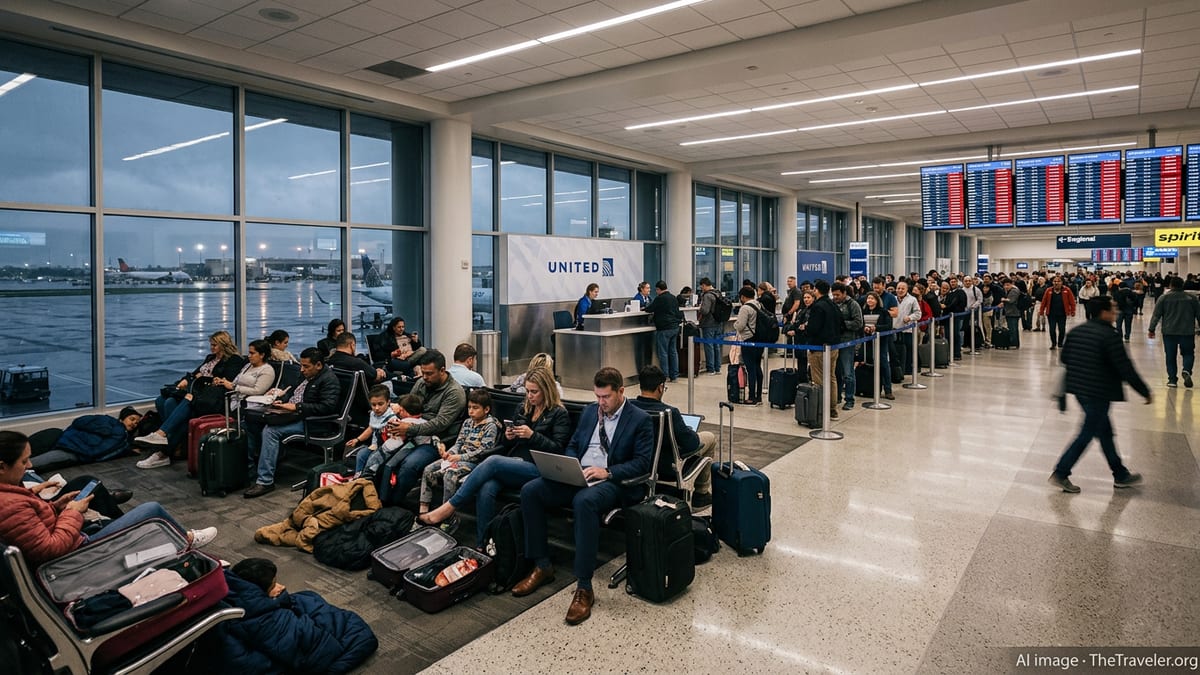
Weather Turbulence Snarls Operations at a Key U.S. Hub
Publicly available flight-tracking data for Tuesday, March 17, 2026, shows that George Bush Intercontinental Airport in Houston experienced dozens of cancellations and hundreds of delays as storms and high winds moved across southeast Texas and the wider region. The figures, indicating roughly 70 cancelled departures and arrivals alongside 223 delayed flights, underline how quickly operations can deteriorate at one of the country’s busiest connecting hubs.
The disruption coincided with an active spell of late-winter weather in the central and eastern United States, with strong lines of thunderstorms repeatedly approaching the Houston area. Operational advisories referenced weather-related flow controls and periods in which departures from Houston were temporarily slowed, contributing to a buildup of aircraft and crews out of position.
While conditions at the airport gradually improved through the day, flight schedules remained strained as airlines worked through backlogs of passengers, aircraft rotations and crew duty restrictions. Even as new weather cells moved out, the earlier disruption continued to affect departures and arrivals throughout the afternoon and evening.
United and Regional Partners Bear the Brunt
United Airlines, which operates a major hub at Bush Intercontinental, absorbed a significant share of the day’s operational strain. As the dominant carrier at Houston, United’s mainline schedule and its United Express regional network, including flights operated by SkyWest Airlines and CommuteAir, were particularly exposed to shifting weather-driven constraints.
Regional flights tend to operate on tight turnarounds and are more sensitive to flow restrictions and ground delays. When a hub experiences multiple rounds of storms and temporary ground stops, regional operations can quickly face rolling delays, diversions and eventual cancellations as aircraft and crews fall out of sequence.
The knock-on effects extended beyond Houston as aircraft scheduled to operate onward segments were delayed leaving Texas. This cascaded into late-arriving flights and missed connections at other United hubs and focus cities, compounding frustration for travelers whose journeys did not begin or end in Houston but still depended on the airport as a connecting point.
Low-Cost Carriers and Other Airlines Also Disrupted
The travel disruption was not limited to United and its regional partners. Flight-status data showed Spirit Airlines among the carriers affected at Houston, with weather and congestion contributing to late departures and schedule changes. Other domestic and international airlines serving Bush Intercontinental also faced intermittent delays as arrival and departure rates were adjusted to match conditions.
At times when storms forced traffic management initiatives in the Houston area, inbound flights from other parts of the country were held on the ground, rerouted or forced to wait for available arrival slots. This led to a scattered pattern of delays for flights that, on paper, were operating from airports with clear skies but remained tied to conditions at their Houston destination.
For airlines with smaller footprints at Bush Intercontinental, even a modest number of disrupted flights can significantly affect daily schedules. Single cancellations can leave limited rebooking options, especially on high-demand routes during a busy travel period, amplifying the experience of disruption for passengers.
Ripple Effects Reach Atlanta, Newark, LaGuardia and Orlando
Because Houston is tightly integrated into nationwide route networks, the day’s operational problems quickly spread to other major airports. According to national delay boards and airline status pages, flights touching Houston created secondary delays at key hubs such as Atlanta, Newark Liberty, New York LaGuardia and Orlando, as well as at several smaller airports.
In practical terms, this meant that a weather system centered on Texas generated late departures in distant cities when those aircraft were scheduled to operate to or from Bush Intercontinental. Passengers waiting in Atlanta or Orlando for flights with Houston connections encountered rolling delay estimates as airlines adjusted to changing arrival times and crew availability.
At northeastern hubs including Newark and LaGuardia, tight runway capacity and dense schedules can make even minor timing disruptions more visible. Late-arriving aircraft from Houston compressed turnaround windows, contributing to gate congestion and further schedule adjustments across the afternoon and evening peaks.
Passengers Face Missed Connections and Overnight Stays
The combination of 70 cancellations and more than 200 delays translated into significant inconvenience for travelers. Many itineraries routed through Houston rely on carefully timed connections, and substantial disruptions in one direction can quickly lead to missed onward flights, especially for those connecting to smaller markets with limited daily service.
As schedules unraveled, some travelers were rebooked on later flights the same day, while others faced overnight stays as remaining seats on alternative routes filled up. Publicly available information on airline service commitments indicates that carriers may offer meal vouchers or hotel accommodations in certain circumstances, although coverage often depends on whether disruptions are categorized as within the airline’s control or driven primarily by severe weather.
For passengers planning trips in the coming days, the episode serves as a reminder of how vulnerable complex hub-and-spoke networks are to fast-changing weather. Travel experts often recommend allowing longer connection times through major hubs during active storm periods, monitoring flight status frequently, and confirming that downstream connections are operating before departing for the airport.
As weather systems move out of the region, operations at Bush Intercontinental are expected to steadily normalize, but residual delays and equipment imbalances may linger temporarily. Travelers with upcoming itineraries touching Houston, Atlanta, Newark, LaGuardia, Orlando and other connected airports are being advised, through public airline and airport channels, to check their flight status regularly on the day of travel.