

More news on this day
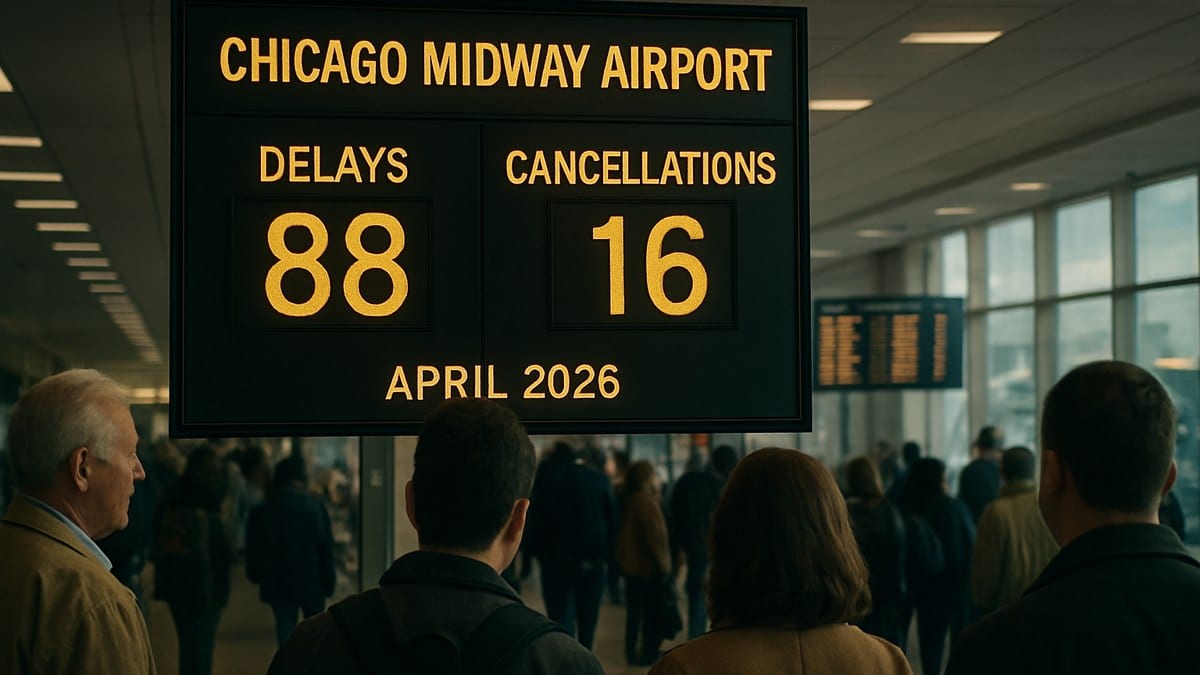
Spring weather systems sweeping across the Midwest and a series of air-traffic constraints have combined to disrupt operations at Chicago Midway International Airport in early April 2026, with publicly available tracking data indicating at least 88 delays and 16 cancellations over the opening days of the month.
Get the latest news straight to your inbox!
Weather Turbulence Hits a Busy Short-Haul Hub
Chicago Midway, a key base for domestic point-to-point services, entered April with unsettled conditions in the air and on the ground. Regional storm cells brought gusty winds, heavy rain and periods of low visibility to the Chicago area, prompting ground stops and slowing arrivals and departures at both of the city’s major airports. The knock-on effect at Midway was a higher-than-normal proportion of delayed departures and arrivals as airlines adjusted schedules to match rapidly changing operational limits.
Recent coverage of the Chicago region’s weather pattern outlines a sequence of storm systems that moved through northern Illinois in the days leading up to and including the first week of April, producing strong winds and localized flooding in some communities. While the most severe impacts were reported closer to Chicago O’Hare, Midway’s more compact layout and dense schedule meant that even relatively short disruptions could quickly congest gates and taxiways, leaving aircraft and crews out of position.
Flight-tracking summaries for early April show that Midway’s delays were typically measured in tens of minutes rather than hours, but the cumulative total of 88 delayed flights represents a significant proportion of the airport’s daily schedule. The 16 cancellations recorded over the same period are modest compared to some of the region’s larger storm events in recent years, yet they still translated into missed connections, overnight stays and rebookings for passengers on some of Midway’s most heavily used domestic routes.
Reports describing wider disruption across the national network in late March and early April further underscore how quickly weather-related bottlenecks can ripple through an interconnected system. When constraints tighten at major hubs and busy regional airports such as Midway, delays in one city can propagate throughout the day across multiple time zones.
How 88 Delays and 16 Cancellations Rippled Through Travelers’ Plans
The 88 recorded delays at Midway in the early April period affected a mix of morning departures, midday turns and evening bank flights. Even when individual delays were relatively short, the pattern placed additional strain on passengers making same-day connections, particularly those traveling onward to smaller cities that have fewer daily frequencies. For some travelers, a 40-minute late departure meant a tight connection; for others, it meant a missed last flight of the day.
Publicly available accounts from travelers in the Chicago area during the first days of April describe a familiar pattern: rolling departure estimates, extended waits at gates and periods of airborne holding while storms passed or arrival rates were temporarily reduced. While O’Hare recorded the bulk of the region’s cancellations during the strongest storm episodes, Midway passengers still reported diversions, re-timed flights and schedule changes that were finalized only a few hours before departure.
Cancellations at Midway, though fewer in number than delays, tended to have outsized impact where routes were heavily concentrated with a single carrier or limited to one or two daily flights. When one of those services was withdrawn from the schedule, travelers often faced rebooking later in the day through a different connecting city, or in some cases an overnight stay with travel continuing the following morning.
Because Midway serves as an important origin and destination gateway rather than a traditional connecting hub, the local effect was especially visible at security checkpoints and curbside pick-up areas as schedules were adjusted. Periods of heavier congestion alternated with lulls when newly delayed departures left more space in the terminal, reflecting the stop-and-start rhythm typical of weather-affected operations.
Operational Pressures Behind the Numbers
The early April disruption at Midway highlights the operational tightrope airlines and airport managers walk during the busy spring travel period. When thunderstorms or high winds cut the rate at which air-traffic controllers can safely accept arrivals or release departures, aircraft often wait longer at gates or in departure queues. That in turn delays subsequent rotations, as the same aircraft and crew may be scheduled for multiple legs over the course of a single day.
Industry analyses of spring 2026 flight performance across the United States point to similar patterns at other high-frequency airports, where carriers with dense point-to-point networks have seen larger clusters of short delays. At Midway, which is dominated by a single low-cost carrier and a handful of additional operators, a disruption to one morning bank can reverberate into late evening as crews reach duty-time limits and spare aircraft become scarce.
Recent commentary on national performance also underscores how vulnerable tightly wound schedules are to early-day shocks. Once a series of delays begins, airlines face increasingly difficult trade-offs: holding a flight until a connecting passenger arrives, reassigning aircraft between routes, or canceling one leg outright so that another can depart close to on time. At Midway, where aircraft often turn quickly between short- and medium-haul segments, those decisions can determine whether delays remain manageable or escalate into broader disruption.
Operational data from earlier weather events this spring show that Midway has, at times, fared better than larger hub airports facing the same storms, with fewer total cancellations but a higher proportion of shorter delays. The 88 delays and 16 cancellations logged in the first days of April fit within that pattern, suggesting that while the airport remains exposed to weather-related volatility, certain mitigation measures appear to be limiting the number of outright flight withdrawals.
Passenger Experience and Preparation for Spring Travel
For travelers, the wave of delays and cancellations at Midway in early April offers another reminder of the importance of preparation during storm-prone periods. Travel advisories circulating nationally this spring have emphasized the value of monitoring airline apps and flight-tracking tools closely in the 24 hours before departure, as schedule adjustments can accelerate when weather forecasts change.
Public guidance from travel analysts in recent weeks has also encouraged passengers to build extra time into itineraries, particularly when connecting to international flights or time-sensitive events. For Midway passengers, selecting earlier departures in the day and avoiding tight connections at downstream hubs can reduce the risk that an afternoon thunderstorm or regional traffic program will derail an entire trip.
Some consumer advocates have pointed to spring 2026 as another test of how airlines communicate with passengers during fast-moving disruption, including how promptly rebooking options and information about overnight accommodations are shared. While the majority of Midway’s affected flights in early April appear to have been delayed rather than canceled, many travelers still faced long days in terminals and shifting expectations about when they would reach their destinations.
As the peak summer travel season approaches, transportation planners and airline schedulers are watching these early spring episodes closely. The pattern at Chicago Midway, with dozens of delays and a smaller but still notable set of cancellations in response to storm activity, reflects the broader challenge of maintaining reliability in an era of increasingly volatile weather while keeping high-demand routes running as close to schedule as possible.
What the April Disruption Signals for the Weeks Ahead
The 88 delays and 16 cancellations recorded at Midway at the start of April may ultimately represent only a small portion of the airport’s monthly traffic, but the episode offers insight into how the rest of the season might unfold. If spring storm systems continue to track across the Midwest, Midway’s operators and airline partners will likely rely on a similar mix of ground stops, speed reductions and schedule adjustments to balance safety with throughput.
Observers of national air traffic trends note that, across the network, early-season disruptions can have a cumulative effect, straining resources and narrowing the margin for error as demand builds toward summer. At a high-utilization airport like Midway, maintaining resilience may depend on how effectively carriers can add slack to schedules, position spare aircraft and manage crew rotations in anticipation of forecast weather.
For now, publicly available information suggests that Midway is operating within a pattern of intermittent but manageable stress, with storm-driven slowdowns producing spikes in delays that most airlines work through within a day or two. The early April statistics, while uncomfortable for those directly affected, remain far below the levels seen during major nationwide weather events that have temporarily paralyzed multiple hubs at once.
Passengers planning to use Chicago Midway in the coming weeks are likely to find a familiar mix of routine operations punctuated by weather-related interruptions. Keeping a close eye on forecasts, maintaining flexible plans where possible and understanding that even short disruptions can cascade into dozens of delays may help travelers navigate what is shaping up to be another unsettled spring in the Midwest skies.