

More news on this day
When a pre-dawn domestic flight out of Accra left travellers stranded in a dimly lit terminal earlier this year, frustration quickly spilled from the departure hall to social media, reigniting a national conversation about how well Ghana’s aviation system protects passengers when things go wrong.
Get the latest news straight to your inbox!
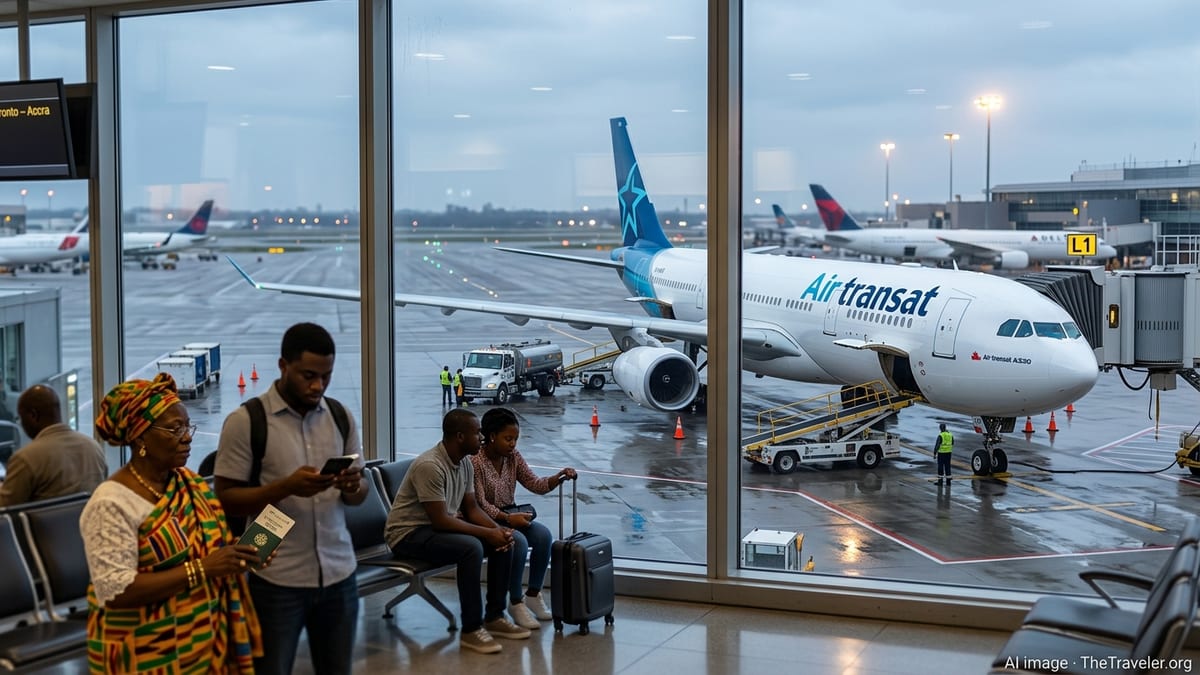
A Pre-Dawn Disruption That Captured Public Attention
Reports from Accra describe passengers gathering before sunrise at Kotoka International Airport for an early domestic departure, only to confront repeated delays and sparse information as the night gave way to daylight. Some travellers recounted missed connections and lost working days, while others highlighted the absence of food vouchers, hotel accommodation or clear rebooking options as the hours dragged on.
Although operational setbacks and weather issues are not unusual in aviation, the timing and communication failures around the incident struck a nerve. Early-morning flights are often chosen by business travellers and families seeking to maximise their day at their destination, so disruption at that hour tends to have a cascading impact on meetings, onward journeys and personal commitments.
The episode echoed wider disruption on Ghana’s domestic network in recent months. Coverage of flight cancellations and delays affecting multiple routes, particularly on services linking Accra to Kumasi, Tamale and Takoradi, has drawn attention to how quickly travellers can be left in limbo when schedules unravel and contingency planning appears thin.
Ghana’s leading airports and carriers have periodically issued apologies after operational “hitches,” ground handling challenges or technical issues. These statements often stress safety and express regret, yet many affected passengers continue to raise questions about what concrete assistance and compensation they are actually entitled to receive.
Growing Scrutiny Of Ghana’s Domestic Aviation Reliability
The pre-dawn stranding is unfolding against a backdrop of pressure on Ghana’s domestic aviation market. Publicly available data and local business coverage indicate that airlines have wrestled with high fuel costs, currency volatility and maintenance expenses, while airports have confronted infrastructure and equipment constraints, particularly at busy hubs such as Kotoka.
News reporting over the past year has highlighted disrupted schedules and stranded travellers on several domestic routes. One major local operator has acknowledged network-wide challenges and cancellations, underscoring how a limited number of aircraft serving multiple cities can quickly trigger knock-on effects when a single aircraft is grounded.
Airports, for their part, have faced criticism ranging from technical incidents to concerns about airside capacity and staffing. Commentaries in Ghanaian media have pointed to the strain that rising passenger numbers place on facilities, even as authorities promote the country as a growing aviation and tourism gateway for West Africa.
Analysts note that while Ghana has invested heavily in infrastructure, including the expansion of Kotoka’s international terminal, bottlenecks can still emerge in domestic operations. Early-morning and late-evening departures, when support services are stretched and rapid turnarounds are essential, can be especially vulnerable to small glitches that escalate into major delays.
Legal Framework: What Passenger Rights Currently Exist
The frustrations voiced after the dawn disruption are increasingly being framed in legal as well as emotional terms. Ghana has moved to update its aviation legislation, drawing on international conventions that set minimum standards for compensation and assistance when flights are delayed, cancelled or when boarding is denied.
Legal analyses of the sector point to the Ghana Civil Aviation Act of 2024 and related regulations as key pillars of consumer protection. These measures incorporate elements of the Montreal Convention, which governs liability for delays, injuries and baggage issues on international journeys, and they extend similar protections to certain domestic flights operating within Ghana.
According to publicly available commentary from Ghanaian legal practitioners, passengers may in some circumstances be entitled to compensation for long delays or cancellations, as well as reimbursement for reasonably incurred expenses, depending on the cause of the disruption and the nature of the ticket purchased. There are also provisions for claims related to damaged or lost baggage, and for assistance in cases involving serious incidents or accidents.
However, these frameworks are complex and not always widely understood. Observers say that many travellers are unaware of their rights or the procedures for lodging complaints with airlines or the Ghana Civil Aviation Authority. Others face practical hurdles in gathering documentation, meeting deadlines or pursuing claims when the sums involved are relatively modest compared with the cost and effort of legal action.
Communication Gaps And The Passenger Experience
For many of those stranded at dawn, the most immediate grievance was not simply the delay itself but the lack of timely, transparent updates. Accounts shared on social platforms referenced sparse announcements, contradictory information about new departure times and limited visible airline staff to answer questions as queues lengthened.
Industry commentators in Ghana have long argued that clear communication is central to modern passenger rights, even when airlines cannot avoid disruptions caused by weather or safety concerns. In practice, this can mean early notification of schedule changes, automatic rebooking where possible, and rapid distribution of written information outlining available options for refunds, vouchers or alternative transport.
Some regulatory guidance in other jurisdictions is being cited in local debates as a benchmark, such as requirements for airlines to share passenger rights information alongside tickets or booking confirmations. Advocates in Ghana suggest that similar measures, adapted to local law, could help close the information gap and reduce confusion at moments of stress.
The experience at Accra’s terminal also illustrates how airport facilities and ground services shape perceptions of fairness. When travellers wait through the early hours with limited access to refreshments, comfortable seating or quiet areas to rest, dissatisfaction with both airlines and airport operators can intensify, regardless of where legal liability ultimately lies.
Calls For Stronger Enforcement And Public Awareness
The incident has added momentum to calls from consumer advocates, legal experts and frequent travellers for more robust enforcement of existing rules and better public education on passenger entitlements. Commentary in Ghanaian business and legal outlets stresses that regulations are only as effective as their implementation, and that consistent oversight is needed to deter poor practices.
Some analysts argue that the Ghana Civil Aviation Authority could play a more visible role by publishing clearer guidance in simple language, maintaining accessible complaint channels and publishing anonymised data on delay-related grievances and resolutions. Others have suggested that airlines should adopt customer charters that go beyond minimum legal requirements, offering standardised care packages when passengers are stranded for several hours.
There is also growing interest in regional harmonisation. As more West African travellers connect through multiple countries on a single journey, differences in national rules and enforcement can make it difficult to know which standards apply. Observers note that aligning Ghana’s framework with broader African or international best practice could support both consumer confidence and the country’s ambition to position Accra as a competitive hub.
For the passengers who watched the sun rise over Kotoka’s apron while waiting for an uncertain departure, such policy discussions may feel abstract. Yet their experience has become part of a much larger story about reliability, accountability and dignity in air travel, raising the prospect that future dawn departures in Ghana could look very different from the ones that left so many travellers stranded.