

More news on this day
Hundreds of travelers left stranded at daybreak at Accra International Airport in early 2026 are focusing fresh attention on Ghana’s fragile consumer protections at a time when West Africa’s skies are supposed to be getting fairer and cheaper for passengers.
Get the latest news straight to your inbox!
Early-Morning Chaos Meets Outdated Rules
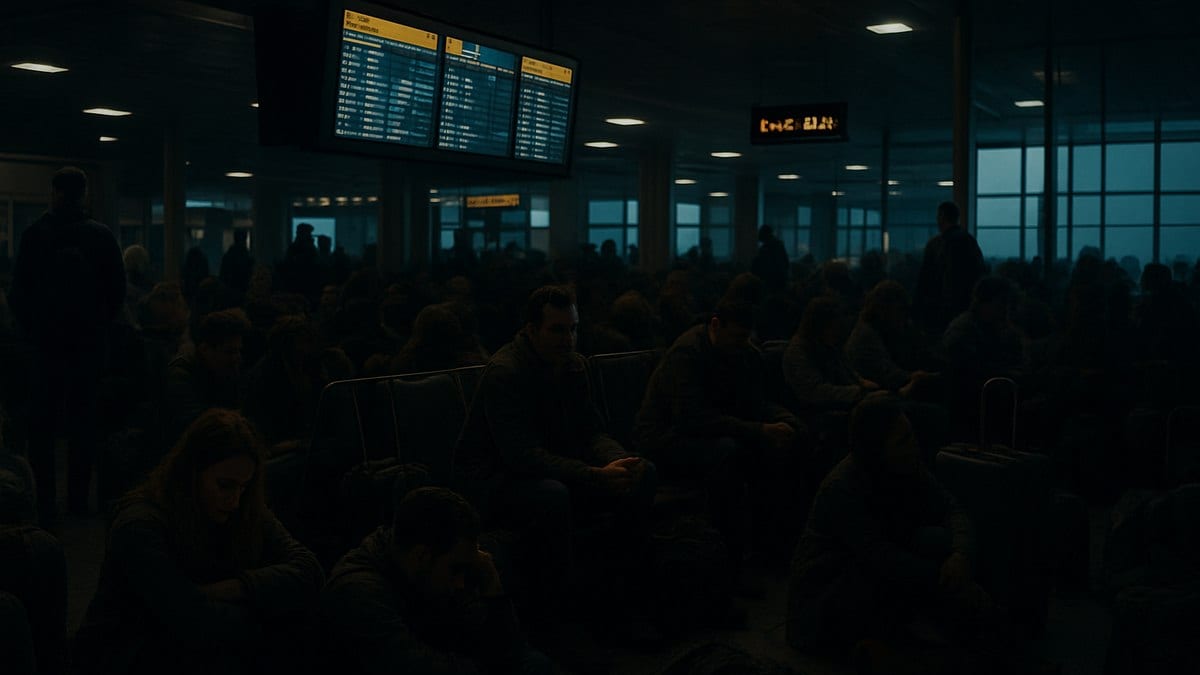
Reports from early 2026 describe long lines, confused announcements and passengers stuck for hours in departure halls at Accra International Airport after a series of delayed and rescheduled regional flights. Many travelers described difficulty obtaining clear information about their options or accessing basic assistance such as refreshments and rebooking support, underscoring how operational disruptions can quickly cascade into a consumer protection gap.
The disruption comes as the airport, which handled a record 3.62 million passengers in 2025, continues to rebuild traffic and expand its role as a regional hub. The sharp growth in passenger volumes has put additional pressure on infrastructure, staffing and communication systems, raising the stakes when things go wrong.
Available regulatory documents show that Ghana has long had broad consumer-protection provisions on paper, including economic directives that reference passenger rights in cases of delays and cancellations. Yet the experience of stranded passengers suggests that these frameworks are unevenly understood and inconsistently applied at the terminal level, particularly in the fraught period around dawn departures when multiple regional flights are scheduled to leave in a short window.
Draft Directives and Gaps in Enforcement
Publicly available information from the Ghana Civil Aviation Authority indicates that draft Passenger Rights and Consumer Protection Directives are under consideration, signalling an effort to align local rules more closely with global norms. These draft measures seek to clarify when airlines must provide care, rebooking or refunds, and how complaints should be handled.
However, the existence of draft directives has not yet translated into a clear, widely recognised rulebook for travelers. Passengers affected by the latest early-morning disruption report that frontline staff often appeared uncertain about what assistance could be offered or whether compensation might apply, leaving many reliant on informal advice rather than transparent procedures.
Advocacy groups and legal analysts across Africa frequently point to the European Union’s Flight Compensation Regulation as a benchmark, noting its defined thresholds for care and monetary compensation in cases of long delays or cancellations. By contrast, Ghana’s current framework remains a blend of older national legislation, economic directives and evolving draft guidance, which can make it difficult for travelers to understand precisely what they are entitled to when a flight grinds to a halt before sunrise.
Regional Reform Meets Local Reality
The timing of Ghana’s latest airport disruption coincides with a sweeping effort by the Economic Community of West African States to reset the economics of regional air travel. ECOWAS has endorsed reforms to abolish certain taxes on air transport and cut passenger and security charges by 25 percent from January 2026, with the goal of making flying within West Africa more affordable and boosting connectivity.
Alongside price-focused measures, ECOWAS has also approved higher minimum compensation levels for passengers affected by flight cancellations and severe delays. The regional bloc has framed these changes as part of a broader push to standardise passenger treatment and give travelers clearer avenues for redress when trips are disrupted.
Yet recent commentary from industry bodies suggests that implementation across member states has been uneven. Airline associations have publicly requested more clarity from ECOWAS on how fee cuts and compensation schemes should work in practice, warning that uncertainty complicates pricing decisions and route planning. For travelers stranded in Ghana at dawn, the gap between regional commitments and local enforcement is particularly visible, as airlines and regulators navigate overlapping obligations.
Safety, Capacity and Growing Demand
The strain on Ghana’s main gateway is not limited to customer-service shortcomings. Previous investigative reporting on Kotoka’s operations, before the airport was rebranded, highlighted concerns about airside resources, including shortages of critical ground vehicles and staffing pressures. These structural issues increase the risk that relatively minor operational glitches can escalate into wider disruption for passengers.
At the same time, demand for seats into and out of Accra continues to grow. New entrants on key regional routes from Nigeria and elsewhere in West Africa have been welcomed as a sign of stronger connectivity, but they also feed congestion concerns at peak times. With more carriers vying for early-morning slots to maximise connections, the system becomes less forgiving when a single aircraft rotation is delayed.
Observers note that other African markets have recently faced their own high-profile crises, from large-scale scheduling breakdowns to weather-related shut-downs that tested national passenger-rights regimes. These episodes have prompted regulators in some countries to tighten enforcement of care obligations, while airlines have invested in better disruption-management systems. The events in Ghana suggest that similar adjustments may now be needed in Accra to keep pace with regional peers.
Lessons for Travelers and Policy Makers
The experience of passengers stranded at dawn in Ghana illustrates how even modest regulatory ambiguity can translate into significant real-world stress. When information about rights is not prominently displayed, and when staff are unsure about what they can authorise, travelers find themselves reliant on ad hoc solutions, from purchasing walk-up tickets on rival flights to arranging unexpected overnight stays at their own expense.
Consumer advocates argue that clearer rules, consistently enforced, can reduce confusion for both airlines and passengers. That could include mandatory timelines for communication during disruptions, standardised care obligations by length of delay, and simplified complaint channels, backed by a regulator with the capacity to track patterns and impose penalties where necessary.
For ECOWAS, the events in Ghana serve as a test of whether regional ambitions will meaningfully reshape the passenger experience on the ground. As airport charges fall and new carriers launch services, expectations among travelers are rising. The next step, many analysts suggest, is to ensure that being stranded at dawn in a key hub like Accra becomes the exception rather than a recurring feature of flying in West Africa.