

More news on this day
Scenes of stranded passengers sleeping on terminal floors in Ghana are drawing renewed attention to how weak and uneven passenger protections across Africa leave travelers exposed when flights go wrong.
Get the latest news straight to your inbox!
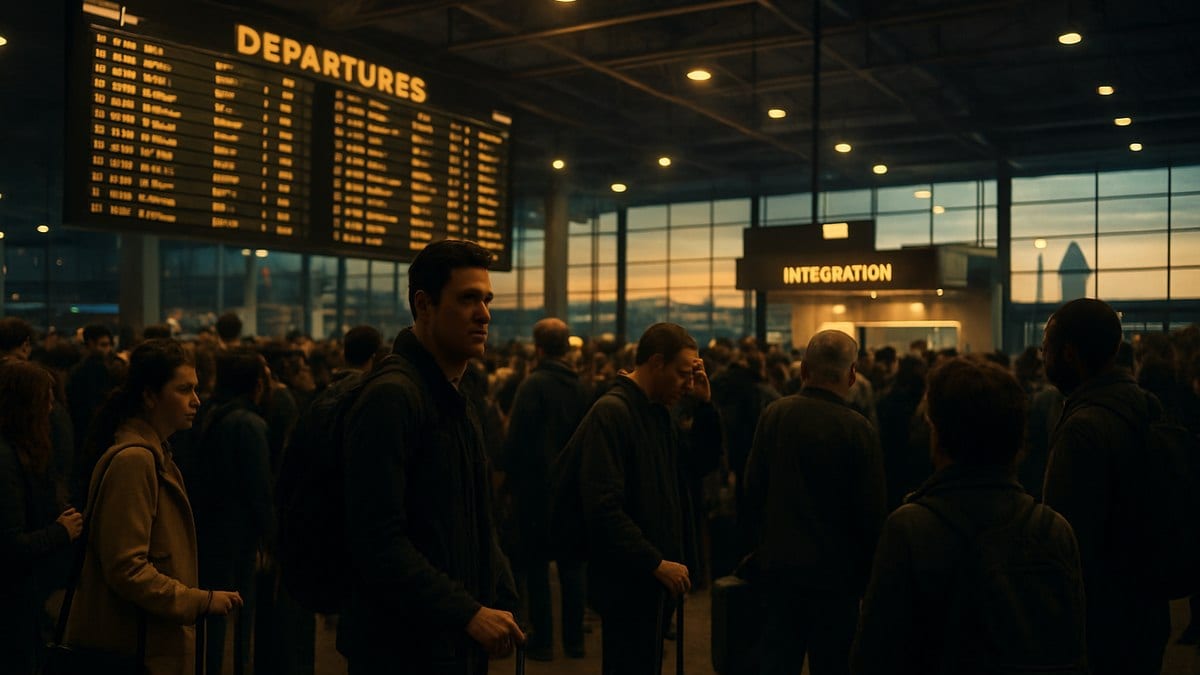
Stranded Dawn at Kotoka Highlights a Familiar Pattern
Recent disruption involving stranded passengers at Ghana’s Kotoka International Airport has become a vivid illustration of how fragile the continent’s passenger protections remain. Travelers described being left with limited information, uncertain rebooking options and out-of-pocket expenses for hotels and meals while they waited for solutions that were slow to materialize. Reports indicate that some domestic and regional passengers were offered little more than the choice between a refund or travel on a later date, with no structured compensation for the wider impact on their plans.
Publicly available information on airline policies in Ghana shows that domestic itineraries are typically subject to capped compensation, often emphasizing refunds rather than additional financial redress for delays or cancellations. At the same time, passengers in Europe facing similar disruptions on eligible flights routinely receive fixed-sum payments under regulations such as EU261, in addition to care such as meals and accommodation. The contrast is fostering frustration among Africa’s growing middle class, many of whom are increasingly familiar with stricter regimes abroad.
Coverage in Ghanaian media in the past two years has documented multiple instances of passengers left in limbo after abrupt cancellations or operational decisions. In one reported case, travelers on a domestic flight arrived at their destination to discover that their baggage had been left behind to accommodate extra fuel, leaving them effectively stranded without belongings. Such episodes are feeding a perception that passenger welfare is secondary to operational convenience when disruptions occur.
Consumer advocates in West Africa have also pointed to practices around lost or delayed baggage as emblematic of broader gaps. Commentary from regional consumer groups describes how passengers at Kotoka are often required to make repeated trips to the airport to trace missing bags, rather than benefiting from proactive delivery to their address at the airline’s expense, a service that is considered standard in many other markets.
Patchwork Rules Across Africa Create Uneven Protections
A key factor behind the recurring scenes of stranded passengers is Africa’s patchwork of passenger rights regimes. While the European Union and some other regions apply a single framework to most commercial flights, African travelers encounter a complex mix of national laws, regional agreements and individual airline policies, many of which are poorly understood by the public.
In West Africa, the Economic Community of West African States has long pursued a supplementary act aimed at harmonizing compensation rules for denied boarding, cancellations and long delays. More recent communiqués indicate that regional leaders have endorsed higher compensation rates for affected passengers, signaling political recognition that existing protections are inadequate. However, implementation across member states has been slow and uneven, and travelers often lack clear information on what these regional rules mean in practice when a flight is disrupted.
Elsewhere on the continent, national regimes are evolving at different speeds. Nigeria has updated its civil aviation framework in recent years, spelling out more detailed rights and liabilities for passengers and airlines. South Africa and a handful of other markets are also moving toward more structured obligations around rebooking, care and compensation. Yet large parts of the continent still rely on general contract law, broad civil aviation statutes or airline conditions of carriage, which tend to limit liability and use discretionary language around support.
Industry analyses prepared for African aviation associations highlight that this regulatory fragmentation complicates cross-border operations and undermines traveler confidence. Airlines must navigate differing obligations from one jurisdiction to the next, while passengers struggle to know whether they are entitled to meals, accommodation or cash compensation when they miss connections or face overnight delays.
Ghana’s Regulatory Framework Under Pressure
In Ghana, the civil aviation regulator issues economic directives and oversees domestic standards, but the scope and enforcement of passenger-focused rules remain under scrutiny. Economic directives make reference to compensation caps for purely domestic itineraries, with limits expressed in US dollar terms that may not reflect the full cost of missed business commitments or onward travel. Publicly available carriage conditions from local carriers typically mirror these ceilings and frame refunds as the primary remedy.
Local coverage has also raised questions about how consistently airlines communicate with affected travelers during disruptions. Cases in which passengers reported learning of cancellations only after hours at the terminal, or discovered that critical information was relayed through sporadic announcements rather than direct notifications, have fueled calls for clearer obligations around timely communication. Consumer organizations argue that even where financial compensation is limited, reliable updates and transparent options can significantly reduce the hardship of being stranded.
Jurisdictional complexity adds another layer. Many international flights serving Accra are operated by foreign carriers governed by their home regimes or broader international frameworks. While this can benefit passengers flying on routes covered by stronger protections, it also creates situations in which travelers on similar itineraries receive very different treatment depending on the operating airline and the origin of the ticket. Analysts note that this undermines perceptions of fairness and makes it difficult for Ghanaian authorities to present a coherent passenger rights narrative.
The recent stranded-passenger incidents have therefore intensified debate around whether Ghana should move toward a more explicit passenger charter, aligning more closely with regional initiatives and global best practice. Observers say that such a move would help clarify responsibilities among airlines, ground handlers and regulators when disruptions leave large numbers of people stuck at the airport.
Continental Ambitions Meet Passenger Experience Reality
The recurring scenes of stranded travelers in Ghana come at a time when African aviation is positioning itself for rapid growth. Continental initiatives linked to the Single African Air Transport Market and long-term traffic forecasts produced by international bodies project rising demand for intra-African connectivity. Airlines and policymakers frequently point to aviation’s role in unlocking tourism, trade and investment.
Yet the day-to-day experience described by many passengers paints a more complicated picture. Data compiled by flight disruption tracking services show that African hubs have seen waves of cancellations and delays over the past year, affecting routes across North, West and East Africa. While some of these disruptions stem from weather or air traffic control constraints, passenger rights organizations emphasize that the impact on travelers often hinges less on the cause and more on how airlines respond once the schedule unravels.
Comparisons with EU261 and similar regimes illustrate this gap. In Europe, passengers on eligible flights delayed beyond certain thresholds are entitled to fixed compensation in addition to care, regardless of ticket class. In much of Africa, disruption response continues to be shaped by discretionary goodwill policies and negotiated gestures such as travel vouchers or partial refunds. The absence of clear, enforceable minimum standards leaves passengers with limited leverage, especially when flights originate and end within the continent.
Aviation policy specialists warn that this disconnect between growth ambitions and passenger experience could carry long-term costs. If travelers come to expect that a missed connection may leave them stranded overnight without guaranteed support, they may opt for indirect routings through non-African hubs or favor foreign carriers perceived as more reliable. That, in turn, could divert revenue away from African airlines and slow the development of competitive regional networks.
Calls for Stronger Enforcement and Transparent Remedies
In the wake of Ghana’s latest stranded-passenger episodes, advocacy groups, legal commentators and travel analysts are renewing calls for a more coherent framework of passenger protections across Africa. Proposals circulating in policy circles range from adopting a continent-wide regulation modeled loosely on EU261 to strengthening regional instruments under bodies such as ECOWAS and the African Civil Aviation Commission.
Some experts argue that Africa does not necessarily need to replicate the exact compensation levels found in Europe, but instead focus on enforceable minimums that prioritize immediate care, rerouting and clear timelines for refunds. Emphasis is also being placed on transparent communication obligations, including requirements for airlines to notify passengers of significant changes within a set time and to publish concise summaries of rights at booking and check in.
Legal practitioners point to emerging case law in countries such as Nigeria, where courts have begun to scrutinize abrupt cancellations and extended delays more closely, occasionally awarding damages beyond simple ticket refunds. Observers in Ghana and other markets see this as a potential signal that judicial systems could play a larger role in nudging airlines toward higher standards, even before comprehensive new regulations come into force.
For now, however, the burden falls largely on individual travelers to understand a complex web of airline policies, regional directives and national laws. As dawn breaks on yet another group of stranded passengers at Kotoka or other African airports, the gap between stated ambitions for a world class aviation sector and the lived reality of disrupted journeys remains stark. Until clearer rights and stronger enforcement mechanisms are in place, Africa’s aviation boom risks continuing to unfold on the backs of its most vulnerable passengers.