


More news on this day
Passengers connecting through Warsaw to Scandinavia and Finland have faced cancellations, missed connections and lengthy delays in recent days, as a mix of regional weather disruption and wider network strain has unsettled flights linking the Polish capital with major Nordic hubs.
Get the latest news straight to your inbox!
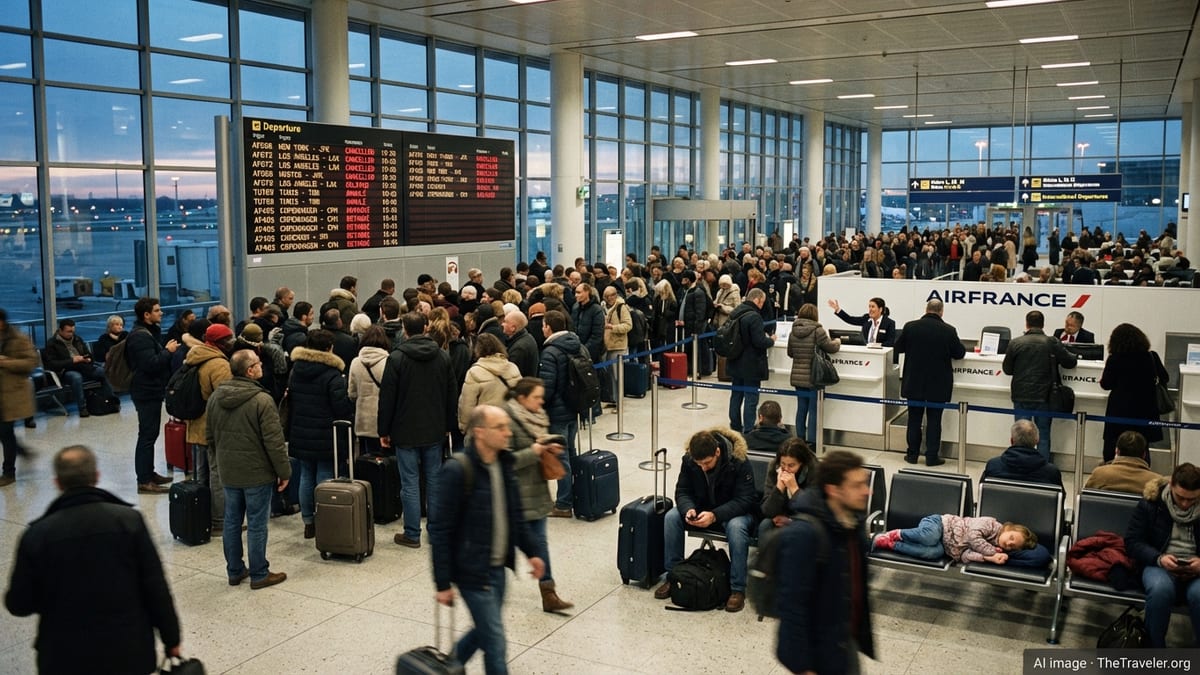
Disruptions Hit Key Routes Between Warsaw and Scandinavia
Traffic data and passenger reports indicate that flights between Warsaw Chopin Airport and major Nordic hubs such as Copenhagen, Stockholm, Oslo and Helsinki have been affected by a combination of regional thunderstorms, congestion elsewhere in Europe and knock-on delays. While Warsaw remains operational, cancellations and late departures have created pockets of stranded travelers unable to complete onward journeys to Scandinavia and Finland.
Industry analysis highlights Warsaw’s role as a growing transfer point for travelers heading from Central and Eastern Europe to Nordic capitals. When flights falter on these city pairs, passengers often lose carefully timed connections, leaving them to queue for rebooking or seek overnight accommodation at their own expense. Recent days have seen such scenarios play out more frequently as schedules across the continent come under pressure.
Publicly available flight monitoring data shows that services from Warsaw to Stockholm and Copenhagen have experienced schedule changes and delays, reflecting broader instability across European airspace. Even when flights eventually depart, late arrivals in the Nordic hubs can leave passengers unable to catch regional connections onward to secondary cities in Sweden, Norway, Denmark or Finland.
Travel rights platforms report a spike in interest from passengers transiting Warsaw and Nordic airports, suggesting that many are exploring options for compensation or reimbursement after missed holidays, business meetings and family visits. For some, the immediate concern has been simply finding a seat out of Warsaw as limited spare capacity constrains rebooking options on popular routes.
Weather and Network Strain Ripple Across Northern Europe
Recent thunderstorms and unsettled weather patterns over parts of the United Kingdom and continental Europe have added to the strain on already busy summer schedules. Reports from major European hubs describe temporary air traffic restrictions, holding patterns and ground delays, all of which can cascade through airline networks that rely on tight aircraft rotations.
When flights into or out of major hubs are delayed, aircraft and crews can be out of position, reducing operational flexibility on later departures, including those serving Warsaw and Nordic cities. This type of disruption does not always show up as a single dramatic event; instead it emerges as a series of modest delays that accumulate into missed connections and overnight stranding for travelers far from the original weather hotspot.
Summer coordination documents for Warsaw Chopin Airport also point to infrastructure works and capacity management that can limit operational margins during busy periods. Although planning measures are designed to keep the airport functioning efficiently, any additional stress from regional storms, congested airspace or technical issues at partner airports can quickly translate into schedule instability.
Across northern Europe, airlines serving Warsaw and the Nordic capitals are balancing aircraft utilization, crew duty limits and growing passenger demand. When one element falters, the resulting imbalance often appears first on connecting routes, leaving transfer passengers particularly vulnerable to disruption compared with those starting or ending their journey in Warsaw or a Nordic hub.
Stranded Passengers Face Long Queues and Limited Options
Travelers affected by cancellations and long delays on Warsaw to Nordic routes report spending hours in customer service lines and at transfer desks, often competing for a small pool of remaining seats on alternative flights. With many services operating close to capacity during the peak travel period, same-day rebooking can be difficult to secure, particularly for families or groups seeking to stay together.
Published guidance from passenger-rights organizations notes that, within Europe, travelers whose flights are significantly delayed or cancelled for reasons within an airline’s control may be entitled to meals, accommodation and financial compensation, depending on the length of delay and flight distance. However, the distinction between weather-related disruption and operational causes can be complex, leaving stranded passengers uncertain about what support they can expect.
In practice, many travelers in Warsaw have turned to online tools and mobile apps to track live departure boards, monitor alternative routings through other hubs and document their disruption for potential claims. Those heading to Scandinavia and Finland often weigh whether to wait for a direct replacement flight or accept re-routing via a different European hub, adding extra connections but potentially arriving sooner.
For passengers without flexible schedules, even a short delay can have outsized consequences. Missed cruise departures from Nordic ports, lost days on tightly planned itineraries and extra accommodation costs in both Warsaw and destination cities are among the most frequently cited impacts when flight links between Poland and the Nordic region are disrupted.
Airlines and Airports Emphasize Planning, but Gaps Remain
Airlines operating out of Warsaw, including carriers that serve Nordic hubs directly or via codeshare agreements, have in recent months promoted expanded schedules and new routes to northern Europe. Public statements and marketing materials emphasize increased connectivity between Central Europe and Scandinavia, reflecting strong demand from both leisure and business travelers.
Operational updates and available performance statistics, however, reveal that on-time performance remains under pressure across segments of the European network. Carriers juggling fleet expansion, maintenance, crew availability and shifting traffic patterns sometimes struggle to absorb additional shocks such as adverse weather or technical outages at partner airports.
Airports on both ends of the Warsaw to Nordic corridor have continued to invest in infrastructure and capacity improvements, including terminal upgrades and runway works. Planning documents show a focus on long-term resilience, yet such projects can introduce short-term constraints, such as night-time closures or stand limitations, that reduce flexibility precisely when disruptions elsewhere force last-minute changes to schedules.
For stranded passengers, these structural efforts can feel distant compared with the immediate reality of full departure boards, long queues and scarce information. Travel industry observers suggest that clearer communication about the causes of disruption and the options available to affected travelers would help reduce frustration when irregular operations affect routes between Warsaw and the Nordic hubs.
What Travelers Connecting via Warsaw Should Know
Passenger advocates and travel experts recommend that anyone planning to connect through Warsaw on the way to Copenhagen, Stockholm, Oslo or Helsinki build additional buffer time into their itineraries during the busiest travel weeks. Longer layovers may reduce the risk of missed onward flights if initial legs into Warsaw encounter modest delays.
Travelers are also encouraged to familiarize themselves in advance with applicable passenger rights rules, airline policies on rebooking and accommodation, and the documentation needed to support potential compensation claims. Keeping boarding passes, booking confirmations and records of delay durations can be important if travelers later seek reimbursement for expenses incurred while stranded.
For those already caught in disruption, published guidance advises checking airline apps and airport information screens regularly, while also considering alternative routings through other European hubs if seats are available. Passengers whose flights are cancelled or significantly delayed may find it helpful to contact customer service via multiple channels, including digital tools, rather than relying solely on in-person airport queues.
As European aviation continues to navigate a complex mix of strong demand, infrastructure works and volatile weather, links between Warsaw and Nordic hubs are likely to remain under close scrutiny. For travelers, awareness and preparation may offer the best protection against becoming stranded when flights on these critical corridors falter.