

More news on this day
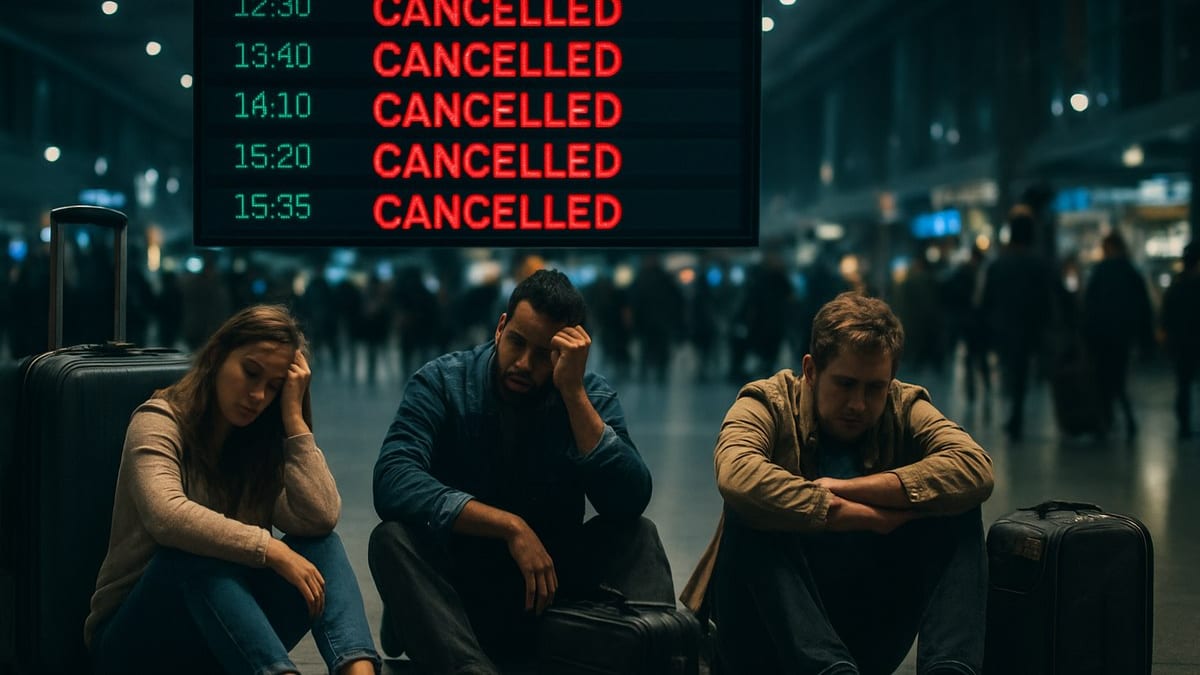
Thousands of passengers have been left sleeping in terminals, scrambling for alternative routes and battling lengthy queues as a succession of strikes, storms and fuel supply fears trigger widespread disruption at Europe’s major hub airports in April 2026.
Get the latest news straight to your inbox!
Strikes Grind Operations at Key German and Italian Gateways
Published coverage indicates that coordinated walkouts across airport and airline workforces are causing some of the most severe disruption at European hubs this month. Industrial action involving ground staff and cabin crew in Germany has hit Frankfurt and Munich particularly hard, with reports of mass cancellations and heavily reduced schedules. In Italy, stoppages affecting airport services in Rome and Milan are contributing to similar scenes of confusion and overcrowding in terminals.
One recent assessment from a travel trade outlet described mid April strike activity as creating “unprecedented levels of chaos and delays” across several countries, with more than 3,000 flights reportedly cancelled in a short period and over 150,000 travelers affected. Frankfurt, Rome, London and additional hubs in Spain and Belgium feature prominently in those reports, highlighting the cross border nature of the disruption and the limited capacity elsewhere in the network to absorb displaced passengers.
The ripple effects extend beyond the cities directly affected by strikes. With aircraft and crews out of position, long haul operations are being trimmed or retimed, squeezing available seats on remaining services. Travelers connecting through Germany and Italy are confronting missed onward flights and overnight stays, often with limited rebooking options as peak Easter and spring traffic keeps load factors high.
Consumer advocacy groups monitoring the situation point to gaps between legal entitlements under European passenger protection rules and what some travelers are actually receiving at the airport. While Regulation EC 261/2004 sets out rights to care, rerouting or refunds in many disruption scenarios, multiple case studies shared publicly depict inconsistent access to vouchers, accommodation or clear information during the strike days.
Weather and Congested Skies Compound Delays at Amsterdam, London and Rome
Weather systems sweeping across the continent in early April have layered an additional level of complexity onto already delicate schedules. A pan European wave of thunderstorms and low visibility conditions in early April produced more than a thousand delays and a cluster of cancellations in a single day, according to operational data compiled by a travel documentation service. Rome Fiumicino and Milan Malpensa counted among the worst affected airports, with hundreds of late departures recorded.
In London, recent storm conditions and ongoing airspace constraints have triggered what airport and airline updates describe as “cascading delays” at Heathrow and Gatwick. Publicly available travel briefings note that long haul carriers using Heathrow as a primary European gateway are still working through backlogs from earlier in the month, leading to frequent retimings of connecting flights within Europe and extended queues at transfer desks.
Amsterdam Schiphol, already flagged in past seasons for vulnerability to winter storms and staffing shortfalls, continues to experience high levels of schedule stress. Local news reporting from the Dutch capital on April 11 described widespread cancellations that left thousands of passengers stranded, with limited spare capacity on rail or alternative air services to help travelers bypass the congested hub.
Eurocontrol and other regional coordination bodies have repeatedly warned in recent reports that air traffic volumes have climbed back to, and in some cases above, pre pandemic levels while airport and air traffic control capacity has not kept pace. A late arrival into one hub can quickly become a missed connection somewhere else, and April’s sequence of storm systems has illustrated how quickly small timing shifts can snowball into overnight delays for connecting passengers.
Lufthansa Easter Disruption Highlights Vulnerability of Hub-and-Spoke Networks
The experience of Lufthansa passengers over the Easter return period offers a clear example of how a single carrier’s labor dispute can reverberate across multiple hubs. Travel industry coverage indicates that a flight attendant strike triggered the cancellation of more than 500 flights linked to the German airline, affecting an estimated 100,000 travelers at the height of the holiday rush.
Frankfurt and Munich, Lufthansa’s main hubs, saw particularly acute scenes as travelers arriving to begin their journeys discovered their flights had been pulled from the schedule. Social media accounts and traveler forums referenced long lines at customer service desks and crowded gate areas as people sought rerouting options, often competing for the same limited inventory of seats on later flights.
Because Lufthansa sits at the center of a wide network of code share and alliance connections, the disruption did not remain confined to Germany. Passengers who had begun trips in other European countries or farther afield found themselves stranded mid journey in German hubs when onward segments were cancelled. Aviation analysts writing in industry reports noted that this episode underlined once again how concentrated traffic flows through a small number of European super hubs leave travelers exposed when operations break down.
Background data from international aviation organizations show that structural pressures have been building for years. One 2025 analysis by an airline industry association concluded that air traffic control related delays in Europe had more than doubled over the previous decade, with staffing and capacity constraints responsible for the vast majority of en route delay minutes. With hubs already running close to their operational limits, events like targeted strikes or localized storms can more easily tip the system into widespread disruption.
Fuel Supply Fears Add New Uncertainty for Spring and Summer Travelers
On top of the immediate disruption from strikes and storms, recent warnings about jet fuel availability have introduced a longer term dimension of uncertainty. In early April, airport industry representatives in Europe issued letters to policy makers raising concerns that continued restrictions on oil flows through the Strait of Hormuz could trigger a systemic shortage of jet fuel within weeks.
Reporting from European media and specialist aviation outlets indicates that airports and airlines are already modeling scenarios in which schedules may need to be trimmed ahead of the key summer season if supplies do not stabilize. Low cost carriers with dense intra European networks, including large operators at London Gatwick and several continental hubs, are viewed as particularly exposed to any sudden requirement to reduce flying.
These warnings have not yet translated into large scale fuel driven cancellations, but they are shaping airline strategies for the coming months. Some carriers have begun to adjust capacity growth plans and to signal the possibility of selective route cuts, particularly on marginally profitable services. For passengers who are already rebooking disrupted April itineraries into May and June, the prospect of further adjustments is adding to a general sense of uncertainty.
Travel advisors commenting publicly on the situation are encouraging passengers to build more buffer time into itineraries that rely on tight same day connections at major hubs. With both operational disruption and potential fuel constraints in play, itineraries that once seemed comfortably timed may carry a higher risk of misconnection than in previous seasons.
Passenger Rights and Practical Options for Stranded Travelers
As disruption continues across multiple hubs, attention has turned once more to the patchwork of protections available to stranded travelers. Under European passenger rights rules, many travelers facing cancellations or long delays on flights departing from or arriving in the European Union are entitled to rerouting or refunds, and in some cases additional compensation, depending on the cause and length of the disruption.
Legal experts and consumer platforms emphasize, however, that not every form of chaos translates into a compensation payment. Weather related cancellations and some categories of airspace or fuel supply issues may be classified as extraordinary circumstances, which can limit cash payouts even when the impact on passengers is severe. By contrast, disruptions linked directly to airline staffing or certain strike actions may fall more clearly within the scope of compensation.
Practical guidance compiled from passenger advocacy organizations urges travelers to document their experience carefully, retain boarding passes and receipts for out of pocket expenses, and submit claims promptly through airline channels. When airport queues are overwhelming, publicly available information suggests that airline apps and websites can sometimes offer faster access to rebooking tools, though this depends on the carrier and route.
For those still in the planning phase of their trips, industry analysts warn that April’s pattern of disruption is unlikely to be a one off event. With structural capacity constraints, evolving labor negotiations and fuel market uncertainty all converging, Europe’s hub airports may continue to experience episodes of severe stress in the months ahead. Travelers connecting through major gateways such as London, Frankfurt, Amsterdam, Paris and Rome are being encouraged, via open guidance from travel organizations and airlines, to monitor conditions closely and to prepare contingency plans in case their flights are affected.