

More news on this day
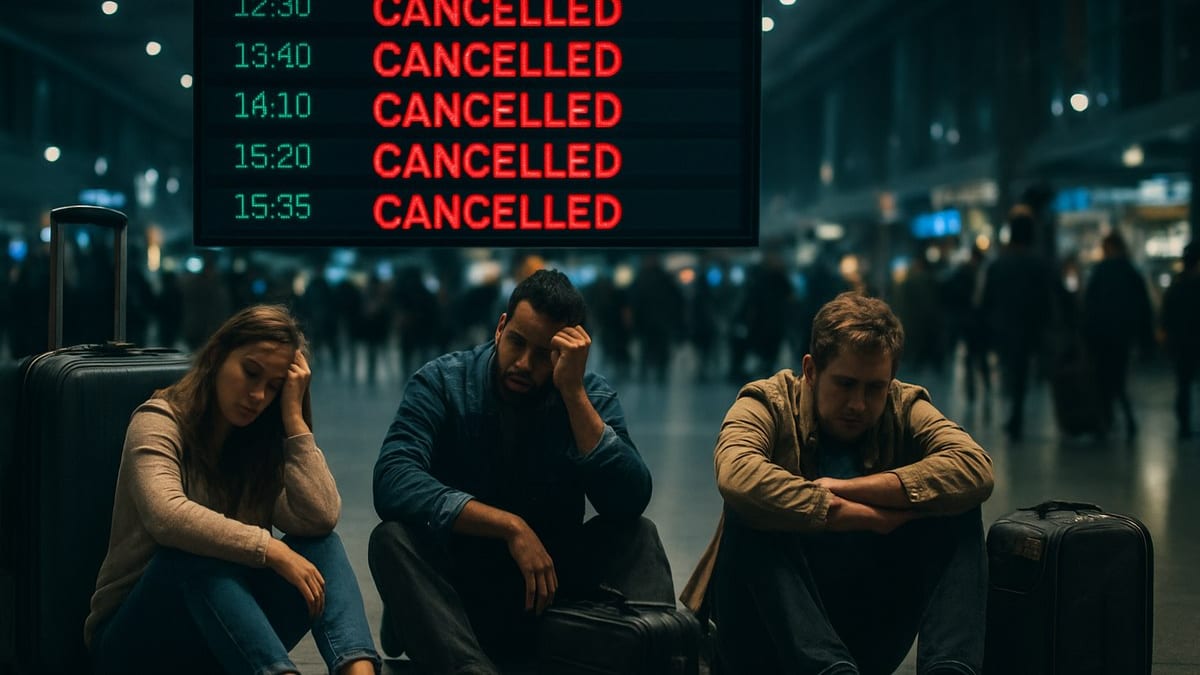
Early April 2026 has brought a new wave of air travel disruption across Europe, with strikes, staffing constraints and wider geopolitical rerouting combining to strand passengers at major hub airports and fray confidence in the continent’s aviation network.
Get the latest news straight to your inbox!
Strikes Ripple Through Key European Gateways
Across Germany, Italy, Spain and France, industrial action in the aviation sector has intensified into April, triggering cancellations, missed connections and dense crowds at hub airports from Frankfurt and Munich to Rome Fiumicino and Barcelona. Published coverage indicates that a series of walkouts by Lufthansa cabin crew around the Easter return period led to hundreds of flights being cancelled and tens of thousands of travelers unable to reach their destinations as planned.
Travel-focused outlets report that the Lufthansa disruption has been particularly acute at the carrier’s Frankfurt and Munich hubs, where short notice schedule changes left passengers queueing for rebooking and struggling to secure seats on alternative services. Some long haul connections into these hubs have landed on time only for onward European sectors to be cancelled, leaving transfer passengers temporarily stranded landside or in terminal holding areas while airlines rework routings.
In Italy, aviation briefings describe coordinated air traffic control industrial action on 10 April, with a multi hour stoppage affecting routes into and out of Rome, Milan and regional airports. Although the walkouts were time limited, guidance from travel advisers notes that even short strikes have generated knock on delays lasting well beyond the official action window, with aircraft and crews out of position for subsequent sectors.
Spain has faced parallel unrest, with ground handling and baggage staff mobilising at multiple airports. Local reports describe growing backlogs of unprocessed luggage, flights departing without checked bags and average delays stretching beyond an hour on some routes, creating further complications for already disrupted passengers trying to retrieve belongings or make tight connections.
Network Strain at Major Hubs Amplifies Local Disruption
While individual strikes and staffing shortfalls have been concentrated in particular countries, the impact has been felt most sharply at Europe’s largest hubs, where tight transfer windows and high daily movements leave little spare capacity. Aviation data providers tracking operations in early April highlight several days where more than a thousand flights across the continent were delayed or cancelled, with disproportionate effects at network nodes such as Frankfurt, Amsterdam Schiphol, Paris Charles de Gaulle and London Heathrow.
Analysis from flight compensation platforms shows that when one or two hubs experience significant disruption, reactionary delays rapidly propagate across the wider network. Aircraft scheduled to operate multiple legs in a single day often arrive late into a hub, compressing ground handling times and pushing subsequent departures behind schedule. For passengers, this has translated into long queues at customer service desks, reissued boarding passes and overnight stays in airport hotels when no immediate alternative is available.
Recent reporting from European aviation bodies adds broader context, indicating that average delay minutes per flight have been climbing in recent years, with air traffic control capacity and staffing constraints frequently cited among the main drivers. A Eurocontrol overview for spring 2026 notes that around four out of five minutes of en route air traffic flow management delay are now linked to controller staffing and sector capacity, particularly in busy airspaces over France and Spain. These structural pressures mean that when industrial action or local technical issues arise, the system has limited resilience.
Passenger advocacy groups point to a widening gap between scheduled and actual journey times at hubs, with missed connections and misaligned minimum transfer windows becoming routine on days of heavy disruption. Travelers who built in what would previously have been considered comfortable buffers have still found themselves sprinting between terminals or facing unplanned stopovers as gate changes and rolling delays cascade through departure boards.
External Shocks and Geopolitical Rerouting Add to Chaos
The disruption in April is unfolding against a backdrop of wider aviation challenges that have reshaped flight paths to and from Europe since late winter. Airspace restrictions linked to heightened tensions in parts of the Middle East and surrounding regions have forced many long haul carriers to reroute services between Europe and Asia, lengthening flight times and increasing congestion along alternative corridors. Publicly available information from airline and aviation bulletins in March and early April points to persistent rerouting on Europe Asia trunk routes, which has reduced schedule flexibility and complicated aircraft rotations.
At the same time, meteorological agencies and airline advisories have recorded a series of intense winter and early spring storms across parts of Europe and the Mediterranean earlier in the year, leaving some airports and carriers with lingering backlogs of maintenance and crew positioning that have carried over into the shoulder season. Although the worst of the severe weather has eased by April, analysts note that disrupted aircraft maintenance windows and staff rostering constraints can take weeks to normalise, particularly at airlines already stretched by high demand.
Transport monitoring services also highlight the impact of domestic unrest on airport access in some countries. In Ireland, for example, early April fuel protests have periodically blocked key roads around Dublin, with some passengers reportedly abandoning vehicles and walking sections of the ring road to reach the airport in time. Such incidents compound the stress of travelers already worried about flight cancellations or connection risks inside terminals.
Together, these external factors act as multipliers on the strikes and staffing shortages that are directly cancelling flights. Longer routings, constrained airspace and unpredictable surface access mean fewer spare crews and aircraft are available across the system to absorb shocks when a hub experiences a sudden wave of cancellations or gate closures.
Passenger Rights and Responsibilities in a Volatile Spring
With disruption now stretching across multiple countries and carriers, attention is again turning to the protections and practical options available to passengers. Consumer organisations and travel law specialists are reminding travelers that the core EU air passenger rights framework remains in force for flights departing from European airports. Public guides explain that, depending on the cause of a disruption, travelers may be entitled to rerouting, refunds, care such as meals and accommodation, and in some cases financial compensation.
Travel advisory outlets stress that understanding the distinction between airline controllable disruptions and events classed as extraordinary circumstances is critical. Strikes by an airline’s own staff, such as cabin crew or pilots, are often treated differently from walkouts by air traffic controllers or airport security staff when it comes to compensation eligibility. Passengers are being encouraged to document communications, keep boarding passes and booking confirmations, and submit claims only once they have a full record of what occurred.
Given the pace of changes, experts are also urging travelers to adopt a more active approach to monitoring their journeys. Practical recommendations in recent coverage include checking flight status repeatedly in the 24 hours before departure, downloading both airline and airport apps, and building longer connection times into self planned itineraries passing through major European hubs. Those booking separate tickets for long haul and intra European legs are being warned that they shoulder additional risk if an initial delay causes a misconnection on a different booking.
Insurance specialists note that comprehensive travel policies can help bridge gaps where statutory compensation does not apply, particularly for costs such as additional nights of accommodation, replacement tickets on alternative airlines or lost prepaid hotel stays. However, policy wording varies significantly, and travelers are advised to verify coverage for strikes, civil unrest and airspace closures before departure rather than assuming they are protected.
Outlook for the Remainder of April 2026
Looking ahead to the rest of April, forecasts from transport analysts and union announcements suggest that volatility is likely to persist. In Italy, a calendar of transport strikes indicates further stoppages across aviation and public transit later in the month, raising the prospect of renewed disruption at Rome and Milan on top of the early April air traffic control action. In Spain, unions representing airport and baggage staff have signalled that additional protest days may follow if current negotiations over working conditions and staffing levels stall.
Industrial relations at several large European carriers also remain tense. After the cabin crew actions that paralysed parts of Lufthansa’s network around the Easter return period, attention is turning to ongoing negotiations with flight deck and ground staff unions, which have not yet fully resolved outstanding wage and rostering disputes. Aviation commentators caution that any further walkouts at major network airlines would likely coincide with already busy travel dates, multiplying the effect on hub congestion.
Regulatory and infrastructure factors may add an additional layer of complexity. The phased rollout of the European Union’s new Entry/Exit System for non EU nationals, due to become fully operational across the Schengen Area by mid April, is expected to lengthen processing times at some border control points during its initial implementation. Security and border agencies have invested in new kiosks and staffing, but travel risk bulletins warn of potential teething problems that could slow passenger flows at peak times in terminals already strained by delayed flights.
For travelers planning to pass through Europe’s hubs in the coming weeks, the picture is one of cautious preparation rather than certainty. Industry observers recommend booking earlier flights in the day where possible, allowing generous buffers for transfers, and remaining flexible on routing and dates. While airline operations teams work to restore regular schedules and clear rebooking backlogs from the first half of April, passengers are likely to continue feeling the effects of what has already become one of the most turbulent spring travel periods in recent European aviation history.