

More news on this day
European air travelers are facing yet another wave of flight chaos in April 2026, as strikes, severe weather and long-running bottlenecks at major hubs combine to strand passengers from London to Frankfurt and Amsterdam.
Get the latest news straight to your inbox!
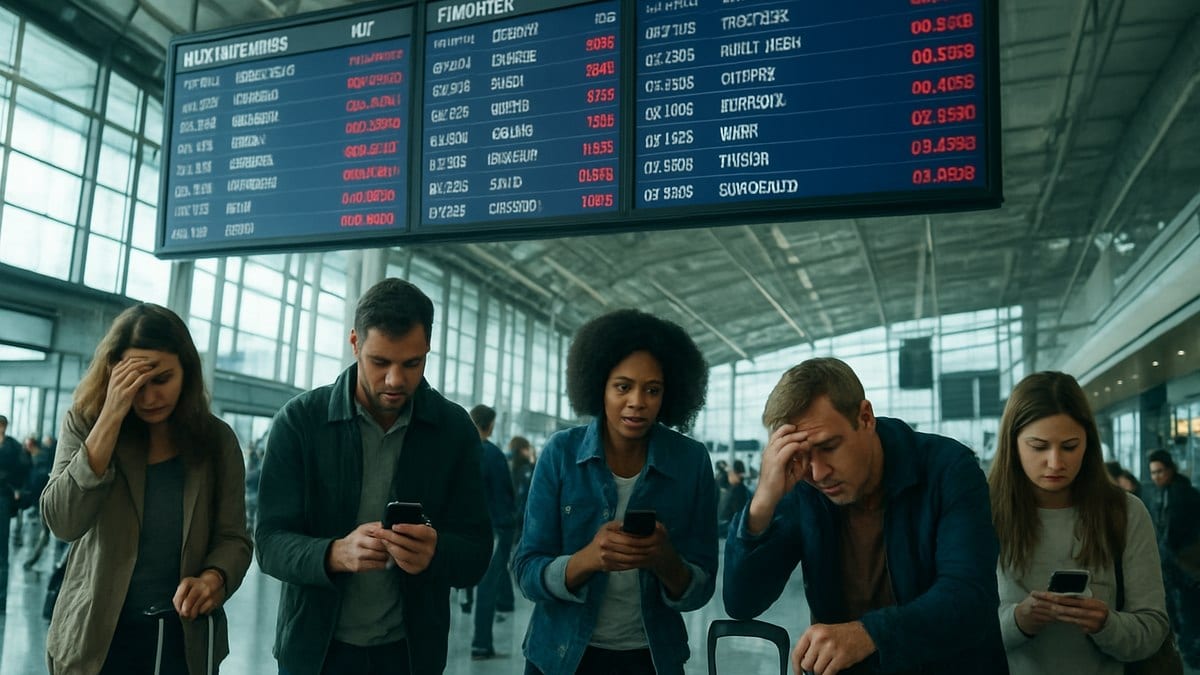
Strikes and Staff Disputes Cripple Key German Gateways
Germany’s largest hubs are at the center of the latest disruption, following a 24 hour walkout by Lufthansa cabin crew that began on 10 April at Frankfurt Airport. Publicly available figures indicate that around 580 flights were cancelled in Frankfurt alone, representing roughly three quarters of Lufthansa’s scheduled departures and leaving tens of thousands of travelers with no immediate way out of the country.
The strike spilled over into Munich, Berlin, Stuttgart and Leipzig, where additional flights were grounded or heavily delayed. Published coverage notes that more than 90,000 passengers were affected on what for many was the tail end of Easter holiday travel, compounding existing congestion in terminals and stretching rebooking capacities across the Lufthansa Group network.
Observers point out that the industrial action in Germany followed closely on the heels of nationwide air traffic control strikes in Italy on 10 April. That four hour walkout, which hit during the afternoon peak, triggered hundreds of cancellations at Rome and Milan and added further strain to an already overstretched European aviation system.
With aircraft and crews left out of position after the walkouts, knock on effects are expected to linger for several days, as airlines attempt to reposition planes and clear backlogs on heavily booked spring routes.
Weather and Airspace Constraints Fuel Network Wide Knock-On Delays
The labor unrest is colliding with unstable weather patterns and airspace constraints that have been pressuring schedules since late March. Data compiled by flight tracking and passenger rights platforms indicates that on several days in early April, more than 1,400 flights across Europe were delayed and well over 100 were cancelled, with thousands of passengers forced to sleep in terminals or seek last minute hotel rooms.
Recent severe weather systems have repeatedly swept across Western and Northern Europe, disrupting operations at Frankfurt, Munich, London Heathrow, Madrid and Oslo. In one early April episode, industry analyses counted more than 470 flights affected at major hubs as crosswinds, low visibility and ground handling limitations forced airlines to pare back services and operate at reduced runway capacity.
Southern and Eastern Europe have not been spared. Reporting from Greece describes a spike in delays at Athens International Airport linked to a mix of airspace restrictions and wider European congestion, while Amsterdam Schiphol continues to experience some of the heaviest schedule pressure in the network, with over a hundred delays recorded on particularly difficult days.
Complicating matters further, geopolitical tensions and airspace closures in the Middle East over recent weeks have prompted reroutings of long haul services between Europe and Asia. Longer flight times and detours through alternative corridors have reduced scheduling flexibility, leaving less slack in the system when weather or local operating issues arise at European hubs.
Border System Rollout and Structural Constraints Add to Passenger Pain
Beyond short term shocks, structural factors are playing a growing role in the disruption now confronting passengers. Air traffic management bodies have warned that total flight volumes in Europe have returned to, and in some cases surpassed, pre pandemic levels, even as staffing and infrastructure have failed to keep pace. Eurocontrol data cited in recent media reports shows that roughly three in ten flights now depart late, with average delays running into double digits.
Airport groups and airlines also continue to flag chronic congestion within Europe’s air traffic control system. Industry research released in recent weeks highlights that while flight numbers rose by a little over 10 percent between 2015 and 2025, certain categories of air traffic flow management delay increased far more sharply, underlining how tight capacity has become on popular routes and at busy control centers.
An additional source of concern is the European Union’s new Entry Exit System, a biometric border control scheme scheduled for full implementation from 10 April 2026. Trials and partial rollouts at selected airports and ferry terminals have already produced longer queues at passport control, with one report from Airport Council International Europe indicating that processing times have, in some cases, risen by up to 70 percent during peak periods.
French airport operators have publicly called for a cautious rollout, warning that layering new border checks onto already congested terminals risks tipping some hubs into further disruption, particularly during the summer peak. For passengers already struggling with missed connections and scarce rebooking options, any additional delays at immigration could mean more nights spent sleeping in departure halls.
Passenger Rights in Focus as Overnight Stranding Increases
As queues lengthen and departure boards fill with cancellations, attention is returning to Europe’s strong but often misunderstood passenger rights framework. Under Regulation EC 261, travelers departing from EU airports or flying on EU carriers are entitled to care and, in many cases, compensation when flights are significantly delayed or cancelled. This can include meals, refreshments, communication support and, where necessary, hotel accommodation and transport to and from the airport.
Consumer advocates note that eligibility depends on several factors, including the length of delay, flight distance and whether the cause is considered within an airline’s control. Strikes by an airline’s own staff or operational shortcomings can trigger compensation in many scenarios, while severe weather or air traffic control strikes are more likely to be classified as extraordinary circumstances, limiting cash payouts but not necessarily relieving carriers of their obligation to provide basic care.
In practical terms, the latest wave of disruption has left growing numbers of families and business travelers overnight in hubs such as Frankfurt, Heathrow and Schiphol. Social media posts and local coverage from early April describe passengers forming long lines at customer service desks, scrambling for hotel rooms near airports and, in some cases, resorting to camp beds or floors as nearby accommodation sells out.
Travel experts advise that affected passengers should keep boarding passes, booking confirmations and receipts for any expenses incurred while stranded, as these can be crucial when seeking reimbursement from airlines or travel insurers once the immediate disruption subsides.
Summer Outlook Darkens as Fuel and Capacity Risks Loom
The timing of the current disruption is raising particular concern for Europe’s tourism sector, which is counting on a robust summer season. A recent alert from an association representing European airports warned that supply concerns linked to the partial closure of the Strait of Hormuz could lead to jet fuel shortages within weeks if shipping flows do not normalize. The warning, set out in a letter dated 9 April, suggested that without a stable resumption of deliveries, airlines such as easyJet and other short haul carriers could be forced to trim schedules.
Airport executives caution that any fuel related capacity cuts would come on top of existing labor disputes, air traffic control constraints and the operational challenges of integrating new border technology. Major hubs in London, Paris and Frankfurt would be prioritized for available fuel, but regional airports and secondary cities could see more aggressive timetable reductions, further limiting rerouting options when things go wrong.
For now, published data shows that flights are still operating at the majority of European gateways, but with a thinner margin for error than before the pandemic. Analysts describe a network where minor shocks quickly cascade into multi day crises, leaving passengers disproportionately exposed to missed holidays, business disruptions and unplanned expenses.
As airlines and regulators debate long term fixes, travelers preparing for spring and summer trips to Europe are being urged by consumer groups and travel advisers to monitor flight status closely, build extra time into connections, and consider flexible tickets or comprehensive travel insurance to hedge against an increasingly unpredictable sky.