

More news on this day
Thousands of air travelers have been left stranded across Europe in April 2026 as a fresh round of strikes, weather disruption and operational bottlenecks collides with the busy Easter travel period at major hub airports.
Get the latest news straight to your inbox!
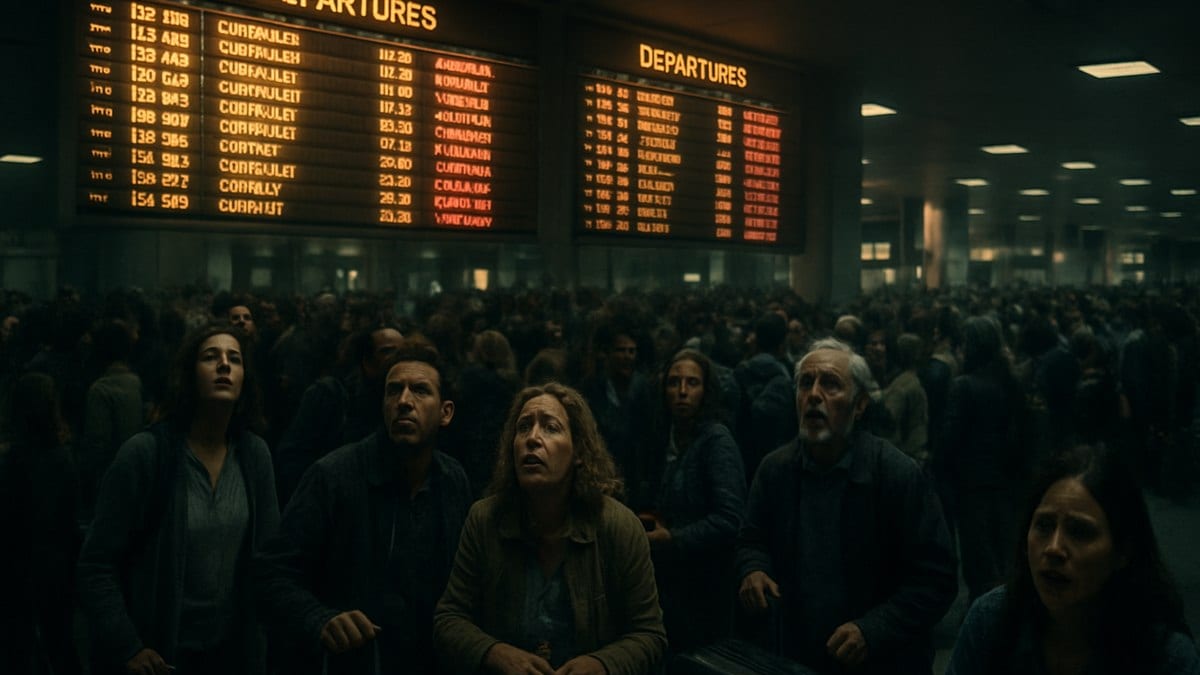
Strikes at German Hubs Trigger Cascading Disruptions
Germany’s largest airports have emerged as focal points in the latest wave of disruption, with labor disputes at major carriers and aviation service providers translating into hundreds of cancellations in the second week of April. Publicly available information indicates that walkouts affecting Lufthansa cabin crew on April 10 led to the grounding of a substantial share of the airline’s departures from Frankfurt and Munich, leaving tens of thousands of passengers seeking last-minute alternatives across the network.
Reports from aviation tracking platforms and travel industry outlets show that the strike activity in Germany coincided with lingering schedule instability from earlier spring weather events, magnifying the effect on connecting traffic. Aircraft and crews stranded away from their intended bases reduced flexibility at hub airports, making it harder to recover when the strike began and when services gradually resumed.
As flights were withdrawn from departure boards at short notice, passengers at Frankfurt and Munich faced extended queues at service desks and crowded seating areas around the gate zones. With many Easter travelers booked on multi-leg itineraries through Germany, missed onward connections rippled into neighboring countries as rebooked passengers filled scarce seats on alternative routes.
Industry data suggests that these disruptions did not remain confined to German airports. Regional services into and out of Frankfurt and Munich feed a dense web of routes to cities such as Amsterdam, Paris, Vienna and Zurich, so cancellations at the hub level quickly translated into gaps in schedules elsewhere, adding to the tally of stranded passengers at outstations across Europe.
Amsterdam, Paris and London Struggle With Overlapping Pressures
The latest difficulties at German hubs have unfolded alongside mounting operational stress at other key European gateways. In the days leading up to the strike, Amsterdam Schiphol recorded one of the region’s highest levels of disruption, with publicly accessible flight-tracking data on April 9 pointing to a cluster of cancellations and lengthy delays on short haul and medium haul services.
Coverage from European travel media indicates that operations at Schiphol have been constrained by a combination of late-arriving aircraft, tight turnaround times and staff shortages, which leave little margin to absorb even modest schedule changes. The result has been a familiar scene of crowded terminals, long lines at check in and transfer security, and passengers racing between concourses to salvage tight connections.
In France, earlier labor actions and ongoing staffing constraints in air traffic control and ground operations have contributed to steady levels of disruption at Paris Charles de Gaulle and Paris Orly in early April. Passenger-rights organizations tracking performance at the two airports highlight repeated clusters of delays and cancellations on routes to southern Europe and North Africa, alongside missed long haul connections for travelers bound for North America, the Middle East and Africa.
London’s Heathrow and other major UK airports have so far avoided the most severe single-day disruption seen in continental hubs this month, but remain heavily exposed to the knock-on effects of cancellations elsewhere. Analysts who monitor hub performance note that when connecting flights from Europe arrive late or not at all, the impact is felt quickly on transatlantic and long haul services that depend on well-timed feeder traffic.
Southern Europe Hit by Strikes and Holiday Crowds
Across southern Europe, holiday demand around Easter has intersected with strikes and weather-related limitations to put additional pressure on airports in Spain, Italy and Portugal. Reports in regional media describe rolling strikes by ground handling and airport staff in Spain that have slowed aircraft turnarounds at several major gateways, producing scenes of crowded baggage halls and queues at customer service counters as suitcases and passengers alike are left waiting.
In Italy, air navigation and aviation worker actions around April 10 have prompted temporary reductions in airspace capacity, contributing to further delays and cancellations on both domestic and intra-European routes. Airport disruption summaries suggest that even short strike windows of a few hours can generate residual schedule issues lasting well into the evening as airlines reposition aircraft and crews.
Portugal’s main hub in Lisbon has also featured prominently in recent disruption statistics, with data compiled by flight-tracking services for April indicating elevated rates of delayed arrivals and departures. With many routes in and out of Lisbon operating close to capacity during the holiday period, passengers whose flights are cancelled or significantly delayed often face limited immediate alternatives, extending the time they remain stranded at the airport or in their destination.
These overlapping challenges have had a particular impact on passengers using southern European airports as leisure gateways to coastal resorts and island destinations. When delays cause travelers to miss tight ferry or domestic flight connections, they may find themselves stuck for an extra night on the mainland, adding accommodation costs and logistical complexity to already disrupted itineraries.
Knock-on Effects Extend Beyond Europe’s Borders
While the most visible scenes of airport chaos are playing out in terminal buildings across Europe, the knock-on effects of the latest disruptions reach far beyond the continent’s borders. A significant share of flights grounded or delayed at key hubs are part of larger long haul itineraries linking Europe with North America, the Middle East, Africa and Asia, creating a secondary wave of stranded passengers at outstations worldwide.
Travel industry analyses note that cancellations at European hubs often force airlines to break the normal rhythm of aircraft rotations, leaving planes and crews out of position in other regions. When a widebody aircraft remains stuck overnight in a non-European destination due to a missed onward connection or a crew duty time limit, the return flight to Europe is frequently delayed or cancelled, amplifying disruption on both sides of the route.
The situation is further complicated by ongoing schedule adjustments related to security developments and airspace restrictions in parts of the Middle East and Eastern Mediterranean. Airlines have continued to reroute or consolidate some long haul services, reducing the number of alternative options available when European feeder flights misconnect. Passengers on multi-leg journeys may therefore find that a missed intra-European hop leads not just to a few hours of delay, but to a full day or more of additional travel time as they wait for the next available long haul departure.
As these operational challenges stack up, travel advisors are warning that the impact of April’s disruption could extend beyond the immediate Easter window. Aircraft and crew utilization plans built months in advance can take days to normalize after major events, so passengers planning to travel later in April may still encounter fuller flights, tighter connection options and higher fares on remaining seats.
What Stranded Passengers Can Expect at the Airport
For passengers caught in the middle of this turbulence, experiences on the ground have varied widely by airline, airport and specific cause of disruption. Publicly available guidance from European consumer agencies and passenger-rights groups emphasizes that travelers affected by cancellations or long delays should be offered rerouting or refunds, as well as basic care such as meals and, in some circumstances, hotel accommodation.
Observers note that the distinction between disruptions caused by strikes or airline operational issues and those triggered primarily by severe weather remains important, as compensation rules differ under European regulations. Even when monetary compensation is not required, airlines are generally expected to provide practical support, particularly when passengers are stranded overnight away from their home airport.
Reports from traveler forums and consumer organizations suggest that passengers with access to airline mobile apps and online self-service tools are often able to rebook more quickly than those relying solely on airport service counters. At peak times during the recent disruptions, digital channels have provided a crucial relief valve for call centers and in-person desks, helping some stranded travelers to secure alternative flights before remaining seats are snapped up.
Across Europe’s hubs, the combination of strike calendars, unsettled spring weather and high seasonal demand means that further pockets of disruption are possible later in April. For now, the experience of early Easter travelers offers a stark reminder of how quickly Europe’s interconnected aviation system can tip from busy to overwhelmed, and how suddenly ordinary passengers can find themselves stranded in terminal limbo.