

More news on this day
Thousands of travelers have been left sleeping in terminals and scrambling for reroutes as a new wave of flight disruptions rolls through major European hubs in early April, compounding weeks of weather and staffing turmoil across the continent’s aviation network.
Get the latest news straight to your inbox!
Major Hubs Buckle Under Holiday and Spring Traffic
Published coverage from aviation trackers and regional outlets indicates that disruption intensified across Europe in the first half of April, with hubs in Frankfurt, London, Amsterdam, Madrid and Paris reporting elevated levels of delays and cancellations. Reports describing more than a thousand delayed flights and hundreds of cancellations over several days suggest that thousands of passengers have been stranded or forced into overnight stays as aircraft and crews fall out of position.
Frankfurt has emerged as one of the hardest hit hubs after a large cabin crew walkout at a major German carrier led to the grounding of hundreds of flights in recent days, with tens of thousands of Easter and spring holiday travelers unable to depart as planned. Aircraft and crews stuck at outstations have triggered knock on cancellations across the network, including at partner airlines and regional airports that depend on Frankfurt connections for long haul links.
Other key hubs have faced their own operational crunch. Eurocontrol data cited in recent analyses show that around 30 percent of flights in Europe now depart late, with average delays in the mid teens of minutes and reactionary delays continuing to be the dominant driver. As traffic volumes edge above pre pandemic levels, even modest schedule perturbations at a major hub can result in widespread missed connections, denied boarding and passengers stranded far from their final destination.
Observers note that the latest wave of disruption is landing just as airlines and airports move into the busy spring and early summer travel period. Aviation consultancies have warned that the continent entered 2026 with elevated air traffic control and staffing related delay levels compared with a decade ago, leaving limited slack to absorb additional shocks from storms or industrial action.
Strikes and Staff Shortages Add to the Chaos
Industrial action is playing a central role in the current turmoil. In Germany, a recent cabin crew strike at the country’s largest network airline is reported to have grounded hundreds of flights at Frankfurt and Munich, affecting an estimated tens of thousands of passengers in a single day. Travel advisories describe long queues at service desks and scenes of crowded terminals as stranded passengers attempt to rebook on limited alternative services.
In Spain, ground handling staff at multiple airports have launched an open ended strike affecting operations at a dozen facilities, including key tourist gateways. According to local business and tourism media, the walkout is disrupting roughly one tenth of flights at affected airports, with particular pressure on services operated for a major Spanish carrier. Travelers report long waits for baggage and aircraft turnaround, leading to missed slots and onward delays that ripple into the wider European network.
Further strain is expected from targeted air traffic control and airport worker actions elsewhere on the continent. Airline customer information pages are already warning of a planned air traffic controller strike window in Italy in mid April, with carriers pre emptively cancelling sectors during the affected hours to avoid day of operations chaos. Traveler forums and strike trackers point to a dense calendar of localized actions across Europe as unions press for pay rises in response to inflation and higher workloads.
Aviation analysts argue that the cumulative effect of frequent, short notice strikes is especially damaging in a system already operating near capacity. When crew or controllers are unavailable, airlines must ground aircraft or re route flights, creating rolling knock on effects that can persist for days after the formal end of a walkout and leaving passengers stranded far from home or holiday destinations.
Severe Weather and a Volatile Atmosphere Disrupt Schedules
While staffing disputes capture headlines, unusual weather patterns have also played a significant part in recent disruption. Europe’s 2025 to 2026 windstorm season has produced a series of intense systems that have repeatedly battered Atlantic facing countries and central Europe, prompting temporary airport closures, diverted flights and widespread cancellations. During January’s severe storms, airports from Hamburg to Dublin reported dozens of grounded services amid crosswinds, heavy rain and snow.
More recently, a rare Mediterranean cyclone and a cluster of strong frontal systems have continued to affect southern and central Europe into March and early April. Meteorological agencies and specialist weather coverage describe repeated episodes of gale force winds, intense rainfall and localized flooding in parts of Spain, Italy and the Balkans. Each spell of adverse weather forces air traffic flow restrictions and reduces usable runway capacity, often at short notice.
On 5 and 6 April, travel rights organizations and regional news outlets documented a continent wide spike in disruption tied in part to storms, with more than a thousand flights delayed and over one hundred cancellations recorded in a single day. Passengers connecting through busy hubs in London, Madrid and Rome experienced multi hour waits, while some services were scrubbed altogether when crews exceeded duty hour limits due to extended holding and diversions.
Industry studies commissioned by European aviation bodies have warned that stronger and more frequent storms associated with a changing climate are likely to increase such weather related disruptions over time. Combined with already stretched air traffic control capacity, these conditions are making it harder for airlines to recover normal operations quickly after major weather events, extending the period during which passengers may be stranded.
New Border Systems and Structural Bottlenecks at EU Gateways
Beyond immediate shocks from strikes and storms, structural bottlenecks are amplifying the impact on travelers. A pan European shift to biometric entry exit controls at external Schengen borders is set to expand on 10 April 2026, despite repeated warnings from airport groups that the system is already lengthening processing times for non EU nationals. According to recent reporting on a study by the continent’s main airport association, trial deployments have increased border processing times by up to 70 percent, with some airports seeing queues stretch to several hours during peaks.
Airport operators in France and other member states have publicly called for a slower rollout to avoid what they describe as a risky combination of new procedures and strong summer demand. Travel industry commentary notes that when passport control queues spill back into departure halls, airlines often delay boarding to allow connecting passengers extra time, which can lead to missed take off slots and reactionary delays across the network.
At the same time, system wide congestion remains a challenge. Eurocontrol’s latest punctuality and capacity assessments indicate that flights within Europe are now running slightly above pre pandemic volumes, but with infrastructure and staffing that have not always fully kept pace. An analysis by international airline groups highlights that while flight numbers grew by around ten percent over the last decade, air traffic control delay minutes rose by a much larger share, pointing to underlying capacity gaps.
For passengers stranded during the latest disruptions, these structural issues translate into fewer options when problems arise. With aircraft operating close to maximum daily utilization and airports struggling to add more movements, it is increasingly difficult for airlines to add recovery flights or reroute large numbers of customers at short notice.
What Travelers Can Expect in the Coming Weeks
With spring holidays ongoing and the peak summer season approaching, travel experts caution that Europe’s aviation network is likely to remain fragile. Forecasts from meteorological agencies and climate linked aviation studies suggest a continued risk of strong wind and convective weather events through late spring, particularly in northern and western Europe. Any new storm system arriving on a busy weekend could again force mass cancellations at one or more major hubs.
On the labor front, collective bargaining calendars and union statements point to further potential for walkouts among cabin crew, ground staff and air traffic control personnel in several countries, especially where agreements have not yet been reached on post inflation wage adjustments. Even short, localized strikes can have outsized effects if they hit core hubs or critical en route control centers at peak times.
Publicly available guidance from consumer advocates stresses that passengers affected by long delays or cancellations departing from European airports may have rights to care, rerouting or compensation under existing regulations, depending on the cause of disruption and notice provided. However, the practical challenge of finding spare seats in a constrained system means that many travelers caught in the current wave of disruption are still facing extended waits, unexpected overnight stays and complex rerouting itineraries.
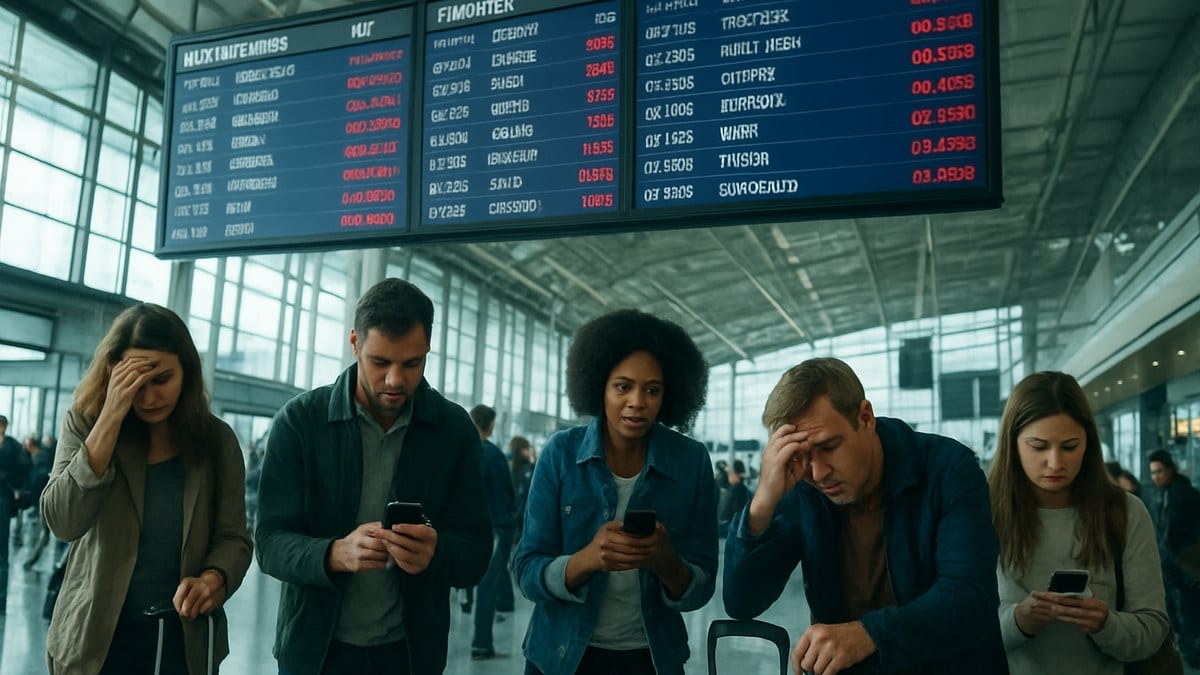
For now, images and descriptions emerging from terminals across the continent show full departure boards, crowded customer service desks and improvised sleeping areas, underscoring how a combination of strikes, storms and structural strain is once again testing the resilience of Europe’s aviation hubs and leaving passengers stranded at the very start of the peak travel season.