


More news on this day
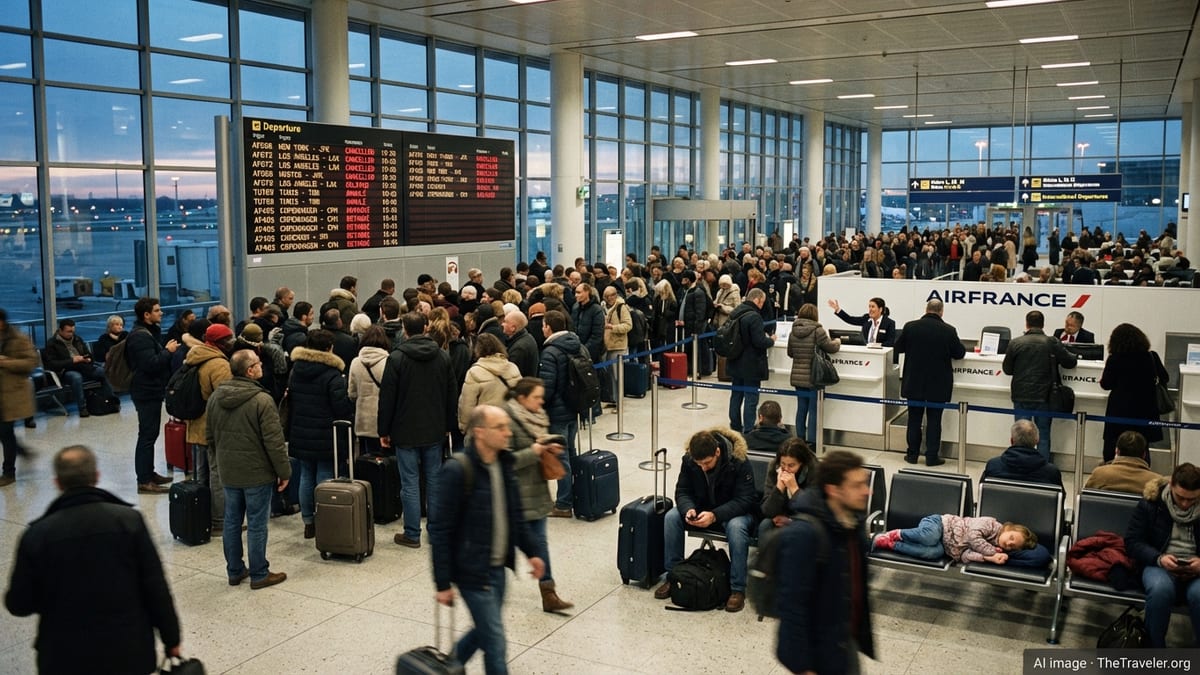
As volcanic ash grounded flights and forced sudden airport closures across several regions in recent weeks, one stranded long-haul passenger described an unexpectedly calm atmosphere in the terminal, even as hundreds of fellow travelers saw their plans collapse around them.
Get the latest news straight to your inbox!
Volcanic Ash Triggers Sudden Airport Shutdowns
Volcanic activity has disrupted air travel from Italy to Indonesia in late summer 2026, forcing airport closures, mass cancellations and diversions that left many travelers temporarily stranded. At Sicily’s Catania Airport, persistent ash from Mount Etna led to a five day closure during the peak Ferragosto holiday week, halting normal operations at the island’s busiest air hub and forcing airlines to divert or cancel hundreds of flights.
Publicly available information indicates that the Catania shutdown was among the most prolonged volcanic emergencies there since 2002, with airport operator data showing that more than a third of nearly 2,000 scheduled flights between 6 and 12 August were cancelled and over 600 were rerouted to other airports in Sicily and southern Italy. Nearby communities reported fine ash fall, underscoring why aviation authorities treat these eruptions with particular caution.
Farther east, a major eruption in Indonesia over the weekend prompted the closure of Soekarno Hatta International Airport in Jakarta and several nearby airfields, as ash drifted across a broad swath of western Indonesia. News reports indicate that up to 170,000 passengers were affected as air traffic managers temporarily shut swaths of airspace to protect aircraft engines from the microscopic ash particles that can damage turbines.
These events follow earlier volcanic related disruptions in the region, including reports that more than 2,000 passengers were stuck at Malaysia’s Tawau Airport in April 2024 when flights were cancelled after an eruption at Indonesia’s Ruang volcano. Together, they highlight how closely connected airports across different countries can feel the effects of eruptions that occur hundreds of kilometers away.
Inside an Airport Where Disruption Met Unusual Calm
Against this backdrop of widespread disruption, some passengers found that the atmosphere inside affected terminals felt more subdued than chaotic. One long haul traveler, who had already been awake for many hours before a volcanic ash related closure halted onward flights, described walking into a terminal where most seats were full, screens were flashing cancellations and diversions, yet conversations remained quiet and queues moved in an orderly way.
Instead of the raised voices and visible frustration often associated with large scale delays, the passenger recounted seeing families spreading out picnic style on the floor, children watching videos on tablets and small groups of travelers comparing rebooking options on their phones in hushed tones. A few people appeared to be leading informal information exchanges, relaying updates from airline apps or public announcements to nearby travelers who did not speak the local language.
That sense of collective restraint echoes scenes reported at other airports facing extended disruption this summer. In one case at Dalaman Airport in Turkey, coverage described how a stranded British traveler stepped up to the public address system to calmly explain procedures to other passengers after an airline representative failed to appear, helping to diffuse tension among a tired crowd. Elsewhere, long lines have formed at customer service counters, but video clips and social posts frequently show passengers quietly waiting rather than confronting staff.
Observers note that while individual frustrations remain, many travelers now arrive at airports expecting that adverse weather, volcanic activity or equipment issues can upend carefully laid itineraries. That expectation, paired with real time information from airline apps and social media, may be contributing to more measured reactions, even when people face overnight stays in terminals or long detours by rail and bus.
Travelers Navigate Closures, Detours and Hard Choices
For travelers caught in the latest round of volcanic disruptions, the practical consequences have been significant. At Catania, data from airport operators and European media show that hundreds of flights were rerouted to Palermo, Trapani, Comiso and even to airports on the Italian mainland, forcing passengers to complete their journeys by bus or to wait hours for replacement flights in unfamiliar cities.
Some holidaymakers in Sicily have recounted journeys that stretched from routine short haul flights into days of improvised travel. In one widely discussed case, an American traveler visiting Mount Etna and the surrounding region ended up on an 11 hour overnight train ride from Sicily to Rome after volcanic activity disrupted flights at Catania, before finally securing a long haul flight home. Such stories underline how quickly a weekend break can transform into a complex, multi leg exit route when ash clouds close airspace.
Similar dilemmas are emerging in Southeast Asia as Indonesian airspace restrictions ripple through regional networks. A traveler based in Sydney, attempting to reach Jakarta via Singapore, recently described being forced to remain in transit after onward flights were cancelled in connection with the latest eruption. According to local broadcaster coverage, seats on alternative flights quickly sold out, while rerouting via other Indonesian cities introduced additional uncertainty and cost.
Those experiences mirror past episodes elsewhere, such as the mass stranding seen at Tawau Airport in 2024, when thousands of passengers waited for flights to resume after Gunung Ruang’s eruption forced cancellations. Public reports from that incident described crowded departure halls and long queues at airline counters, with travelers weighing whether to book new tickets, find overland routes or wait for skies to clear.
Why Airports Can Feel Calm Even as Plans Collapse
Experts in aviation safety consistently point out that volcanic ash poses unique hazards, from engine flameouts to damage to sensors and windscreens, which is why even small amounts can lead to extensive rerouting and ground stops. In 2010, ash from Iceland’s Eyjafjallajokull eruption infamously shut large portions of European airspace and left millions of passengers stranded, creating scenes that still shape public expectations about volcanic travel disruption.
Yet inside many of the airports affected by more recent events, the overall mood has at times appeared surprisingly controlled. Some analysts suggest that widespread smartphone use and improved airline communication channels may be reducing the sense of uncertainty that historically fueled public anger. With push alerts, live rebooking tools and constant news updates, passengers may feel better informed about why their flights are not operating and what options are available.
Travel commentators also note that people have become more accustomed to seeing large scale disruptions linked to forces beyond human control, including wildfires, hurricanes and extreme heat. When a closure is publicly tied to a visible natural event, such as sustained ash emissions from Mount Etna or an Indonesian volcano sending plumes high into the atmosphere, travelers may be more inclined to accept long delays as unavoidable rather than the result of poor planning.
At the same time, the relative calm within the terminal can mask the heavy logistical and emotional toll on individuals. Stranded passengers often face the loss of prepaid hotel nights, missed work commitments and disrupted family events, as well as added expenses for food, last minute accommodation and alternate transport. For those far from home, the need to navigate unfamiliar languages and systems can heighten stress, even if outward behavior in public areas remains composed.
Airlines and Airports Review Playbooks for Future Eruptions
As this season’s volcanic disruptions continue to unfold, airlines, airports and travel industry groups are revisiting their response plans. In Italy, a federation representing travel agencies and tour operators has called for a dedicated task force to better coordinate responses to Mount Etna related disruptions and to examine how cancellations and passenger assistance are handled when ash shuts down a key gateway like Catania.
Airport operators in affected regions are also focusing on how to maintain clear public communication when conditions change rapidly. Published information from Sicily during the mid August shutdown, for example, shows repeated updates about airport closure times and expected reopening windows, an approach intended to give travelers enough certainty to decide whether to wait at the airport, seek accommodation or reroute through other cities.
In Southeast Asia, the latest eruption driven closures around Jakarta have revived discussions about regional contingency planning, particularly for hub airports that anchor domestic and international networks. Reports indicate that Indonesian air navigation authorities and nearby airports have been working to adjust routings and slot allocations so that diverted aircraft can be accommodated without overwhelming local terminals.
For the stranded long haul passenger who recalled that unexpected sense of calm in the terminal, such measures translated into a long but orderly wait for rebooking, punctuated by small acts of cooperation among fellow travelers. As more regions confront the realities of flying in an era of frequent natural disruptions, that mix of behind the scenes coordination and on the ground composure may increasingly define how passengers experience sudden volcanic shutdowns.
Euronews coverage of Mount Etna airport closures
The Washington Post report on Etna ash disruptions
Associated Press reporting on Indonesian volcanic flight disruptions