


More news on this day
The United States has imposed temporary restrictions on government travel to the Mexican border city of Nogales, Sonora, after an unspecified threat prompted a weekend security alert from the U.S. mission in Mexico, drawing renewed attention to safety conditions along one of the busiest crossings on the Arizona border.
Get the latest news straight to your inbox!
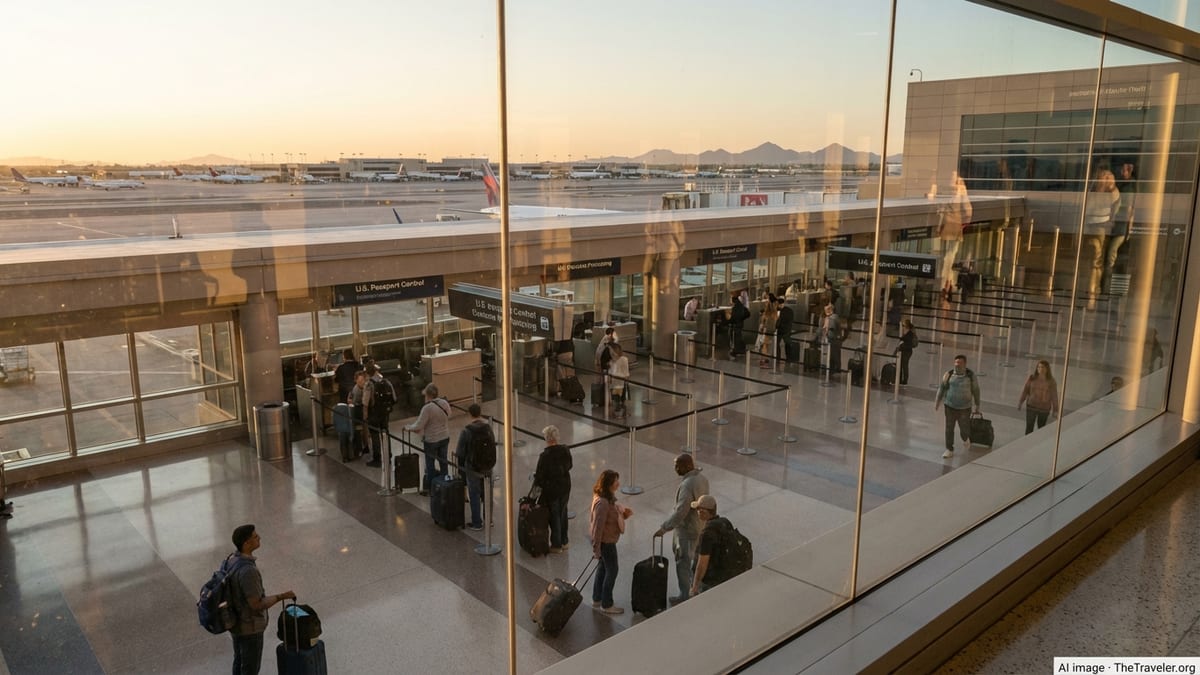
Security alert targets Nogales after unspecified threat
According to published coverage summarizing the alert, the U.S. Embassy and Consulates in Mexico issued a security message over the weekend limiting the movement of U.S. government employees in Nogales, Sonora, in response to threat information that has not been publicly detailed. The alert describes a temporary shift to essential, security-related activity only, while non-essential official travel in the city is paused.
Reports indicate that government personnel in Nogales are instructed to restrict movements to essential daytime travel, with heightened caution around government facilities and major transit corridors. While the alert does not name a specific group or describe the nature of the threat, it characterizes the information as serious enough to justify immediate precautionary steps.
Coverage of the alert emphasizes that the measures are framed as temporary and subject to ongoing review as more information becomes available. No timeline has been publicly announced for a full return to normal government operations in Nogales, and updates are expected to be provided through the U.S. mission’s official alert channels.
Publicly available information also notes that similar alerts in other Mexican border cities have sometimes been lifted within days once officials assess the immediate risk as reduced, but they can also remain in place longer if security conditions stay uncertain.
What the new Nogales restrictions involve
Based on summaries of the alert, U.S. government employees in Nogales are currently limited to mission-essential travel, primarily during daylight hours, and are advised to avoid certain areas of the city that are considered higher risk. Details on exact neighborhoods or routes are not being widely circulated, a common practice in security communications that focus instead on general patterns of movement.
The alert also advises that routine consular and outreach activities in Nogales may be reduced or postponed while the restrictions are in effect. That can affect the scheduling of official meetings, site visits and some public-facing services that depend on staff mobility within the city.
Public guidance circulated in connection with U.S. travel advisories frequently notes that private U.S. citizens are encouraged to mirror many of the precautions applied to government personnel. In practice, that often translates to limiting night driving, sticking to main arteries, and monitoring official channels for any further updates when traveling through or near affected urban areas.
While cross-border trade and essential traffic at the nearby ports of entry are expected to continue, observers of past alerts say travelers may see increased security presence and possible delays if additional screening measures are introduced in response to the threat information.
Context: broader US travel guidance for Mexico
The targeted restrictions in Nogales come against the backdrop of a long-standing U.S. travel advisory system for Mexico, which rates states individually and outlines specific limitations for American government personnel. The current countrywide guidance underscores that violent crime and organized criminal activity remain concerns in several northern border states, including Sonora, and encourages U.S. travelers to follow the same safety rules that apply to government staff.
Existing guidance for certain Mexican regions already discourages driving after dark between border cities and the interior, and often limits official travel to designated toll roads and prescribed urban areas. These measures are designed to reduce exposure to highway crime, carjackings and other incidents that have been documented along some stretches of the border.
Recent months have seen a series of localized alerts in different Mexican border cities, including temporary suspensions of consular activities and restrictions on government movement in places such as Mexicali in Baja California. Public reporting on those alerts notes that they were triggered by potential threat information, sometimes coinciding with law enforcement operations or reported tensions involving criminal groups.
Analysts who track regional security trends say that periodic tightening of government movement, followed by gradual easing as conditions stabilize, has become a feature of U.S. risk management in parts of northern Mexico where security conditions can change quickly.
Implications for cross-border and leisure travelers
While the new measures are formally directed at U.S. government employees, public-facing travel advisories consistently recommend that private citizens take them into account when planning trips near affected areas. Travelers heading to Nogales or transiting through Sonora are advised in open-source guidance to stay informed through official channels, register planned trips when appropriate, and maintain flexible itineraries that can adapt to sudden changes in security posture.
Travel industry observers point out that Nogales functions both as a local destination and as a gateway for travelers driving deeper into Mexico. In periods of heightened alert, some visitors may choose to adjust routes, limit overnight stays near the border, or opt for air travel to interior cities instead of long overland journeys.
Experts in risk-aware travel planning often highlight simple but practical steps for those who proceed with border trips during an alert period. These include confirming hotel reservations in well-established areas, using recognized transportation providers, avoiding isolated areas, and keeping family or friends informed of daily movements.
For now, published coverage suggests that cross-border traffic between Nogales, Arizona, and Nogales, Sonora, continues to move, albeit under closer scrutiny and with a heightened emphasis on situational awareness. Further adjustments to official restrictions are likely to depend on how the underlying threat picture evolves in the coming days.
Mexico travel advisory – U.S. Department of State
Coverage of Nogales travel restrictions – AOL
Regional report on Nogales security alert – FOX 7 Austin
Background on recent Mexicali border alert – Los Angeles Times