


More news on this day
Germany’s air traffic system is under mounting pressure as fresh disruptions at Frankfurt converge with earlier strikes, schedule cuts, and congestion at Munich, Düsseldorf, Hamburg, Stuttgart, and Berlin, unsettling travel plans across Europe and beyond.
Get the latest news straight to your inbox!
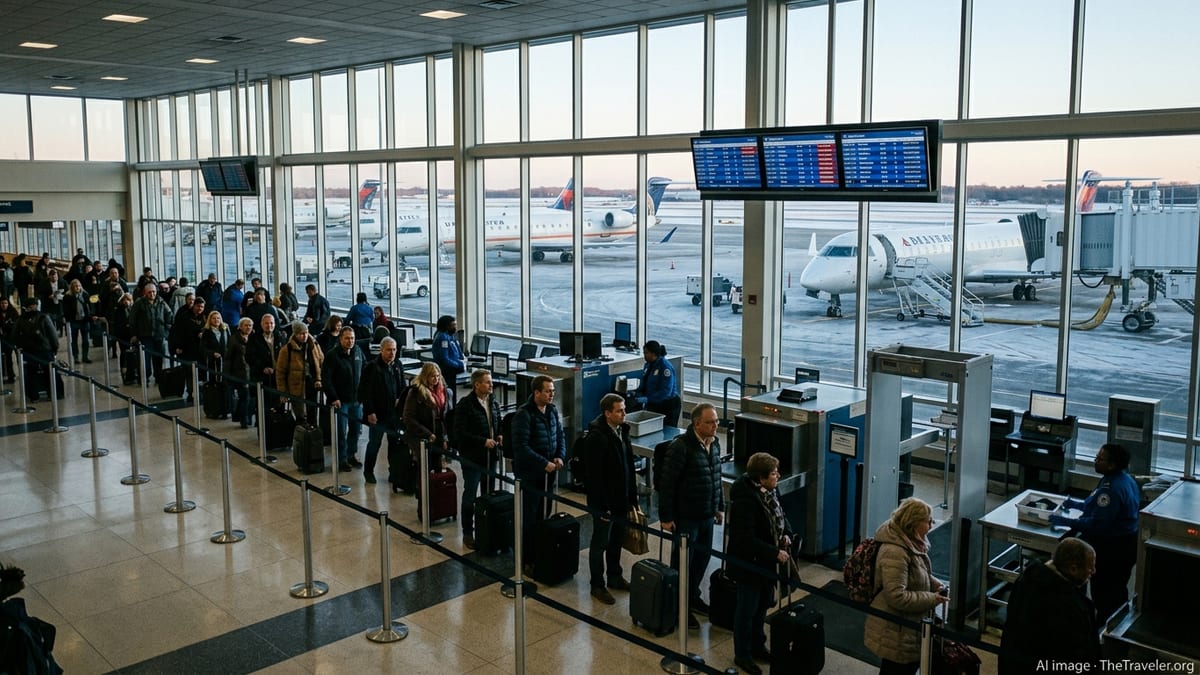
Frankfurt Turbulence Highlights Fragility of a Key Global Hub
Frankfurt Airport, Germany’s largest aviation gateway, has become the focal point of recent travel disruption as operational bottlenecks collide with earlier schedule changes and labor unrest across the country’s air network. Publicly available data shows Frankfurt handling tens of thousands of flights each month, but even modest waves of cancellations and delays have translated into long queues, missed connections, and tight aircraft rotations that reverberate throughout the system.
Reports from flight-tracking and aviation analysis outlets in early June detail several hundred combined cancellations and severe delays clustered around Frankfurt and Munich on specific peak days, overwhelming ground resources at both hubs. These issues have emerged just as Frankfurt completes a complex terminal transition, with dozens of airlines moving into the newly opened Terminal 3 in phased stages, further straining passenger flows and connection times.
As the principal European hub for many long haul routes to Asia, the Middle East, Africa, and the Americas, disruption at Frankfurt rapidly spreads outward. When domestic feeder flights are trimmed or delayed, passengers from secondary cities in Germany and neighboring countries risk missing onward services, turning what would otherwise be local schedule problems into long distance travel breakdowns for travelers worldwide.
Travel forums and disruption trackers indicate that some long haul passengers have recently found themselves stranded overnight in Frankfurt following missed connections, with rebooking options limited by already full cabins and reduced backup capacity. This has contributed to the impression among travelers that the hub is operating at the edge of its resilience, even when the absolute number of daily cancellations remains well below the peaks recorded during past crises.
Strikes and Labor Disputes Ripple Through Munich, Stuttgart, and Düsseldorf
Germany’s current wave of aviation disruption cannot be explained by Frankfurt alone. Earlier in the spring, a sequence of strikes involving pilots and cabin crew at Lufthansa and affiliated carriers triggered widespread schedule upheaval at Munich, Stuttgart, Düsseldorf, Hamburg, Berlin, and other airports. Published coverage from German and European outlets describes days when large parts of the Lufthansa network were either curtailed or forced into short notice rebooking.
At Stuttgart, several rounds of industrial action in April led to the cancellation of most flights to Frankfurt and Munich on affected days, effectively severing the airport from the national hub system for many travelers. Similar patterns were reported in Düsseldorf, where a reduced schedule left only a fraction of the usual departures operating during strike windows. Even when alternative carriers maintained some services, the loss of key feeder flights disrupted onward connections via Frankfurt and Munich.
Munich, Frankfurt’s counterpart hub in southern Germany, also saw a wave of cancellations and delays as part of the same labor disputes. Aviation monitoring sites reported clusters of domestic and European services scrubbed at short notice, including key routes linking Munich to Berlin and other regional airports. These interruptions coincided with the busy late winter and early spring travel period, affecting both business travelers and holidaymakers.
While industrial action was limited in duration, the knock on effects have lasted far longer. Airlines have continued to adjust their schedules, consolidate lightly booked flights, and reposition aircraft, contributing to uncertainty for passengers booking short haul connections through German hubs in the early summer season.
Structural Schedule Cuts Intensify Pressure on Domestic Connectivity
Alongside short term disruption from strikes, airlines have implemented more permanent changes to domestic German schedules that weaken the resilience of the network. Lufthansa Group communications outline a series of cuts and frequency reductions through the end of June, including the withdrawal of the Frankfurt to Stuttgart route and reductions on certain Frankfurt and Munich services to secondary cities.
The trimming of feeder flights to and from hubs such as Frankfurt and Munich means fewer options for travelers when irregular operations occur. If a morning connection is canceled, the remaining flights of the day are more likely to be fully booked, leaving limited room for rebooking and increasing the likelihood of passengers being stranded or forced into overnight stays.
Regional airports such as Leipzig/Halle and Dresden have also reported fewer daily connections to Frankfurt than in previous seasons, according to German regional reporting. Though each individual cut may appear modest, the cumulative effect is a tighter network where hubs must process similar or higher passenger volumes with a slimmer buffer of spare capacity.
This leaner structure amplifies the impact of weather, air traffic control restrictions, and technical issues. Once a disruption day begins to unfold, the reduction in domestic frequencies and alternative routings makes it harder to absorb delays, leading to more cancellations and extended recovery times across multiple airports.
Berlin, Hamburg, and Hamburg Face Knock On Disruptions Rather Than Full Shutdown
Berlin Brandenburg, Hamburg, and Düsseldorf have not experienced a complete shutdown of operations, but have absorbed recurring knock on effects from events centered on Frankfurt, Munich, and labor disputes. Cabin crew and regional carrier strikes extended to multiple airports, prompting cancellations of flights that normally channel passengers into the main hubs for long haul connections.
At Berlin Brandenburg, publicly available flight program data for 2026 shows a growing schedule of European and some long haul services, yet the airport remains heavily dependent on connectivity via Frankfurt and Munich for intercontinental travel. When hub operations falter, Berlin bound passengers are among those who face diversions, rebookings, or extended layovers at intermediate airports.
Hamburg and Düsseldorf, key gateways for northern and western Germany, have seen a similar pattern. Tracking sites and disruption dashboards list repeated pockets of delays and cancellations tied to the wider Lufthansa network and air traffic flow measures. Travelers departing from these airports on days with constrained hub operations have reported longer travel times, missed meetings, and last minute itinerary changes.
Despite these challenges, capacity statistics from Germany’s aviation monitoring bodies indicate that overall traffic volumes at Berlin, Hamburg, and Düsseldorf remain below their theoretical maximums. The difficulty lies not in absolute capacity, but in the tight orchestration of connections that can quickly unravel when several nodes of the system face stress at the same time.
Global Travelers Adjust Plans as Uncertainty Lingers
The accumulation of strikes, schedule cuts, and infrastructure changes across Frankfurt, Munich, Düsseldorf, Hamburg, Stuttgart, and Berlin has not produced a complete collapse of Germany’s air system, but it has created a climate of uncertainty that is influencing how travelers plan their journeys. Travel advisory platforms note heightened interest in disruption dashboards and compensation guidance, particularly for flights touching German hubs in late spring and early summer.
Some passengers are reported to be favoring itineraries that bypass Germany entirely, opting instead for connections via Amsterdam, Paris, Zurich, Vienna, or London in an effort to reduce perceived risk. Others are building in longer layovers at Frankfurt and Munich to protect against missed onward flights, trading convenience for a greater margin of safety.
Rail air combinations are also gaining visibility. With Frankfurt and Munich both integrated into Germany’s high speed rail network, some airlines and booking platforms promote itineraries that replace short domestic flights with train segments, providing an additional layer of flexibility when airside disruptions escalate. This model offers a partial release valve for the stressed domestic network, although it introduces its own vulnerabilities when rail services face delays.
Looking ahead to the peak summer travel period, aviation analysts point to a mixed picture. On one hand, the completion of terminal moves at Frankfurt and the gradual normalization of strike calendars may reduce the likelihood of sudden systemwide shocks. On the other, a tighter schedule structure, ongoing staffing constraints, and strong demand mean that any fresh disruption could again cascade quickly through Frankfurt, Munich, and the wider German airport network, keeping global travelers on alert.