


More news on this day
Beijing Capital International Airport has cancelled 25 flights and recorded delays to 371 services as Super Typhoon Bavi disrupts air traffic patterns across East Asia, affecting both domestic routes and long-haul connections to Europe, the Middle East and North America.
Get the latest news straight to your inbox!
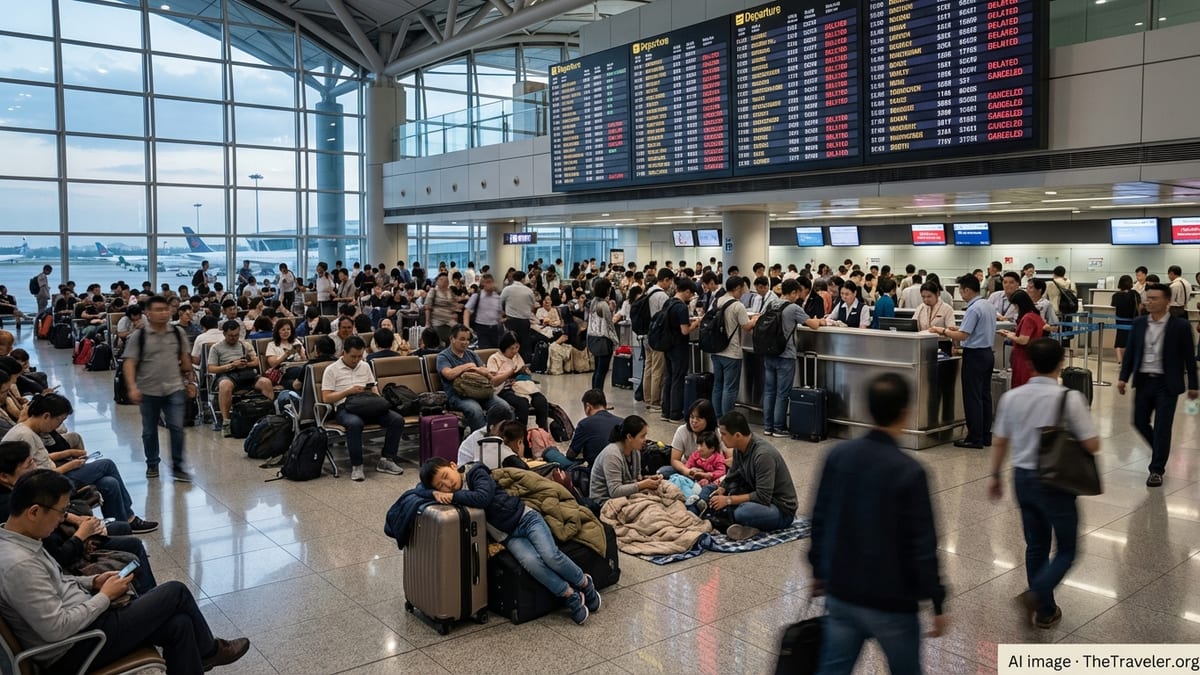
Operational Turmoil at One of the World’s Busiest Hubs
Publicly available operational data for July 9 shows that Beijing Capital International Airport is grappling with widespread schedule disruption, despite the airport remaining open. While 25 cancellations represent only a fraction of the day’s planned traffic, the 371 delayed flights indicate significant strain on runway capacity, aircraft rotations and air traffic flow management.
Travel and aviation industry reports indicate that Air China accounts for the majority of cancellations and a large share of delays, reflecting the carrier’s dominant presence at the hub and its extensive regional and long-haul network. Other domestic and international airlines are also experiencing knock-on effects as incoming aircraft arrive late, departure slots are re-sequenced and crew duty limits are adjusted.
The disruption is being felt throughout the day’s schedule rather than being confined to a single rush period. Morning delays have rolled into the afternoon bank of departures, complicating recovery efforts and leaving airlines to make real-time decisions on which flights to prioritize for scarce departure windows.
Although the overall cancellation figure remains moderate when compared with the airport’s daily capacity, the scale of delays points to a system operating close to its limits under severe weather-related constraints.
Super Typhoon Bavi Reshapes Regional Airspace
Super Typhoon Bavi, currently churning across the western Pacific, is not making a direct landfall on Beijing, but its influence is reshaping airspace across a wide swath of East Asia. Forecast tracks show the powerful storm affecting areas around Taiwan, the East China Sea and coastal parts of eastern China, prompting precautionary adjustments in air traffic flows and route planning.
Long-haul services linking Beijing with destinations such as France, South Korea, Thailand, Hong Kong, Macau, Kazakhstan, the United Arab Emirates and the United States are among those seeing schedule changes. Many of these flights must traverse or skirt airspace where strong winds, convective activity and evolving storm bands are forecast, limiting routing options and extending block times.
According to published coverage from aviation-focused outlets, air traffic management authorities across the region have introduced temporary flow restrictions, holding patterns and altitude caps on certain routes in response to Bavi’s expansive wind field. These measures, designed to preserve safety margins, reduce the number of aircraft that can transit affected sectors at any one time.
Even where flights are able to operate, extended routings and speed reductions contribute to late arrivals in Beijing, which in turn delay onward departures. The result is a web of knock-on disruption that reaches far beyond the immediate vicinity of the storm.
Airlines Juggle Cancellations, Crews and Fleet Positioning
For airlines using Beijing Capital as a hub or focus city, the current situation has become a complex recovery exercise. Carriers are weighing whether to cancel selected flights outright in order to reposition aircraft and crews more effectively, or to maintain schedules with significant delays in the hope that weather and air traffic constraints ease later in the day.
Industry analyses of disruption management practices note that such decisions are influenced by multiple factors, including aircraft type, maintenance requirements, crew duty time limitations, and the number of connecting passengers booked on each service. In the context of Super Typhoon Bavi, carriers must also consider the risk that aircraft sent into or near affected regions may later be stranded by further deterioration in conditions.
Reports from passenger forums and travel platforms suggest that some airlines have opted to consolidate lightly booked flights, offering rebooking onto alternative departures from Beijing or via other Chinese hubs. Others are focusing on maintaining key trunk routes, while trimming frequencies on secondary city pairs to free up operational capacity.
Fleet positioning is also a concern. Widebody aircraft operating long-haul sectors into Beijing may arrive significantly behind schedule or be diverted to alternate airports if arrival windows close, complicating plans for subsequent outbound services to Europe, the Middle East and North America.
Passenger Impact and On-the-Ground Conditions
For travelers passing through Beijing Capital, the disruption is manifesting as extended waits at departure gates, congested check-in halls and long lines at rebooking counters. Social media posts and travel community discussions describe screens filled with “delayed” indicators and frequent gate change announcements as airlines adjust operations hour by hour.
Publicly available airport information shows that, despite the high number of delayed services, ground transportation links into and out of the airport remain generally available. However, passengers with tight onward connections, particularly those transferring to long-haul flights, face a heightened risk of missed departures and involuntary overnight stays.
Travel advisories from major carriers encourage passengers to monitor their flight status closely through airline apps and official channels, and to arrive at the airport with additional time to accommodate possible check-in or security bottlenecks. Some airlines are waiving change fees for affected routes, allowing ticket holders to shift travel dates or choose alternative itineraries without additional penalties.
Hotel availability near the airport is another emerging pressure point, as late-night cancellations and missed connections translate into unplanned overnight stays. Travel platforms are reporting increased last-minute searches for accommodation in northeastern Beijing districts that serve the airport catchment area.
Broader Implications for China’s Summer Travel Season
The turbulence at Beijing Capital comes during a peak travel period in China’s summer season, a time when domestic tourism, business trips and international journeys usually converge to fill aircraft across the network. With Super Typhoon Bavi expected to influence weather patterns and airspace capacity for several days, analysts describe the current wave of cancellations and delays as a stress test for the country’s aviation recovery.
Historical experience with major typhoons in the region shows that the most acute disruption often occurs not only during the passage of the storm but also in the immediate aftermath, when airports and airlines work through backlogs of stranded passengers and out-of-position aircraft. In such scenarios, it can take several days for schedules to fully normalize, even after meteorological conditions improve.
For international travelers using Beijing as a gateway, the situation underscores the vulnerability of highly interconnected air networks to extreme weather events originating hundreds of kilometers away. Travel planners are likely to pay closer attention to seasonal typhoon outlooks, while airlines and airports continue to refine contingency plans, recovery algorithms and communication strategies.
As Super Typhoon Bavi continues its west-northwest track and gradually weakens over cooler waters and land interaction, operational data from Beijing Capital in the coming days will indicate how quickly one of the world’s busiest airports can absorb the shock and restore its typical rhythm of tightly choreographed arrivals and departures.