

More news on this day
Hundreds of passengers were left stranded across Australia after a wave of disruptions at Sydney Airport led to the cancellation of 14 flights and delays to nearly 300 more, with knock-on effects reported on services to the Gold Coast, Brisbane, Melbourne, Moree and Adelaide operated by Virgin Australia, Qantas, United, Air Canada and other carriers.
Get the latest news straight to your inbox!
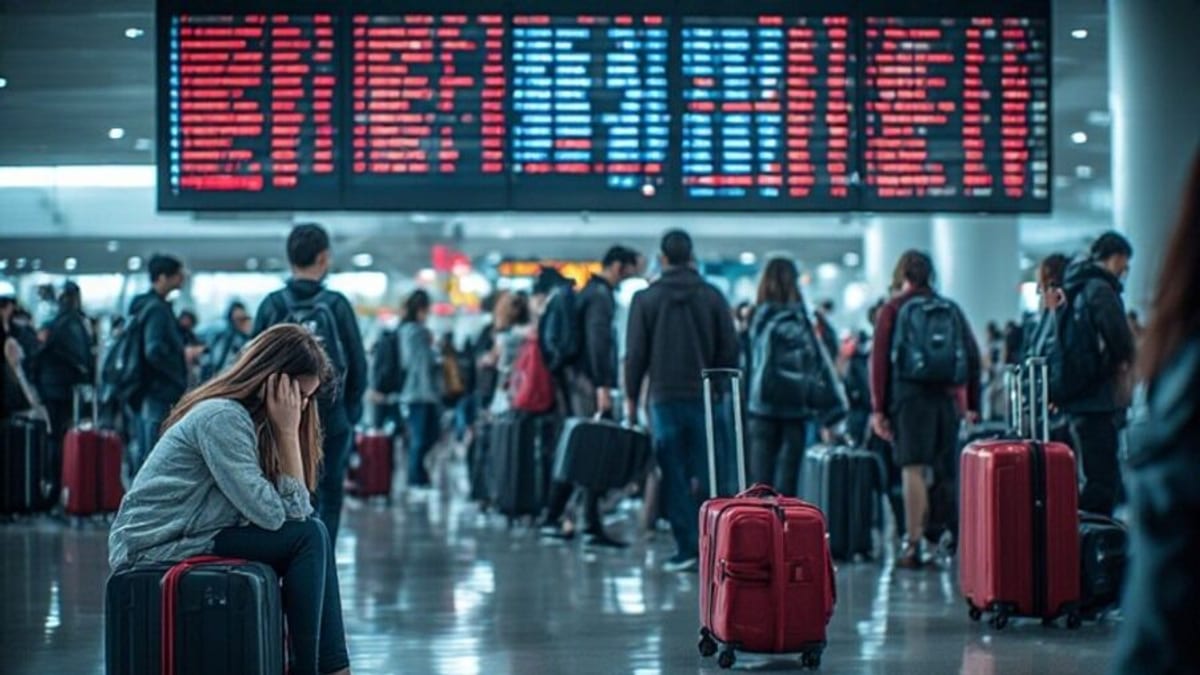
Image by Global Travel Alerts, Advisories, International Travel Alerts
Major Operational Disruptions Across Sydney Airport
Publicly available flight data and media coverage indicate that Sydney Airport has experienced a significant spike in disruption, with 14 flights cancelled and around 299 delayed over a short period. The pattern of interruptions has affected both domestic and international operations, intensifying pressure on already busy terminal and airside systems.
The latest disruption comes amid broader volatility in Australian aviation performance figures, where cancellations and late departures at major hubs such as Sydney and Melbourne have risen compared with pre-pandemic norms. Recent on-time performance reports show that Sydney continues to record some of the highest levels of delays and cancellations in the country, reflecting its exposure to weather events, congestion and air traffic management constraints.
Industry data for 2025 also points to elevated cancellation rates on several routes feeding into and out of Sydney, suggesting that even modest operational shocks can quickly cascade into a large number of delayed sectors. Against that backdrop, the cancellation of 14 flights at a single airport, coupled with hundreds of delays, has translated into widespread disruption for passengers across the domestic network.
Airport monitoring platforms show that the affected services cover a mix of peak and off-peak departures, impacting business travellers, leisure passengers and those making onward international connections. The bunching of delays across the day has led to crowded terminals and longer waits at check-in, security and baggage reclaim.
Virgin Australia, Qantas and International Carriers Affected
According to published coverage and schedule data, major Australian carriers Virgin Australia and Qantas are among the airlines most heavily affected by the latest round of disruptions at Sydney. Both operate dense networks linking the New South Wales capital with Brisbane, Melbourne, Adelaide and the Gold Coast, meaning any extended disruption in Sydney can quickly spread through their systems.
Domestic on-time performance statistics for recent months show the two largest full-service groups accounting for a substantial share of late and cancelled flights nationwide. Analysts note that Virgin Australia has significant exposure to Queensland routes, while Qantas and its subsidiaries carry a high volume of traffic on trunk sectors such as Sydney to Melbourne and Sydney to Brisbane, where delays and cancellations have been recurrent.
International operations have also felt the impact, with services operated by long-haul carriers such as United Airlines and Air Canada reported as delayed. These flights typically rely on tightly timed domestic connections through Sydney from cities including Melbourne, Brisbane and Adelaide. When short-haul sectors run late or are cancelled, connecting passengers can miss transpacific departures, triggering complex rebooking efforts and extended layovers.
Travel industry observers highlight that disruptions at a major hub such as Sydney can affect airlines differently, depending on fleet utilisation and crew availability. Carriers operating aircraft on multiple daily rotations through Sydney may have limited margin to absorb cascading delays, increasing the risk of cancellations later in the day when duty-time limits are reached.
Ripple Effects Felt in Gold Coast, Brisbane, Melbourne, Moree and Adelaide
Operational data and airport reporting show that the disruption at Sydney has not been confined to New South Wales. Flights to and from the Gold Coast, Brisbane, Melbourne, Moree and Adelaide have experienced knock-on impacts, including rolling delays and, in some cases, cancellations.
Brisbane and Melbourne, as two of Australia’s busiest domestic hubs, are particularly vulnerable to schedule shocks at Sydney. When inbound aircraft depart late from Sydney, subsequent turnarounds in Queensland and Victoria can be compressed, leading to further slippage in departure times. Over the course of a day, this can erode schedule reliability on multiple city pairs, from Brisbane to regional Queensland through to Melbourne connections across the southeast.
Gold Coast and Adelaide have seen similar pressure, with publicly available airport performance statistics in recent months showing a pattern of delays linked to congestion and operational issues along the east coast corridor. For smaller regional airports such as Moree, even a single cancelled or heavily delayed Sydney service can have outsized consequences, because replacement options are limited and many passengers rely on those flights for essential travel.
Airline schedules indicate that services on these routes are largely operated by the same fleets and crews that pass through Sydney multiple times per day. When any one of those rotations is disrupted, aircraft and staff can be left out of position, complicating recovery efforts and increasing the likelihood that delays persist into subsequent days.
Weather, IT Systems and Capacity Constraints Under Scrutiny
While specific operational reasons for each cancelled or delayed flight can vary, recent incidents across Australia highlight a cluster of recurring triggers, including adverse weather, technology failures and structural capacity limits in the aviation system. Strong winds, low cloud and storms around Sydney have frequently resulted in air traffic flow restrictions, forcing airlines to hold or divert aircraft and compressing runway capacity.
In addition, large-scale technology outages have recently demonstrated how vulnerable airline and airport operations can be to external IT failures. A widely reported global software incident in 2024 disrupted check-in and departure systems for multiple Australian airlines, including Qantas and Virgin Australia, affecting several capital city airports such as Sydney, Melbourne, Brisbane and Adelaide. Publicly available reports indicate that on that occasion, passengers endured long queues, manual boarding processes and flight delays while systems were restored.
Capacity constraints have also been identified in regulatory and competition analyses as a persistent source of fragility. Studies into domestic airline reliability published in 2025 highlight that cancellation rates at key airports, including Sydney, have risen above pre-2019 levels despite the market not yet fully returning to pre-pandemic traffic patterns. Analysts point to tight staffing, aging infrastructure and high utilisation of aircraft as factors that can turn relatively minor issues into network-wide disruption.
Industry commentators argue that, in this context, a cluster of 14 cancellations and close to 300 delays at a major hub is less an isolated event than a symptom of deeper structural stress within Australia’s aviation system. They suggest that without additional investment in infrastructure, technology resilience and workforce capacity, similar disruption episodes are likely to recur.
Travellers Confront Growing Uncertainty in Australian Skies
For passengers, the latest disruption episode at Sydney Airport adds to a growing sense of uncertainty around domestic and international air travel in Australia. Recent consumer and regulatory reports have documented rising complaint levels related to cancellations, lengthy delays and rebooking difficulties, particularly on busy east coast routes linking Sydney, Melbourne and Brisbane.
Publicly available guidance from airlines and airports urges travellers to allow extra time at terminals, regularly check flight status via official channels and consider the risk of missed connections when booking tight domestic to international transfers. Travel agents and advisory services increasingly recommend longer layovers at Sydney for those connecting to long-haul flights to North America and Asia, in recognition of the higher likelihood of upstream delays.
Observers note that disruptions of the scale seen in the latest Sydney episode can have wider economic effects, from lost business productivity to added costs for airlines providing accommodation, meal vouchers or alternative transport for stranded customers. For tourism-dependent regions such as the Gold Coast and broader Queensland, repeated interruptions to air links can also undermine confidence among domestic and overseas visitors.
As airlines and airport operators work through recovery operations following the cancellation of 14 flights and delays to nearly 300 more, attention is likely to focus on whether lessons from recent incidents translate into tangible improvements in reliability. For now, passengers travelling through Sydney and its connected cities such as Brisbane, Melbourne, Adelaide, the Gold Coast and Moree are being reminded that flexibility and contingency planning remain essential parts of flying in Australia’s current aviation climate.