


More news on this day
Taiwan has formally approved a long-planned extension of its high-speed rail network from Taipei to Yilan, advancing a major infrastructure project that aims to ease chronic traffic congestion to the country’s northeast while raising fresh scrutiny over its environmental impact and multibillion-dollar price tag.
Get the latest news straight to your inbox!
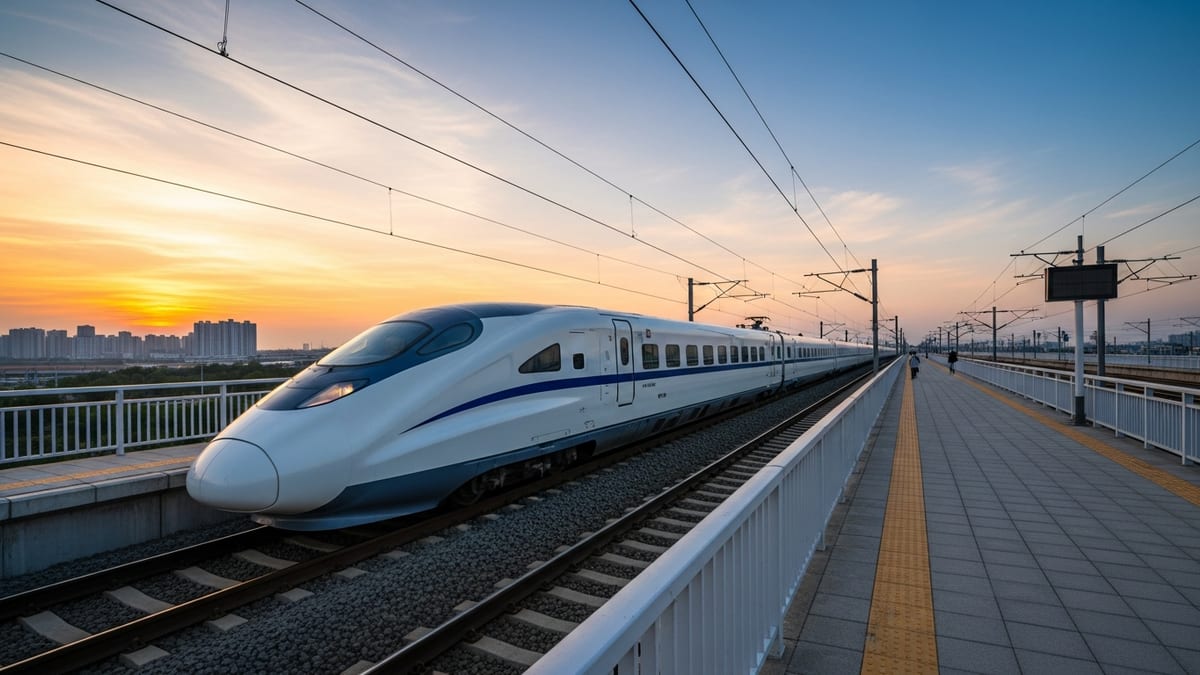
A New High-Speed Link for Northeastern Taiwan
According to publicly available government planning documents and recent media coverage, the approved project will extend Taiwan’s high-speed rail line east from the existing terminus in the greater Taipei area toward Yilan, a coastal county popular with domestic tourists. The line is intended to cut rail travel between the capital and Yilan to around a quarter of current journey times on conventional services, potentially bringing the trip close to the 15-minute mark that earlier feasibility studies highlighted as a target.
The extension has been under discussion for years as part of a broader push to expand the high-speed rail network beyond its original corridor on Taiwan’s western plains. Policy papers and corporate filings from Taiwan High Speed Rail Corporation show that Yilan and Pingtung in the south have been recurring priorities for future route development, with the Yilan link seen as the critical first step toward a more continuous, island-spanning system.
The latest approval follows previous milestones including route selection and the completion of an environmental impact assessment. Recent local news segments in English-language Taiwanese outlets reported that the project cleared a key environmental review and subsequently received cabinet-level backing, allowing it to move into the detailed design and comprehensive planning phase.
While precise opening dates will depend on final engineering decisions and construction progress, transportation commentators in Taiwan generally indicate a timeline of just over a decade from approval to full operation, reflecting the complexity of tunneling and bridge work required to cross the mountain range that separates Taipei from the Yilan plain.
Major Investment and Engineering Challenges
The high-speed rail extension represents one of Taiwan’s most expensive single transport projects in recent years. Earlier estimates prepared around 2022 put core construction costs in the range of 180 billion New Taiwan dollars. Subsequent discussions cited by local media and county-level planning material suggest that updated figures, adjusted for rising labor and materials prices, could approach 400 billion NT dollars as the design is refined.
The line will require extensive tunneling through rugged terrain, a factor that has long complicated rail planning toward Taiwan’s east coast. Engineering assessments released in recent years underlined the need to balance speed with seismic safety and environmental protection, particularly in light of recent earthquakes that have affected nearby Hualien and Yilan counties and highlighted the vulnerability of existing rail infrastructure.
Technical documentation related to Taiwan High Speed Rail’s next-generation rolling stock indicates that the network is being upgraded in parallel with the extension plans. New trainsets derived from the N700S platform are expected to begin service later this decade, and transport analysts have noted that they are being introduced at a moment when the system is preparing for longer routes, including the new connection to Yilan.
Given the scale of investment, financial planning materials released by the operator and transport authorities emphasize staged funding, with central government support, potential local contributions, and an expanded role for the high-speed rail company in long-term operation and maintenance once the route opens.
Relief for Congested Freeways and Tourism Corridors
Yilan’s popularity as a weekend and holiday destination for residents of Taipei has been a central argument in favor of the extension. Reports from Taiwanese broadcasters routinely highlight severe congestion in the Hsuehshan Tunnel and along Freeway No. 5, which links the capital with the county. Long tailbacks on peak travel days have been a persistent feature of domestic travel news coverage.
Transport planners and local commentators expect a completed high-speed rail link to shift a share of this traffic from road to rail, particularly for time-sensitive travelers willing to pay premium fares. That could ease pressure in the tunnel and along key highway sections, while also providing a more predictable, weather-resistant connection in typhoon seasons that often disrupt mountain road travel.
The new station location near Yilan has been a topic of debate. Some planning material and public discussion describe a site in the central part of the county, with the expectation that Taiwan Railway local and express services would be reconfigured to connect with the high-speed stop. Advocates of the project argue that this could anchor new transit-oriented development, with bus feeders and rail connections extending the catchment area.
Tourism operators in eastern Taiwan, as described in travel and economic coverage, hope that faster access from Taipei will encourage more frequent short trips and potentially lengthen stays, particularly if combined with coordinated ticketing between high-speed and conventional rail services. However, there is also recognition that quicker access could increase visitor pressure on fragile coastal and mountain environments if not managed carefully.
Debate Over Environmental Impact and Local Benefits
Public debate around the Yilan extension has been intense. Environmental groups and some local residents have voiced concerns in Taiwanese media reports about the project’s potential impact on sensitive ecosystems, including river valleys, wetlands and mountain slopes along the proposed alignment. They argue that the benefits may be concentrated among commuters and tourism operators, while the environmental costs are borne by local communities and wildlife.
The environmental impact assessment process, which the project has now passed, examined route alternatives and mitigation measures, including tunnel alignments intended to limit disturbance on the surface. Summaries of the review described strengthened monitoring of groundwater, landslide risk and ecological corridors, as well as measures to reduce construction noise and vibration in populated areas.
Critics, including participants in public hearings and street demonstrations covered by domestic television news, have argued that the project’s climate benefits may be modest compared with investments in conventional rail, regional buses or local transit upgrades. They point to the high embodied carbon in large-scale tunneling and viaduct construction, and question whether projected ridership justifies the scale of the intervention.
Supporters counter that integrating Yilan into the high-speed network will reduce car dependence for long-distance trips, create more resilient evacuation routes in the event of major natural disasters, and help rebalance development between Taiwan’s densely populated west and its less-served east. The approval suggests that national decision-makers have concluded that these benefits outweigh the documented environmental risks, provided that mitigation and monitoring commitments are upheld.
What the Extension Means for Travelers
For travelers, the most immediate implication is not a timetable change but the prospect of a significantly different journey experience in the next decade. Instead of relying on a combination of freeway buses, private cars or conventional trains that share constrained mountain routes, passengers will eventually be able to travel from the Taipei area to Yilan on the same type of high-speed trains that now connect the capital to major western cities such as Taichung, Tainan and Kaohsiung.
Once completed, the extension is expected to shorten travel times dramatically and offer more consistent service during peak tourism periods and adverse weather. Public information from Taiwan’s transport planners indicates that the line is intended to operate at frequencies integrated with the existing high-speed timetable, likely with additional peak services on weekends and holidays when demand to Yilan is strongest.
The project also positions Yilan as a more accessible base for exploring Taiwan’s rugged northeast coast and, indirectly, the wider east coast corridor toward Hualien and Taitung. While the high-speed rail will not replace conventional lines that continue deeper into eastern Taiwan, it is likely to change how many visitors plan itineraries, with Yilan becoming a high-speed gateway rather than a terminus reached only by slower routes.
In the meantime, travelers can expect a long construction horizon once ground is broken, with periodic disruptions along access roads and in future station areas. Local reporting suggests that authorities and the operator will be under pressure to manage these impacts carefully in order to maintain support for a project that, after years of debate, is finally moving from plans on paper to engineering reality.