


More news on this day
Emergency rail work is underway along the San Clemente coastline after recent high tides and heavy surf damaged a vulnerable stretch of track on Southern California’s busy Pacific Surfliner corridor, disrupting passenger service and renewing concern over the long-term future of the oceanfront rail line.
Get the latest news straight to your inbox!
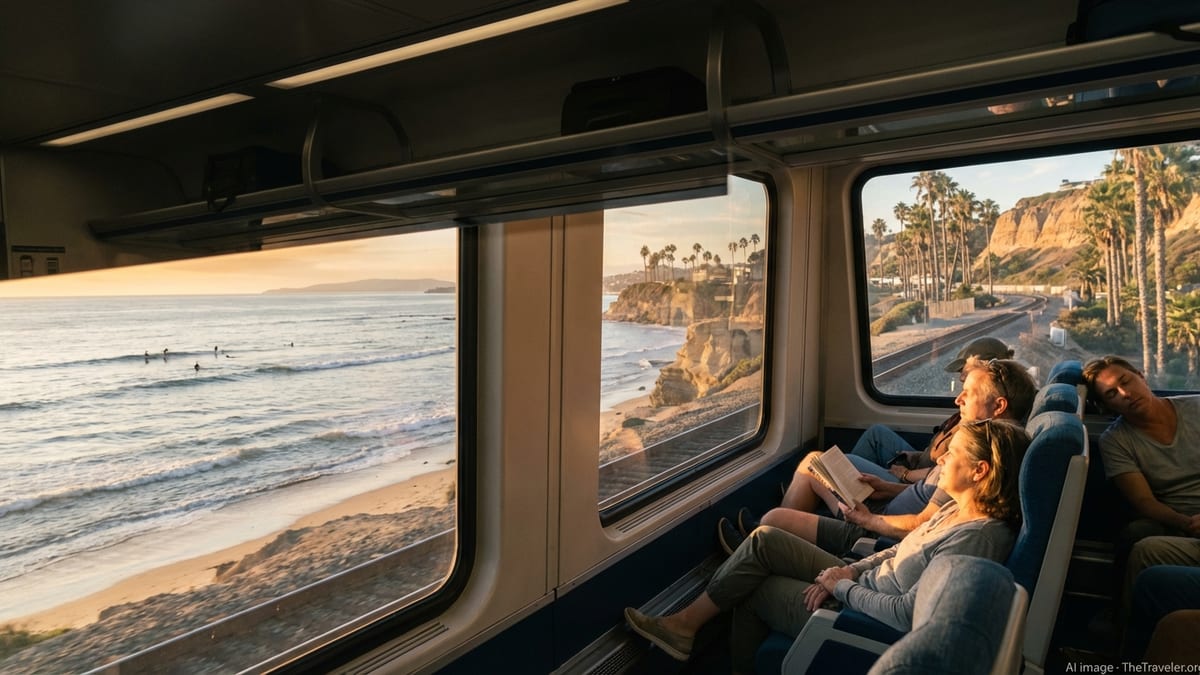
High Surf Forces New Closures on a Critical Coastal Link
Recent reports from riders and local observers indicate that powerful surf and elevated tides in late July and early August sent waves across the tracks south of the San Clemente Pier, scouring the ballast and damaging rail infrastructure along the narrow beach. Social media posts and online discussions describe trains creeping through the area at very low speeds before sections of the line were closed for safety and emergency repair work was mobilized.
The affected segment forms part of the Surf Line, used by Amtrak’s Pacific Surfliner, Metrolink commuter services and freight operators between Los Angeles and San Diego. Publicly available information from earlier repair programs notes that waves in this reach can crash directly onto the track at high tide when beach width is minimal, leaving little buffer between the ocean and the rail bed.
Travelers have reported delays of an hour or more in recent days as trains are held short of the damaged area or detoured to bus connections between Oceanside and Orange County. Online status tools for the Pacific Surfliner show cascading schedule impacts along the corridor, with some services canceled outright while crews work around tidal cycles to reach the exposed work zone.
Information shared by transit riders suggests that, at times, trains have been routed through at restricted speeds when tides are lower, then halted again as water recedes and work resumes. That pattern underscores how closely rail operations here are tied to short-term ocean conditions and how quickly a high-surf event can interrupt one of the state’s busiest passenger rail corridors.
Fresh Damage on a Corridor Already Shaped by Erosion
The latest washout comes on the heels of a series of emergency projects in San Clemente in recent years, including stabilization efforts near the Cyprus Shore community and below Casa Romantica, where landslides and bluff movement have repeatedly threatened the right-of-way. Orange County Transportation Authority reports describe millions of dollars already spent on ground anchors, protective rock berms and temporary barrier walls intended to keep the track in service.
Planning documents and coastal resiliency studies prepared for public agencies have long identified this section of shoreline as highly vulnerable to both coastal erosion and inland slope failures. At several mileposts through San Clemente City Beach, analysts describe conditions where there is little or no dry beach at high tide, leaving the track and its supporting structures exposed whenever swell and water levels coincide.
Previous emergency repairs were focused on landslide-prone bluffs and gradual ground movement, but the current event highlights the opposite threat: direct attack from the sea. Riders posting images and first-hand accounts of recent trains passing through the city describe large waves reaching track level, with water intrusion into train cars and visible rock dumped along the seaward edge to patch fresh scour.
This combination of chronic bluff instability and increasingly energetic coastal flooding has made the San Clemente segment a focal point for broader debates about how, and for how long, the Surf Line can realistically remain in its current oceanfront alignment.
Traveler Impacts: Detours, Delays and Service Adjustments
For rail travelers, the immediate effects are being felt in altered timetables and changed trip patterns between Los Angeles, Orange County and San Diego. Information shared through rail enthusiast communities and rider forums points to temporary bus bridges replacing some Pacific Surfliner segments around San Clemente, along with added travel time for Metrolink passengers connecting through the corridor.
Passengers have reported trains being held at Oceanside or further north while dispatchers coordinate movements through single-track bottlenecks created by parked freight trains and track work zones. In some cases, the use of sidings for freight storage has effectively extended the length of single-track territory, amplifying the impact of any disruption at the coast.
Prospective riders looking ahead to late summer travel are also being advised, through online notices and shared bulletins, to prepare for additional closures tied to larger maintenance windows in September. Discussion of a full corridor shutdown on a mid-September weekend for overlapping work by several railroads, including activity near San Clemente, suggests that operators are trying to pair longer-planned projects with ongoing stabilization efforts in the fragile coastal segment.
For visitors planning coastal trips, the combination of short-notice emergency responses and scheduled work windows adds a new layer of uncertainty. Travelers are encouraged by publicly available advisories to monitor day-of status updates closely, allow extra connection time and be prepared for last-minute shifts between train and bus service along the Los Angeles–San Diego route.
Long-Term Questions About the Future of the Surf Line
While current efforts are focused on restoring safe operations as quickly as conditions allow, the recurring need for emergency intervention is intensifying scrutiny of the long-term viability of the oceanfront alignment through San Clemente. State transportation commission briefings and regional planning studies have previously highlighted the rail line’s importance as both a passenger corridor and a strategic freight link for moving goods and military assets along the coast.
Those same documents also acknowledge that climate-driven sea level rise, higher king tides and more frequent extreme surf events are expected to increase pressures on low-lying infrastructure, particularly where historic rail beds were constructed close to the shore. The San Clemente segment has emerged as a visible example of that challenge, with widely shared images of waves breaking at rail height and rock revetments consuming what remains of the beach.
Concepts such as relocating the tracks inland, adding tunnels, or pursuing large-scale shoreline protection projects have appeared in public discussions, but associated costs, permitting hurdles and potential neighborhood impacts have kept most options at the feasibility and study stage. In the meantime, agencies have repeatedly relied on incremental measures such as added rock, temporary walls and track monitoring systems to buy time.
The current round of emergency repairs, prompted once again by high tides and surf, reinforces the tension between short-term stabilization and long-term adaptation. For travelers, each new closure is a reminder that one of California’s most scenic rail journeys is also one of its most exposed, and that decisions about the corridor’s future will increasingly shape how reliably people can move along the Southern California coast.
Coastal Erosion, Climate Pressures and Visitor Awareness
Beyond transportation logistics, the situation in San Clemente is drawing renewed attention to the broader erosion of Southern California’s beaches and the implications for coastal tourism. Public hazard mitigation plans prepared for the city catalogue a series of recent landslides, washed-out walkways and storm-related damage to beachfront facilities, illustrating how quickly infrastructure at the land-sea boundary can be affected.
For visitors, the striking juxtaposition of trains, waves and narrow strands of sand that once defined the appeal of the Pacific Surfliner route is increasingly intertwined with visible signs of defense: fresh rock piles, construction equipment on the beach and fenced-off work zones below bluffs. As repairs proceed, some access points and segments of the popular San Clemente Beach Trail may be temporarily constrained, altering how people experience the shoreline.
Travel and rail advocates following the repairs are using the moment to highlight the role of intercity trains and commuter rail as lower-emission alternatives to driving along the congested Interstate 5. At the same time, they note that maintaining those options in a changing coastal environment will require sustained investment and, potentially, transformative decisions about where and how the tracks run.
For now, emergency work crews are focused on shoring up the latest damaged reaches of track and restoring through service over the coming days and weeks. As new high-surf episodes arrive with the seasons, however, the San Clemente rail line is likely to remain a closely watched barometer of how California’s coastal transportation network adapts to a more volatile ocean.