

More news on this day
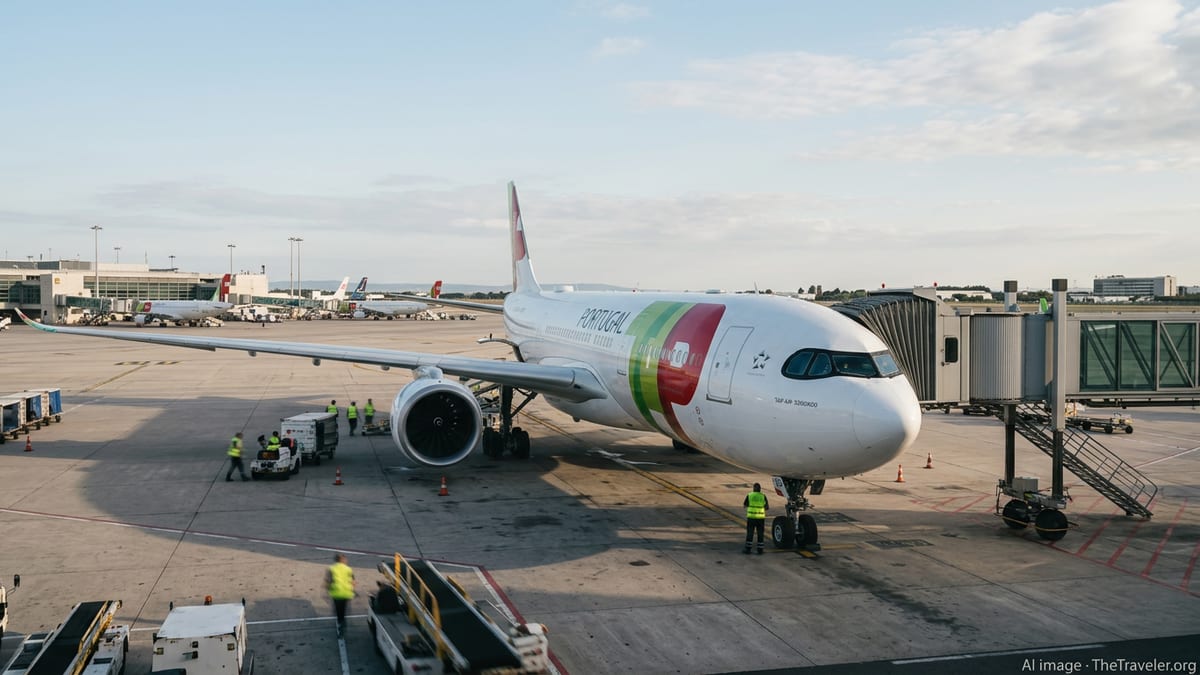
TAP Air Portugal is reinstating nonstop service between Lisbon and Caracas in early April 2026, deploying its fuel-efficient Airbus A330neo on a route seen as strategically vital for tourism and diaspora links between Europe and Venezuela.
Route Relaunch Marks New Phase in Portugal–Venezuela Connectivity
The long-anticipated return of direct flights between Lisbon’s Humberto Delgado Airport and Caracas’ Simón Bolívar International Airport marks a significant shift in TAP Air Portugal’s Latin American strategy. After years of capacity adjustments and intermittent suspensions linked to Venezuela’s economic and operational challenges, the carrier is once again committing widebody capacity to the market.
According to recent announcements from aviation authorities in Caracas and coverage in Portuguese and Venezuelan media, TAP will resume the Lisbon–Caracas link at the start of April 2026, restoring a nonstop bridge between Portugal and Venezuela. The route will initially operate several times per week, providing both point-to-point connectivity and onward links via TAP’s Lisbon hub to the rest of Europe and parts of Africa.
TAP had previously served Caracas with older-generation Airbus widebodies and, more recently, with the Airbus A330neo as part of a broader South Atlantic network. The renewed commitment for 2026 reflects improved conditions in the Venezuelan market as well as strong demand from the sizable Venezuelan and Luso-Venezuelan communities in Portugal, Spain and other European countries.
The decision also comes as TAP expands across the Atlantic, adding new routes to North America and reinforcing its role as a bridge between Europe and Latin America. Industry analysts say the Lisbon–Caracas relaunch is part of a wider recalibration of long-haul capacity, with the A330neo at the center of the airline’s international fleet.
A330neo Brings Modern Comfort and Efficiency to the Caracas Route
The Lisbon–Caracas flights will be operated by Airbus A330-900neo aircraft, TAP’s flagship long-haul type. The airline was the launch customer for the A330neo and has deployed it extensively on routes to Brazil, North America and Africa, earning a reputation for improved comfort, quieter cabins and better fuel efficiency compared with previous-generation A330s.
The A330neo features a two-class configuration on TAP, with a lie-flat business-class cabin and an updated economy cabin that includes a “comfort” section with extra legroom. Passengers on the Caracas route can expect modern in-flight entertainment screens, onboard connectivity on most aircraft and a cabin design that incorporates TAP’s contemporary Portuguese branding.
From an operational perspective, the choice of the A330neo reflects a focus on fuel savings and range flexibility. The aircraft’s new-generation engines and aerodynamic improvements reduce fuel burn, a crucial factor on long transatlantic sectors. For TAP, this efficiency supports the economic viability of long-haul routes that may experience demand fluctuations, such as services to Venezuela.
For travelers, the move to the A330neo is likely to mean a more consistent onboard product between Caracas and Lisbon, matching what TAP already offers on many of its flagship routes to São Paulo, Rio de Janeiro and Miami. Travel agents and frequent flyers note that this alignment simplifies expectations for passengers connecting via Lisbon to other long-haul destinations.
Schedules, Frequencies and Key Market Segments
While full timetable details and exact start-of-service dates are being finalized, aviation authorities in Venezuela have indicated that TAP’s Lisbon–Caracas flights will return with multiple weekly frequencies in April 2026, using the widebody A330neo. The schedule is expected to provide early-evening departures from Lisbon with overnight arrivals in Caracas, and daytime return flights back to Portugal to optimize connections at TAP’s hub.
The primary market segments for the relaunched route will include visiting-friends-and-relatives traffic, particularly among the sizable Venezuelan diaspora in Portugal and other European countries, as well as business travelers linked to energy, infrastructure and trade. Leisure travelers are also expected to benefit, with the nonstop service providing a more straightforward option for European tourists heading to Venezuela and Venezuelan travelers en route to European destinations.
Lisbon’s geographic position continues to be a key selling point. The city’s airport offers a compact hub where passengers from Caracas can connect to dozens of European cities, along with select destinations in North Africa and beyond. TAP’s existing network to Brazil and other South American markets also opens up one-stop itineraries between Venezuela and Portuguese-speaking destinations further south.
Industry observers point out that demand between Europe and Venezuela has been resurfacing as more carriers cautiously restore or increase services. TAP’s decision to return with a modern widebody jet and a hub-based model is seen as a vote of confidence in the gradual normalization of air travel to and from Caracas.
Implications for Diaspora, Tourism and Trade
The restoration of direct Lisbon–Caracas flights carries significance that goes beyond aviation. For the Venezuelan and Portuguese communities spread across both countries, the nonstop service reduces travel time, simplifies itineraries and eliminates the need for lengthy connections through third-country hubs. Families separated across continents will once again have a direct option that connects them in a single overnight flight.
Tourism stakeholders in both Portugal and Venezuela are hopeful that the route will stimulate two-way leisure travel. Portuguese travelers have increasingly sought long-haul destinations that combine nature, culture and value, and a direct link to Caracas may encourage more visitors to explore Venezuela’s Caribbean coastline, national parks and historic cities. Conversely, Venezuelan tourists will gain smoother access to Portugal’s cities, wine regions and Atlantic islands.
Trade flows may also benefit from the return of regular widebody capacity on the corridor. Although the A330neo is primarily a passenger aircraft, its belly cargo space can support the movement of high-value and time-sensitive goods between Europe and Venezuela. Forwarders and exporters of pharmaceuticals, perishables and spare parts often rely on the frequency and reliability of passenger flights to maintain their supply chains.
Diplomatically, the resumption of flights underscores the continuing role of Portugal as an important partner for Venezuela within the European Union context. Direct air links facilitate official visits, business delegations and cultural exchanges, reinforcing bilateral ties at a time when connectivity is being rebuilt across the region.
What Travelers Should Know Before Booking
Prospective passengers on the renewed Lisbon–Caracas route are being advised by travel agents and aviation experts to monitor TAP’s official channels and booking systems as schedules are loaded and fares become available. As with many long-haul services, introductory promotional fares may be offered around the launch period, particularly for spring and early summer 2026 departures.
Travelers planning trips to or from Venezuela are also encouraged to pay close attention to entry requirements, visas and any transit rules that may apply when connecting through Lisbon. While the return of nonstop flights simplifies the journey, regulatory conditions can still vary by nationality and itinerary. Early booking is recommended for peak travel periods, including school holidays and major regional events.
Passenger feedback from TAP’s other A330neo-operated routes suggests that selecting seats in advance, especially in the extra-legroom economy section or business class, can make a noticeable difference on the roughly eight to nine hour crossing. Those seeking a quieter experience often opt for seats away from galleys and lavatories, while travelers prioritizing sleep may prefer window seats on the overnight leg.
With the launch of A330neo-operated nonstop flights between Lisbon and Caracas in early April 2026, TAP Air Portugal is placing a renewed bet on a complex but strategically important market. For travelers, diaspora communities and businesses on both sides of the Atlantic, the return of this direct connection promises greater flexibility, comfort and choice in the months and years ahead.