

More news on this day
The Tanzania–Zambia Railway Authority has restarted cross-border passenger trains between Dar es Salaam and New Kapiri Mposhi, reviving a strategic rail corridor that promises fresh momentum for tourism, trade and wider economic integration across Southern and Eastern Africa.
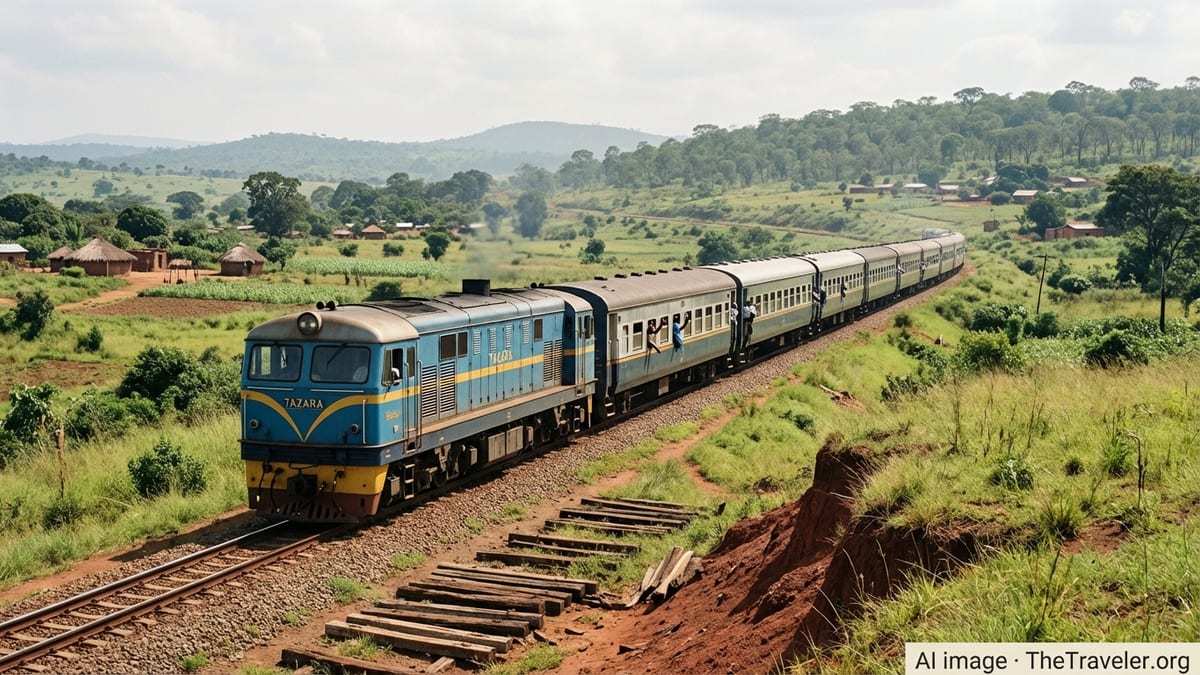
Cross-Border Trains Return After 20-Month Suspension
Cross-border passenger services on the Tanzania–Zambia Railway resumed on 10 February 2026, ending a 20-month hiatus that began in June 2024 when technical and operational problems forced long-distance trains to halt at the border. The reintroduction of services restores one of the region’s most iconic rail links, originally built in the 1970s to connect landlocked Zambia to the port of Dar es Salaam.
The flagship Mukuba passenger train now operates once a week in each direction between Dar es Salaam in Tanzania and New Kapiri Mposhi in Zambia. Departures leave Dar es Salaam on Friday afternoons and return from New Kapiri Mposhi on Tuesdays, aligning with a revised timetable designed to match demand while working within the constraints of an ageing fleet.
TAZARA officials have framed the restart as a key step in rebuilding confidence in cross-border rail travel. After years of interrupted operations and infrastructure setbacks, the return of international passenger services is being closely watched by governments, regional bodies and the tourism and logistics industries that rely on predictable, affordable transport across the corridor.
Reorganised Services Aim for Reliability and Inclusion
The resumption of trains is part of a broader reorganisation of passenger operations that TAZARA says is intended to prioritise reliability, inclusivity and financial sustainability. Weekly passenger trips between Dar es Salaam and New Kapiri Mposhi have been cut from four to two, allowing the authority to consolidate locomotives and coaches on core routes rather than stretching limited rolling stock thinly across the network.
Under the new pattern, the Mukuba service combines express running with all-stops segments to balance speed and accessibility. The train runs as an express between New Kapiri Mposhi and Kasama in Zambia and between Nakonde on the border and Msolwa in Tanzania, but switches to a stopping service between Kasama and Nakonde and between Msolwa and Dar es Salaam, where demand is high and alternative transport is scarce.
The Udzungwa shuttle, a popular domestic service in Tanzania, has also been restored with two ordinary trips per week between Kidatu and Makambako. By maintaining this local lifeline while relaunching the international corridor, the authority is seeking to ensure that small communities and low-income passengers are not pushed aside as it focuses on higher-profile cross-border operations.
TAZARA management acknowledges that the reduced number of trains is a compromise driven by infrastructure limitations and rolling-stock shortages. However, they argue that a smaller, more reliable schedule is preferable to frequent cancellations and breakdowns, which have historically eroded public trust and undermined the railway’s commercial prospects.
Boost for Tourism Along a Legendary African Rail Journey
The restored Mukuba service is expected to deliver an immediate uplift for tourism along the Tanzania–Zambia corridor. The route, which traverses coastal plains, miombo woodlands and wildlife-rich escarpments, has long held appeal for rail enthusiasts and independent travelers seeking an overland journey between Eastern and Southern Africa.
Tour operators in Dar es Salaam, Mbeya and the Zambian copperbelt say the return of a predictable cross-border train will make it easier to package multi-country itineraries that combine coastal stays, national park safaris and cultural experiences with a classic rail journey. The Udzungwa segment in particular provides low-cost access to key jumping-off points for destinations in the Morogoro and Njombe regions.
The timing of the relaunch, coinciding with TAZARA’s 50th anniversary, is also being used to reposition the line as both a heritage attraction and a practical transport option. Railway officials have signalled plans to gradually upgrade onboard services, including catering and cabin standards, to appeal to a broader mix of domestic and international travelers, while keeping base fares affordable for regional passengers.
For communities along the line, increased visitor flows can translate into new income from guesthouses, markets and guiding services. However, local authorities stress that improved coordination between rail timetables, road transfers and park access will be essential if the full tourism potential of the corridor is to be realised.
Reconnecting Trade Routes and Border Communities
Beyond tourism, the restored passenger link carries significant economic and social weight for border communities and small traders who depend on affordable, predictable transport. The Mukuba’s stopping pattern on sections without parallel roads is designed to reconnect markets that had become increasingly isolated during the suspension of services.
Informal cross-border trade in agricultural goods, textiles and household supplies is expected to benefit from renewed rail connectivity, especially for passengers who travel with small consignments that are impractical to move by air or expensive road services. Traders and civil society groups say that consistent train operations can lower transport costs, improve safety and reduce the risks associated with using overcrowded or unregulated road vehicles.
The relaunch also carries symbolism for regional integration efforts championed by the Southern African Development Community and the African Continental Free Trade Area. By physically reconnecting Zambia to the Indian Ocean via rail, the corridor strengthens an alternative to congested road borders and provides a strategic back-up route for freight and passenger flows across Southern and Eastern Africa.
Local leaders along the line note that regular trains help sustain cross-border family ties, education opportunities and labour mobility that were disrupted when services were halted. For many, the return of the Mukuba is as much about restoring social and cultural links as it is about moving goods and tourists.
Investment and Rehabilitation Shape the Railway’s Future
The restart of cross-border passenger services comes as TAZARA embarks on a multi-year rehabilitation programme backed by significant investment to overhaul track, bridges, signalling and rolling stock. Engineering teams have begun detailed audits of the 1,860-kilometre line, prioritising sections that suffer from speed restrictions, landslide risk and structural wear.
New locomotives and passenger coaches are slated to arrive over the coming years, with the goal of increasing frequencies once reliability improves and maintenance backlogs are reduced. TAZARA executives say that dedicated passenger fleets will eventually allow more express services and a more competitive journey time between Dar es Salaam and New Kapiri Mposhi.
Analysts caution that turning around a complex bi-national railway will require sustained political support from both Tanzania and Zambia, as well as careful management of concession and investment agreements. Nevertheless, the successful reintroduction of the Mukuba service is being seen as an important signal that the line’s long-discussed revival is finally moving from planning to reality.
For now, the weekly cross-border trains mark a tangible step toward a more connected Southern and Eastern Africa. If operational gains can be consolidated and planned upgrades delivered, the Tanzania–Zambia Railway could once again become a backbone for regional mobility, tourism growth and trade across the heart of the continent.