


More news on this day
Test trains are now running along Sydney’s long-awaited Southwest Metro extension between Sydenham and Bankstown, marking a major shift from heavy construction to intensive systems testing ahead of passenger services planned for the second half of 2026.
Get the latest news straight to your inbox!
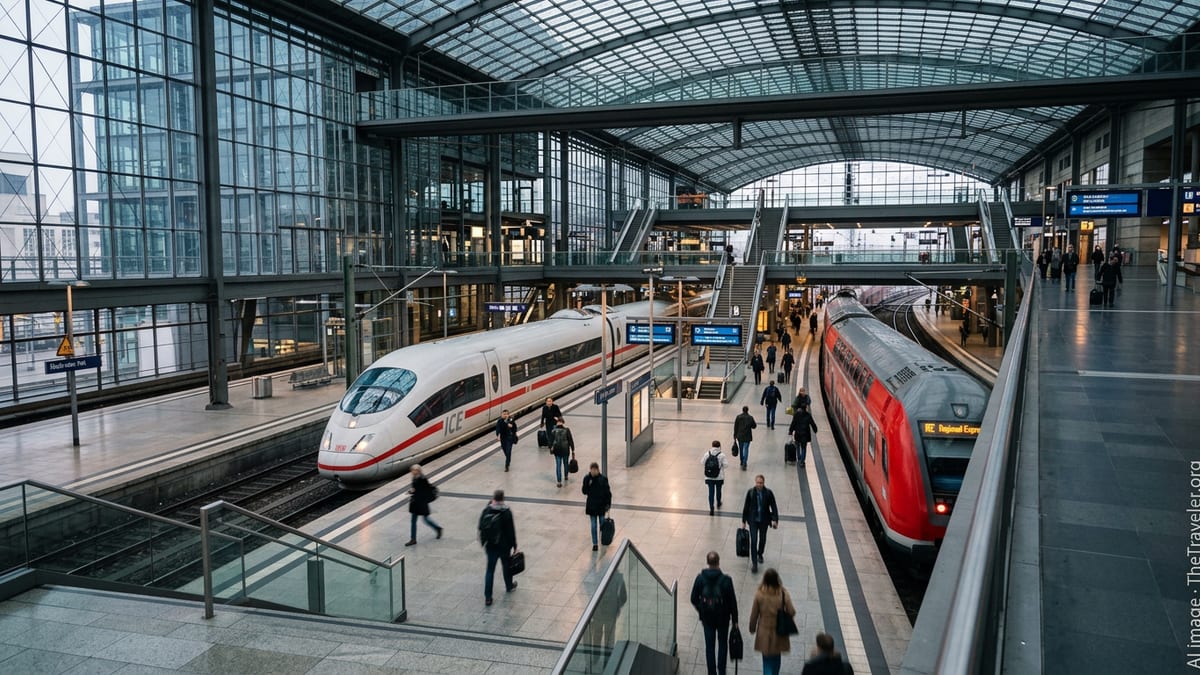
From construction zone to live railway
The 13.5 kilometre Southwest Metro extension is being delivered as part of the Sydney Metro City and Southwest project, converting the former T3 Bankstown Line between Sydenham and Bankstown into a fully automated, high-frequency metro corridor. Publicly available project updates show that civil works, track installation and station fit-outs have progressed to the point where the line can now support regular test running.
According to project documentation and recent government releases, the extension has moved through several testing phases since early 2025, beginning with low-speed running on dedicated test sections before gradually expanding to higher-speed runs along the full corridor. By early 2026, test trains were authorised to reach up to 100 kilometres an hour on the new infrastructure, allowing engineers to validate ride quality, braking performance and the interface with platforms and signalling.
The latest phase involves what operators describe as multi-train and end-to-end testing. Trains that ordinarily carry passengers on the existing M1 Metro North West & Bankstown Line are now running empty beyond Sydenham into the converted section toward Bankstown during selected periods. This practice mirrors the staged approach used ahead of the opening of the city section in 2024, when in-service trains continued empty through new tunnels prior to the commencement of public services.
Reports indicate that the railway has also been formally handed over from the construction consortium to the operating company, enabling a focus on operations, safety validation and service reliability rather than heavy building work. This operational handover is a key prerequisite for the intensive testing regime required before regulators sign off on passenger operations.
Complex systems under scrutiny
The move to sustained test running reflects the complexity of the systems underpinning the Southwest Metro extension. The line will operate as a fully segregated, driverless metro with platform screen doors, advanced signalling and integrated control systems that must perform reliably across a wide range of conditions before opening day.
Publicly available information from Sydney Metro highlights a focus on synchronising train doors, platform screen doors and gap-filler mechanisms at the line’s nine upgraded stations. Test runs are being used to validate the precise alignment and simultaneous operation of these elements, ensuring that passengers will experience quick, safe boarding and alighting when services commence.
Simulated passenger testing has also emerged as a critical component of the program. A dedicated test train, weighted to mimic a full passenger load of more than 100 tonnes, has been deployed to measure acceleration, braking and stopping distances under realistic conditions. Data from these runs helps confirm that the trains can meet strict performance standards while maintaining smooth journeys and consistent dwell times at stations.
Beyond the train-platform interface, systems testing covers power supply, communications, signalling redundancy and the integration of the Southwest extension with the existing M1 operations north of Sydenham. Multi-train scenarios and peak-period simulations are designed to stress the network and verify that onboard and trackside technology can handle the higher throughput promised once the extension opens.
Closures, buses and the push toward opening
The transition from construction to intensive testing has required repeated closures of the existing metro and heavy rail network over recent months. Transport advisories show a pattern of full weekend shutdowns of the M1 Metro line and regular closures between Macquarie Park and Victoria Cross or along the Bankstown corridor, allowing testing teams and construction crews unfettered access to key sections of track.
During these periods, replacement buses have been operating between Sydenham and Bankstown and at other pinch points, maintaining limited connectivity for local communities. Government budget figures and media reports indicate that the extended closure of the T3 Bankstown Line and prolonged use of substitute buses have added significantly to the project’s overall cost, reflecting both service disruption and the challenges of converting a live suburban railway into a driverless metro.
Recent transport notices point to continued line closures through mid-2026 as testing intensifies and final works are completed. While an exact opening date for the Southwest Metro has not been formally announced, published material and independent coverage suggest the government is targeting a start to passenger services in the second half of 2026, with some reports pointing to a possible mid-October launch window.
In parallel, Sydney Metro has been temporarily boosting services on parts of the existing line outside major closure windows, using additional trains to meet demand and to stage rolling stock for the future extension. Once the testing program transitions into formal trial running, timetables are expected to more closely replicate the pattern that will operate when Bankstown services are fully integrated.
What the Southwest Metro will deliver
When open, the extension from Sydenham to Bankstown will complete the M1 Metro North West & Bankstown Line, creating a 66 kilometre automated railway stretching from Sydney’s northwest through the CBD to the city’s inner southwest. Official project descriptions state that the line is designed to operate at up to 30 trains per hour in each direction through the core, with trains every four minutes in the peak between Bankstown and the city.
This uplift represents a substantial increase in capacity for the corridor compared with the former suburban heavy rail timetable, which typically offered around eight trains per hour. Government forecasts cited in recent coverage suggest the Southwest Metro could move around 18,000 passengers per hour in the morning peak between Bankstown and Central, adding space for an estimated 17,000 extra people per hour across the wider network.
The turn-up-and-go frequencies are intended to be paired with faster, more reliable journeys. Travel time projections indicate that trips from Bankstown to Central via the metro will be significantly shorter and less prone to disruption than under the previous stopping pattern, thanks largely to the line’s dedicated tracks, modern signalling and automatic operation.
For local communities, the upgraded stations along the corridor are expected to act as catalysts for broader precinct renewal. Public materials highlight new or refurbished entrances, improved accessibility, weather protection and provisions for future over-station development, along with cycling and walking upgrades scheduled to continue into 2027 and 2028 after metro services begin.
Balancing public impatience with safety milestones
The visible presence of test trains running through the new Southwest Metro section is feeding public anticipation that the years-long conversion project is finally entering its last stages. At the same time, community discussion captured in local media and online forums points to frustration over repeated delays, ongoing bus replacements and the lack of a firm opening date.
Project timelines published by Sydney Metro show that final construction and train testing on the Southwest extension were always expected to continue into 2026, following the year-long closure of the Bankstown Line in 2024 and 2025. Recent updates confirm that the program remains in this final testing window, with regulatory safety approvals and comprehensive trial running still to be completed before passengers are allowed on board.
The cautious approach reflects the regulatory environment for driverless metros and the high stakes involved in integrating a new automated line with a complex existing network. Testing hours must be accumulated under a variety of operating conditions, including peak-period simulations, varied weather and contingency drills such as controlled recoveries from faults or signal issues.
As test trains continue to leave Sydenham and run empty through to Bankstown over the coming weeks, the visual proof of progress is likely to grow. For now, the extension remains a construction-turned-testing railway, but the escalating pace of trial operations suggests that Sydney’s inner southwest is edging closer to finally boarding the metro trains that have been promised for more than a decade.