


More news on this day
Europe’s aviation safety regulator has renewed and widened conflict-zone warnings across the Gulf, urging airlines to avoid busy air corridors over the United Arab Emirates, Qatar, Bahrain and Kuwait as heightened tensions between the United States and Iran raise fresh concerns for civil aviation safety and travel disruption.
Get the latest news straight to your inbox!
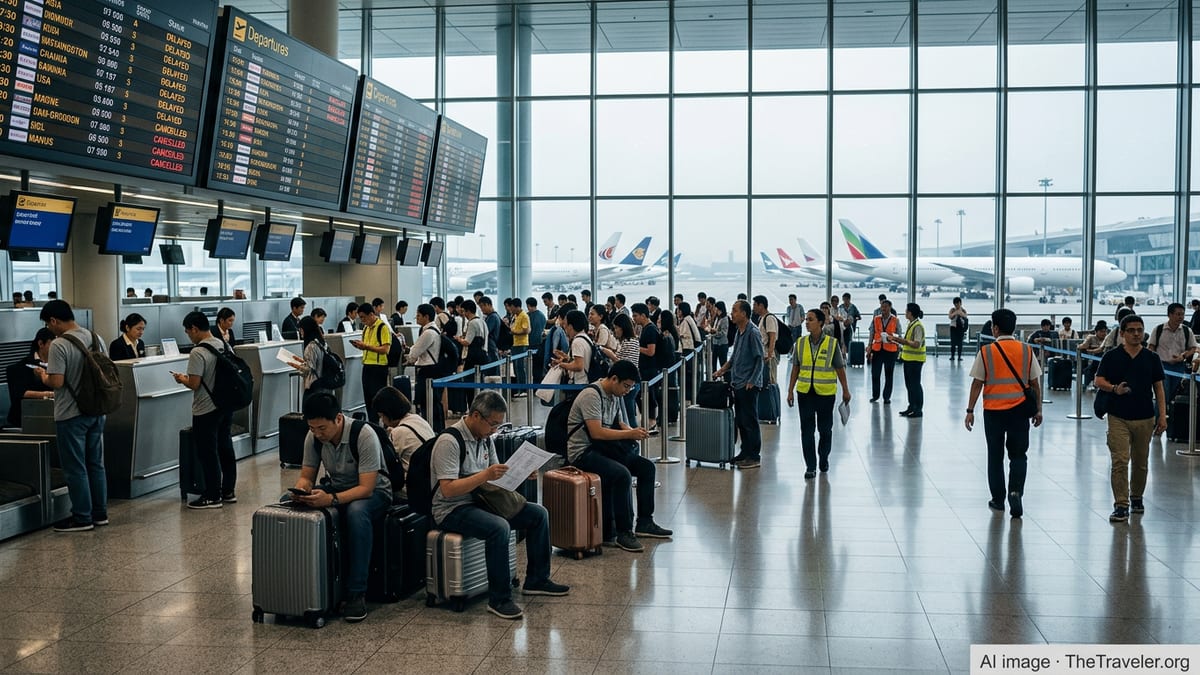
New conflict-zone bulletin targets key Gulf corridors
The European Union Aviation Safety Agency has issued an updated conflict-zone information bulletin advising carriers under its oversight to steer clear of the airspace of the United Arab Emirates, Qatar, Bahrain and Kuwait until at least late July. Publicly available information indicates that the advisory, circulated in mid-July, classifies these skies as presenting a high risk to civil flights at all altitudes because of the possibility of missile or drone activity and military interception.
The move comes shortly after a previous Gulf-focused bulletin expired, reflecting a short-lived easing of tensions following a fragile ceasefire between Washington and Tehran. Within days, reports of renewed strikes, retaliatory rhetoric and the movement of military assets in and around the Strait of Hormuz prompted European risk assessors to act again, focusing this time on the Gulf’s densest aviation corridors rather than the entire region.
According to recent specialist aviation coverage, the latest guidance builds on earlier warnings covering Iran, Iraq and Lebanon, where overflight bans and severe restrictions have already pushed traffic into more southerly or northerly routes. By explicitly adding the airspace of major Gulf hubs, the regulator is signalling that risks are no longer confined to territories directly involved in the conflict but extend to states hosting large concentrations of US military infrastructure.
The bulletin is advisory rather than legally binding, but European carriers typically treat such assessments as de facto operating rules. Airlines are required to conduct their own risk evaluations, yet many align closely with conflict-zone bulletins when planning routes, crew duty times and contingency fuel loads.
US Iran tensions reshape safety assessments
The renewed warnings are rooted in the latest spike in US Iran tensions that has emerged from a cycle of attacks on shipping near the Strait of Hormuz, strikes on Iranian targets and reported retaliatory actions against facilities linked to US forces. Analytical reports highlight that Bahrain, Kuwait, Qatar and the UAE all host significant US military bases, raising concerns that any further escalation could involve missile or drone activity in or near their airspace.
European risk assessments now emphasize the prospect of miscalculation in a crowded region where commercial aircraft share airspace with military traffic operating at short notice. Public documents summarising the new advisory note the potential for misidentification of civil flights, unintended overflights of missile trajectories, or exposure to falling debris if interception attempts take place above or near established air routes.
The updated bulletin also references the surrounding maritime airspace, particularly above the Gulf and parts of the Gulf of Oman, as an area where missile or drone overflights and interception operations could create hazards beyond the immediate conflict zone. This reflects lessons drawn from previous incidents over other conflict areas, where fragments from weapons systems posed risks well outside designated ground targets.
While no recent incident involving a civil aircraft has been reported in the affected airspace, the memory of past tragedies in other regions has made regulators more cautious about traffic over active or potential conflict zones. Travel risk consultancies note that regulators now tend to act preemptively when intelligence or military posturing suggests a rising threat trajectory.
Reroutings lengthen Europe Asia journeys
Europe to Asia and Africa routes are among the most exposed to any change in Gulf overflight policy. The affected airspace sits on some of the world’s busiest long-haul corridors linking European cities with destinations in South Asia, Southeast Asia, Australasia and East Africa. Flight-tracking data in recent days has already shown many European carriers altering routings to skirt the Gulf, often turning to paths over Saudi Arabia, the Red Sea or more northerly corridors through central Asia.
Previous analyses by European air traffic bodies have estimated that similar conflict-related reroutings can add hundreds of miles to typical long-haul journeys, with some Europe Asia flights extended by up to an hour or more. Each additional hour in the air increases fuel burn, crew costs and the risk of delays as aircraft and staff rotate through already tight schedules.
Industry-focused publications report that network planners are now revisiting their schedules for the remainder of the summer season, rebalancing capacity away from the most exposed routes and building in extra ground time to absorb potential disruptions. Airlines must ensure that longer routings remain within aircraft performance limits when airports are operating in high temperatures, a frequent challenge in the peak travel months.
These changes can ripple quickly through global networks. Aircraft that arrive late from extended Middle East detours can miss onward departure slots in Europe, affecting connecting passengers across North America and within the continent. Ground handling and airport operators in major hubs are therefore monitoring the situation closely as they adjust gate assignments and turnaround planning.
Knock-on effects for Gulf hubs and passengers
The advisory is specifically addressed to airlines under European jurisdiction, but the practical impact extends beyond Europe. Gulf airports such as Dubai, Abu Dhabi and Doha function as major transfer points between Europe, Asia, Africa and Oceania. When European carriers reroute away from nearby airspace or reduce frequencies to regional destinations, the connectivity offered by these hubs for European travellers can be affected.
Travel industry bulletins note that some carriers have already trimmed frequencies to certain Gulf destinations or switched to aircraft with different range and capacity characteristics better suited to the longer alternative routes. Others are temporarily favouring destinations that can be reached via safer corridors, maintaining total capacity while shifting geographic focus.
For passengers, the most visible immediate effect is a rise in schedule changes. Travellers may see flight times adjusted, routings altered to avoid direct overflight of the Gulf, or aircraft types changed at short notice. Longer flight times can also compress minimum connection windows at busy hubs, increasing the likelihood of missed onward flights when operations are disrupted elsewhere in the network.
Consumer travel advisories recommend that passengers with imminent itineraries involving Gulf hubs or overflights monitor airline notifications closely and allow extra time for connections wherever possible. Flexible tickets, travel insurance that covers disruption linked to security events, and early online check in can help reduce the practical impact of any last minute operational changes.
Outlook for summer travel and risk reviews
The current bulletin covering Gulf airspace is time limited, with a review date later in the summer. However, European regulators have shown a willingness over recent months to extend, widen or tighten restrictions when the security situation evolves. Previous advisories on broader Middle East and Gulf airspace were prolonged several times as hostilities flared and then eased only partially.
Aviation analysts point out that conflict-driven airspace restrictions have become a persistent feature of long haul planning between Europe and Asia, adding complexity to summer schedules already strained by aircraft delivery delays and wider jet fuel market volatility. Any renewed escalation between the United States and Iran, particularly involving assets based in Gulf states, is likely to trigger fresh risk assessments that could further affect routing options.
For now, most Gulf-based carriers have retained their networks, relying on their proximity to the region and close coordination with local air navigation authorities to manage risk. The divergence between European and Gulf operators’ approaches underscores the differing regulatory frameworks and risk appetites applied to the same physical airspace.
Travellers planning trips between Europe and destinations that traditionally route via the Gulf are being encouraged by travel agencies and airline advisories to check their bookings regularly in the weeks leading up to departure. While aviation safety protocols are designed to keep operations within conservative risk thresholds, the evolving security picture around the Gulf means that routings and schedules are likely to remain fluid through the peak holiday period.