

More news on this day
Hundreds of passengers across Texas faced disrupted travel on Tuesday as a wave of 395 flight delays rippled through major airports in Dallas, Houston, and San Antonio, reflecting a mounting squeeze on the state’s already stressed aviation system.
Get the latest news straight to your inbox!
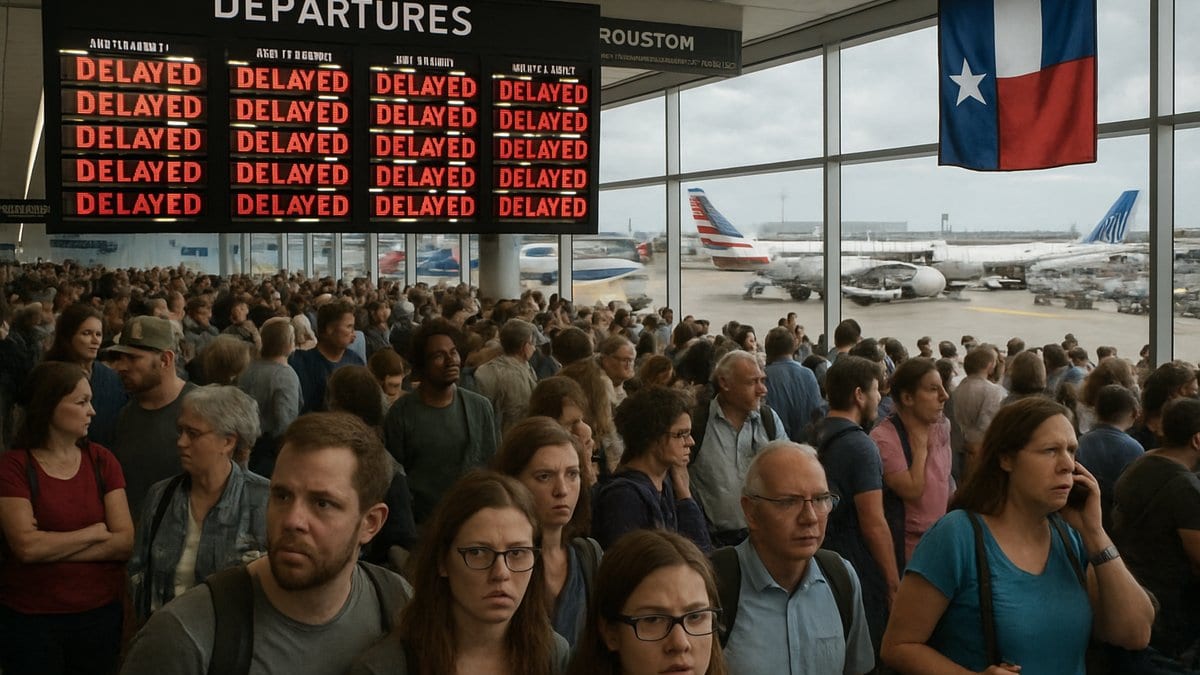
Image by nomadlawyer.org
Delays Mount Across the Texas Airport Network
Publicly available tracking data for April 1 indicated that Dallas Fort Worth International, Dallas Love Field, Houston’s George Bush Intercontinental, William P. Hobby, and San Antonio International collectively recorded 395 delayed departures and arrivals over the course of the day. While the vast majority of flights ultimately operated, the disruption translated into hours of extra waiting for travelers and cascading schedule problems for airlines operating tight connections through these hubs.
The highest concentration of delays appeared at Dallas Fort Worth and Bush Intercontinental, the state’s two largest airports by passenger volume. Each serves as a key connecting point for domestic and international routes, meaning localized problems in Texas had knock-on effects for flights as far away as the East Coast, Mountain West, and Latin America.
Flight status boards at all three metro areas showed clusters of late departures in the morning and late afternoon, traditionally among the busiest periods of the day. The pattern suggested a combination of weather factors, air traffic flow restrictions, and staffing-related bottlenecks compounding as the day progressed.
Although cancellations remained comparatively limited, the volume of delayed operations underscored how little slack remains in the system when any one element, from security screening to air traffic control, comes under pressure.
Weather, Airspace Constraints, and a Tight Spring Travel Window
The timing of the Texas disruption coincided with unsettled spring weather moving across central and southeast Texas. Forecast discussions for March 31 and April 1 highlighted elevated rain and storm chances along a broad corridor stretching from the Dallas Fort Worth metroplex through Houston and south toward San Antonio. That pattern raised the likelihood of ground stops, reroutes, and reduced arrival rates at crowded terminals as air traffic managers worked to keep operations safe in changing conditions.
Air traffic advisories for Houston showed periodic programs in place at Bush Intercontinental, limiting the rate at which flights could land and take off during the busiest windows. Even modest reductions in those arrival and departure rates can quickly translate into dozens of delayed flights as aircraft are held on the ground at origin airports or placed into holding patterns en route.
In Dallas, recent experience has shown how vulnerable the region’s airspace can be to both weather and infrastructure issues. Past outages in local communications and radar equipment have triggered widespread delays and ground stops at both Dallas Fort Worth and Love Field, illustrating how a single constraint in North Texas can ripple throughout national networks. While the latest wave of delays appeared more closely tied to weather and volume than a single point failure, the cumulative effect for travelers was similar: longer lines and missed connections.
For San Antonio, the disruption highlighted the city’s role as both an origin and a relief valve. During recent storm events, flights have occasionally been diverted among San Antonio, Dallas, and Houston, sharing the load when storms, congestion, or staffing issues slow operations at one airport more than another. That interconnectedness means even travelers flying entirely within Texas are vulnerable to delays that begin in another metro area.
Security Staffing Strain Adds Ground-Level Frustration
Beyond weather and air-traffic constraints, airport security staffing has been an escalating pressure point, especially in Houston. In recent days, coverage from local outlets documented security lines stretching to four hours or more at Bush Intercontinental, as Transportation Security Administration staffing struggled to keep pace with a surge in travelers during a period of broader federal budget uncertainty.
Subsequent reporting indicated that temporary staffing adjustments and deployment changes helped bring estimated wait times at both Bush Intercontinental and Hobby back down, at least during some off-peak periods. Even so, the prospect of multi-hour screening lines has prompted some Houston travelers to reroute through other Texas airports, including Dallas and San Antonio, inadvertently shifting demand and pressure across the state’s network.
Security challenges at one airport can exacerbate delay statistics in subtle ways. When travelers are held in long lines, more passengers miss their scheduled departures, forcing airlines to rebook customers on later flights and complicating aircraft and crew rotations. That dynamic can turn a manageable weather or volume issue into a protracted daylong disruption affecting dozens of departures and arrivals beyond the initial hotspot.
As airports and federal agencies work to stabilize staffing, the Texas experience is emerging as a case study in how local security bottlenecks can contribute to broader performance issues, even when runways and taxiways remain open.
Traveler Impact and Airline Response Across Texas Hubs
For passengers, the 395 delayed flights were felt most acutely in missed connections, crowded gate areas, and a scramble for alternative itineraries. In Dallas, travelers on morning departures faced rolling departure-time changes, while those passing through in the evening wave encountered full flights with limited rebooking options. At Houston’s airports, some travelers arriving from other parts of the country found themselves facing extended waits for connecting flights, particularly on routes funneled through Bush Intercontinental’s busiest terminals.
San Antonio travelers saw their own schedules affected as airlines worked to reposition aircraft and crews. Publicly available flight histories for recent days indicated that routes in and out of San Antonio have been experiencing elevated delay percentages, reinforcing how even secondary hubs can become pressure points when larger nodes such as Dallas and Houston are under strain.
Airlines serving the Texas market have been relying on familiar playbooks, including issuing limited-fee-change travel waivers during periods of anticipated disruption and adjusting schedules where possible. Recent carrier advisories have highlighted flexibility options for travelers flying through Houston and Dallas, sometimes extending waiver windows to accommodate weather and staffing uncertainty across multiple days.
Industry analysts note that while such steps can soften the blow for some passengers, they do not fully address the systemic tightness that leaves carriers and airports with little margin for error when any one factor goes wrong. With fuller planes in the spring travel period, spare seats for rebooking are often scarce, and even minor delays can lead to overnight disruptions for those with tight connections.
What the Texas Disruptions Signal for the Spring Travel Season
The latest wave of delays serves as a warning sign for the broader spring and early summer travel season. With demand projected to remain strong and federal and local agencies still working through staffing and budget constraints, Texas’s experience suggests that travelers across the United States may face a more fragile system than headline cancellation rates alone would indicate.
Reports from multiple Texas outlets have already highlighted the combination of severe-weather risk, infrastructure work at some large airports, and ongoing workforce challenges in both security and air traffic control. When layered on top of tight airline schedules and high load factors, these elements create the conditions for rapid escalation from routine slowdowns to large-scale delay events such as the 395-flight spike seen in Dallas, Houston, and San Antonio.
For travelers planning itineraries through Texas hubs in the coming weeks, aviation experts and consumer advocates commonly recommend leaving more time for connections, traveling earlier in the day when possible, and monitoring both weather forecasts and airport status updates closely. The current disruption underlines how quickly conditions can change, and how delays at one Texas airport can rapidly spread throughout the state’s interconnected air network.
As the spring storm pattern continues and federal agencies refine their staffing and traffic-management strategies, Texas’s major airports are likely to remain closely watched barometers of the health of the national aviation system, with each new wave of delays offering clues about how resilient that system truly is.