

More news on this day
Thai Airways will raise ticket prices by 10 to 15 percent as surging jet fuel costs linked to the escalating conflict in the Middle East squeeze margins and reshape travel flows into and out of Thailand.
Get the latest news straight to your inbox!
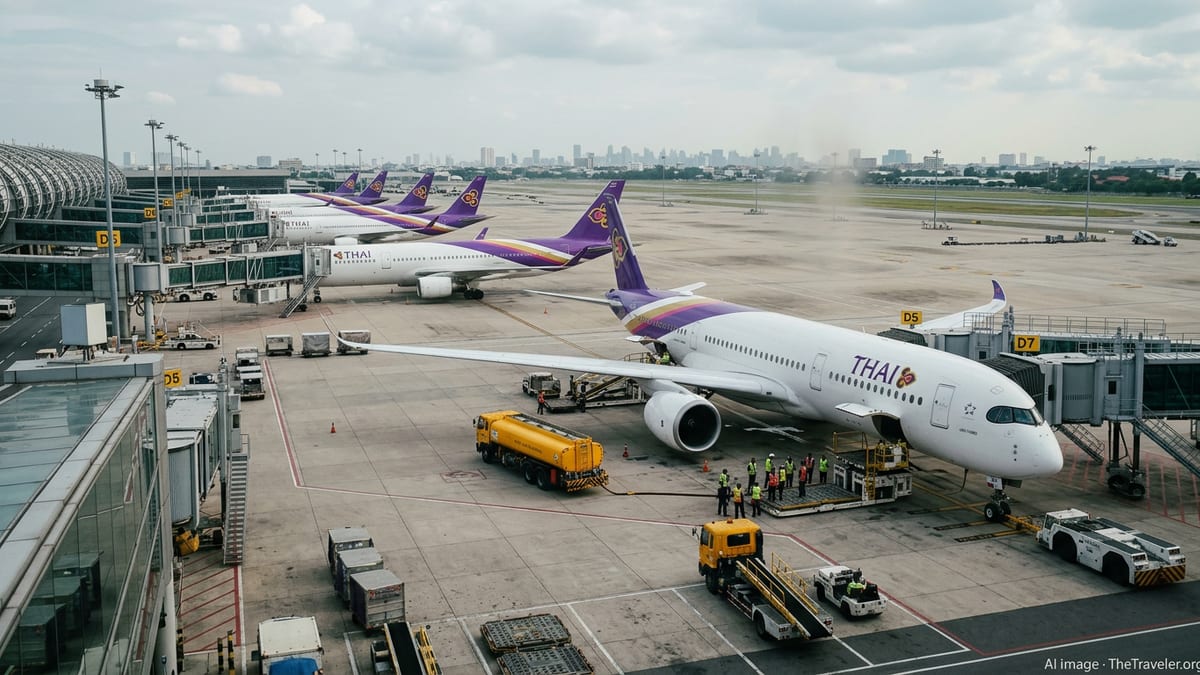
Fuel Shock Pushes Thailand’s Flag Carrier to Act
The decision, confirmed by senior executives this week, comes as jet fuel prices soar to levels airlines say are unsustainable without passing some of the burden to passengers. Industry data show aviation fuel costs have jumped dramatically since the latest Iran war intensified, rattling energy markets and disrupting supply routes through the Strait of Hormuz, a vital chokepoint for global oil shipments.
Thai Airways, which only recently returned to profitability after a sweeping court-supervised restructuring, is particularly exposed to fuel swings. Fuel is typically its single largest operating expense, and the airline has relied heavily on fuel surcharges to buffer volatility. The latest move goes further, lifting base fares across many international routes as the carrier seeks more predictable revenue in an increasingly uncertain environment.
Executives have framed the adjustment as a necessary step to protect the airline’s recovery rather than a discretionary price grab. They argue that without higher fares, sustained fuel costs at current levels would quickly erode the financial gains made in 2025 and complicate the completion of its multi-year turnaround plan.
Analysts note that Thai Airways is not alone. Carriers across Asia, Europe and Oceania have announced similar or smaller increases in recent days as they contend with a sudden jump in operating costs triggered by the Middle East turmoil.
Middle East Conflict Upends Fuel Markets and Flight Paths
The conflict involving Iran, Israel and Western allies has reverberated well beyond the battlefield, rippling through global aviation. With airspace closures and security concerns spreading across parts of the Gulf region, major tanker routes and refinery operations have come under strain, pushing up crude oil and aviation turbine fuel prices.
As fuel markets tightened in early March, jet fuel benchmarks spiked to levels well above those seen just weeks earlier, according to traders and airline executives. For airlines, which typically operate on thin margins even in stable times, such rapid increases are difficult to absorb, especially on long-haul services where fuel accounts for a substantial share of total costs.
The conflict has also forced many carriers to reroute flights to avoid affected airspace, extending flight times between Asia and Europe. Longer detours mean more fuel burn, higher crew costs and greater scheduling complexity. While Middle Eastern hub airlines have shouldered much of the immediate disruption, Asian carriers such as Thai Airways that operate direct services to Europe are now reevaluating network plans, capacity deployment and pricing.
Regulators in Thailand have warned that if the war drags on, further fare hikes across the industry may be unavoidable. Authorities are monitoring both fuel prices and fare ceilings on domestic and international routes, but have acknowledged that a sharp and prolonged spike in energy costs will inevitably be passed through to travelers.
From Restructuring Success to New Financial Pressures
The fare increase marks a sharp change in tone from late 2025, when Thai Airways reported a full-year net profit and touted a solid turnaround from deep losses earlier in the decade. The carrier benefited from Thailand’s tourism rebound, robust regional travel demand and relatively moderate fuel prices through much of last year.
That recovery allowed Thai Airways to strengthen its balance sheet, reduce debt and reposition itself as a leaner, more efficient operator after its high-profile rehabilitation process. Market analysts had expected modest profit growth through 2026, assuming stable oil prices and continued tourism expansion.
The sudden fuel shock triggered by the Middle East conflict has upended those forecasts. Several brokerage houses have already trimmed earnings estimates for Thai Airways, citing higher unit costs and the risk that demand could soften if ticket prices rise too far, too fast. Some see limited room for the carrier to absorb additional shocks without scaling back capacity or accelerating cost cuts elsewhere.
Thai Airways has indicated it still has tools to manage the crisis, including adjusting fuel surcharges, refining its hedging strategy and prioritizing more profitable routes. However, executives have cautioned that if fuel prices climb further or remain elevated for an extended period, they may be forced to revisit capacity plans and seek regulatory approval to raise certain price caps.
Impact on Passengers and Thailand’s Tourism Ambitions
For travelers, the announced 10 to 15 percent rise in fares will be felt first on medium- and long-haul routes where fuel costs are most significant, particularly Europe-bound flights that are already seeing strong demand. Many passengers who have shifted away from Middle Eastern transit hubs in favor of direct or alternative Asian connections now face higher prices at a time when leisure travel to Thailand had largely recovered.
Tourism operators are watching closely. Thailand has set ambitious arrival and revenue targets for 2026, positioning itself as a premium yet accessible destination. Higher airfares risk tempering growth from price-sensitive markets, especially if competing destinations manage to keep travel costs lower. Some hoteliers and tour agencies fear that package prices will need to be recalibrated if airlines across the board continue to raise fares.
At the same time, analysts note that underlying demand for Thailand remains strong, bolstered by pent-up leisure travel, improved connectivity and the country’s enduring appeal. If the fare increases remain within the announced band and are mirrored by competitors, they may have a limited long-term impact on visitor numbers, though they could shift booking patterns as travelers hunt for cheaper dates, carriers or routes.
Consumer advocates in Thailand have urged transparency in how the new fares and surcharges are applied. They argue that travelers should clearly see which portion of their ticket is tied to fuel costs and how those charges might fluctuate if the conflict de-escalates and fuel prices retreat.
Regional Aviation Braces for a Prolonged Crisis
Thai Airways’ move underscores a broader recalibration underway across the Asia-Pacific aviation sector. Airlines are reworking budgets, hedging positions and capacity plans as they brace for the possibility that the Middle East conflict and its impact on fuel markets may drag on for months.
Carriers in Australia, New Zealand, India and Southeast Asia have already flagged fare increases or higher fuel surcharges, while Gulf-based airlines face the double challenge of disrupted hubs and rising costs. Industry bodies warn that if volatility persists, weaker airlines could struggle to cope, potentially leading to consolidation or route withdrawals on marginal city pairs.
For Thailand, which relies heavily on aviation to support tourism, exports and broader economic growth, the stakes are high. A sustained period of elevated travel costs could test the resilience of its tourism-led recovery and increase the strategic importance of its national carrier’s financial health.
For now, Thai Airways is betting that passengers will accept higher ticket prices in exchange for reliable connectivity and avoiding war-affected transit points. How long that equation holds will depend not only on the trajectory of fuel prices, but also on whether the conflict in the Middle East shows any sign of easing in the months ahead.