

More news on this day
Thai and Chinese airlines are launching a fresh wave of 2026 discounted fares, packaging cheaper seats with wellness-focused messaging and emotion-led campaigns aimed at travelers seeking to “heal” after years of disrupted journeys.
A New Kind of Discount: Fares Built Around Feelings
In Thailand’s key China market, airlines are pivoting from pure price wars to emotionally charged promotions that promise more than a cheap seat. Marketing slogans now focus on restoring balance, reconnecting with loved ones and rediscovering joy, reflecting a post-pandemic shift in how travelers justify long-haul trips. Airlines and tourism officials say many of the new 2026 offers are intentionally framed as a way to “heal your soul,” rather than simply cut costs.
Campaigns from Thai-based low-cost carriers and Chinese full-service airlines increasingly highlight quiet coastal escapes, slower itineraries and low-stress connectivity instead of high-intensity sightseeing. This approach mirrors a broader trend identified by Thai tourism strategists, who see 2026 as a year when visitors prioritize value, wellness and quality of experience over aggressive bargain hunting.
Carriers feeding traffic between Thailand and Chinese cities are also banking on pent-up emotional ties. After several years of family separations, postponed honeymoons and delayed graduations, airline executives argue that discounted fares packaged with wellness language make it easier for travelers to “give themselves permission” to spend on long-haul journeys that feel restorative rather than indulgent.
Visa-Free Travel and Lunar New Year Momentum
The timing of the new fare pushes is not accidental. Thailand’s decision to allow visa-free entry for Chinese passport holders has helped reignite travel between the two countries and provided airlines with a strong foundation for 2026 promotions. Industry data around this year’s Lunar New Year peak show Chinese arrivals surging into the tens of thousands per day, reinforcing the appetite for Thailand’s mix of beaches, temples and shopping.
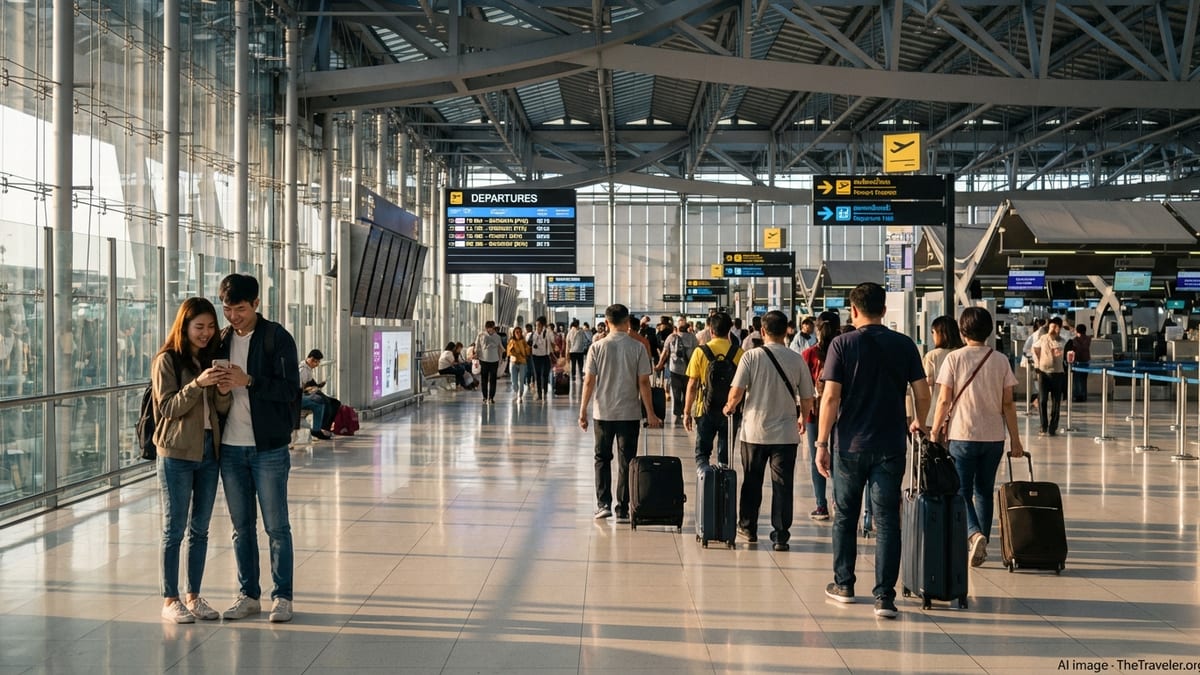
Airports including Bangkok’s Suvarnabhumi have prepared for a sharp rise in passenger volumes from mainland China and surrounding hubs, adding temporary services such as language support desks, festive welcome ceremonies and extra staff around immigration and baggage areas. The visible uptick in Chinese arrivals during the early 2026 holiday period has given airlines fresh confidence to expand capacity and attach aggressive fare discounts to routes that were only cautiously restored in earlier years.
Tourism planners see the Lunar New Year flows as a real-time stress test of the Thailand–China corridor heading into the rest of 2026. If airports and airlines can keep operations smooth while offering promotional fares, they argue, the market will be well placed to sustain higher traffic volumes during shoulder seasons, when wellness-themed retreats and slower-paced holidays typically gain popularity.
AirAsia Targets Emotional Travel With China Deals
Among Thai-based carriers, AirAsia has moved fastest to formalize discounted 2026 fares to China under clearly branded campaigns. In late 2025 it introduced a “NiHao China” promotion with special all-in fares from Thailand to 10 key Chinese cities, with prices starting at symbolic levels tied to the year 2026 and travel windows stretching deep into the new year. Travel periods span from the end of 2025 through October 2026, with the soft language of reconnecting and rediscovering China embedded throughout the campaign material.
The airline has followed up in early 2026 with Lunar New Year offers targeting Greater China, advertising all-in one-way fares from Thailand to mainland Chinese cities, Hong Kong, Macau and Taiwan at sharply reduced prices. These deals are explicitly promoted as a way to ride the festive mood, visit family or take a long overdue cultural break, with sale periods concentrated around mid to late February and travel valid across much of the year.
At the same time, AirAsia has been leaning into Thai domestic tourism with emotion-led branding that dovetails with the soul-healing narrative. A tie-up with the Tourism Authority of Thailand under the “Feel All the Feelings” and “FLY YOUR FEELINGS” campaigns encourages travelers to follow the journeys of a global Thai celebrity to lesser-known provinces. While focused on domestic routes, this messaging is also pushed to Chinese and regional travelers who use Thailand as a base, further blurring the line between discount fare, celebrity culture and wellness-focused exploration.
China Airlines and China Eastern Roll Out 2026 Specials
On the Chinese side, full-service carriers are using Thailand as both origin and destination within wider Asia and long-haul promotions. China Airlines has released a series of 2026 deals that include departures from Bangkok and Chiang Mai to Taiwan, North Asia, North America and beyond. These offers feature limited-time ticketing windows in February 2026 and cover travel dates across the spring, autumn and peak year-end periods, with blackout dates carefully carved out around the busiest month of April.
For Thai travelers, the China Airlines deals translate into lower barriers to combining a relaxing Thai beach holiday with a long-haul connection to cities such as Los Angeles, San Francisco, Seattle and Vancouver, often via Taipei. The airline has also introduced a year-long collaboration with Thai credit card issuers, giving cardholders an automatic percentage discount on published fares from Thailand throughout 2026. Those promotions are framed around making it easier to “fly off to your next favorite holiday,” subtly tying financial accessibility to mental and emotional wellbeing.
China Eastern, meanwhile, has announced early 2026 fare reductions from United States gateways such as Los Angeles and San Francisco to China and onward to Southeast Asia. Bangkok, Phuket and Chiang Mai appear among the listed Asian destinations in the promotion. While these particular offers originate outside Thailand, they are crucial to the broader Thailand–China travel ecosystem, because they encourage Chinese diaspora and American travelers to route through Chinese hubs to reach Thai resorts, effectively lowering the cost of soul-soothing trips to Southeast Asia.
Regulators Push Affordability While Watching Capacity
Behind the scenes, Thai aviation regulators have been working to keep discounted promotions aligned with consumer protection rules. The Civil Aviation Authority of Thailand has reinforced that domestic and international fares must remain within pre-approved ceilings, even during peak periods such as Chinese New Year. Recent spot checks around the February 2026 travel window found that prices remained within those limits, though many routes were heavily booked as demand escalated.
Thailand’s air navigation service provider has also contributed with time-limited fee reductions for airlines operating extra flights or discounted-ceiling services over the New Year stretch. By lowering air navigation charges by nearly one third for select services between late December 2025 and early January 2026, officials aimed to give carriers more room to add capacity without passing costs on to passengers. In effect, these measures function as indirect support for airlines advertising lower fares to entice cost-sensitive travelers.
Industry observers say such regulatory moves are central to sustaining promotional campaigns throughout 2026. Airlines can advertise healing, wellness and emotional reconnection, but the offers must still stand up to scrutiny on transparency and fairness. That is particularly important when flights are marketed across languages and platforms, where hidden fees or confusing displays can quickly erode the trust that airlines need to persuade travelers back into the skies.
Healing Journeys: From Wellness Retreats to Quietcations
The “heal your soul” tagline that appears in airline and tourism messaging for 2026 is not just metaphorical. Thai tourism planners have identified wellness, slower travel and “quietcations” as central themes shaping demand for the next phase of recovery, especially among middle-aged and older travelers from China who are willing to spend more for a calmer experience. Discounted airfares are increasingly positioned as the gateway to wellness resorts, forest monasteries, beachside yoga retreats and culinary-focused escapes.
Packages built around these fare deals often highlight soft landings: arrival at Bangkok or Phuket followed by smooth domestic connections to smaller cities, private transfers to resorts, and program itineraries that include meditation, spa treatments or nature-based excursions. While the airlines themselves mainly control the flight pricing, partnerships with hotels and local operators allow them to bundle experiences in a way that reinforces the emotional payoff of the journey.
For Chinese travelers, the appeal is both physical and psychological. Thailand’s spa culture, tropical climate and comparatively low cost of living make it attractive for short wellness breaks and longer stays. When an airline combines a limited-time discount with imagery of misty mountains, quiet beaches or lantern-lit night markets, it taps into a desire not only to travel but to reset, a theme that resonates strongly after years of stop-start border policies.
Competitive Pressures and the Risk of a Price War
Despite the warm rhetoric, the surge of discounted 2026 fares also reflects fierce competition on core Thailand–China routes. Low-cost carriers and full-service airlines alike are fighting for market share as capacity returns, and fare promotions remain one of the fastest ways to fill seats in shoulder seasons. Analysts caution that while emotionally themed campaigns can soften the tone, they still sit atop aggressive yield management strategies that seek to maximize load factors.
Thai tourism leaders have warned against relying solely on discounts to sustain growth, arguing that 2026 should mark a transition toward higher-quality, value-driven tourism. They point out that overuse of fare cuts can stress infrastructure, depress margins and encourage ultra-short stays that contribute less to local economies. Airlines counter that temporary promotions are essential to rebuild confidence, especially in markets like China where travelers are still testing post-pandemic routines.
The balancing act for carriers is to keep promotions targeted and time-bound, using them to smooth demand across the year rather than locking in a race to the bottom. Many of the current 2026 offers come with tight booking windows, blackout dates and restrictions on fare classes, all tools designed to protect core yields while still signaling accessibility to price-conscious travelers in both Thailand and China.
What Travelers Can Expect Through the Rest of 2026
Looking ahead, industry insiders expect more cross-promotions between Thai tourism bodies and Chinese or regional airlines, particularly around major festivals and school holidays. Visa-free access, improving flight frequencies and supportive government policies create conditions for a steady stream of themed fare campaigns tied to healing, happiness or seasonal mood. Travelers watching the Thailand–China corridor can anticipate periodic flash sales from carriers such as AirAsia, China Airlines and China Eastern, each targeting slightly different segments.
At the same time, capacity constraints at key airports and lingering economic uncertainty in both countries may limit how deep discounts can realistically go. Airlines are likely to focus on fine-tuning schedules, strengthening codeshare agreements and enhancing onboard and ground experiences, recognizing that comfort and reliability are now nearly as important as price in attracting repeat visitors.
For travelers seeking a soul-healing journey in 2026, the emerging pattern is clear: discounted fares will be available, but often within narrow booking windows and under specific conditions. Those who plan ahead, remain flexible on dates and pay attention to airline and tourism board announcements will be best positioned to secure lower prices on flights that promise not only a change of scenery, but a genuine emotional reset in Thailand’s temples, mountains and shores.