

Thailand is often imagined as a place for long, lazy beach holidays, but it is just as rewarding for travelers who prefer to move. With good transport links, competitive tour operators and a landscape that swings from karst-studded seas to cloud-fringed mountains, the country is ideal for day trips that pack in real adventure. For island and nature lovers, it means you can snorkel coral reefs one day, trek to a jungle waterfall the next and still be back at your base in time for sunset drinks.
Planning Day Trips in Thailand as an Island and Nature Lover
Designing day trips in Thailand starts with understanding the country’s geography. The Andaman Sea, on the west coast, offers dramatic limestone cliffs and some of the country’s clearest waters, while the Gulf of Thailand on the east tends to be calmer, with gentler seas that suit relaxed island-hopping. Inland, a spine of mountains and national parks runs down the country’s length, sheltering waterfalls, caves, hot springs and wildlife. Where you choose to base yourself will strongly shape the character of the day trips available.
Most organized day tours depart early in the morning and last eight to ten hours, including hotel transfers by minivan and travel by boat or open truck. For island-hopping, speedboats and larger ferries serve the busiest routes, while long-tail boats handle shorter hops. For nature excursions, expect a combination of road transfers, short hikes and sometimes kayaks or bamboo rafts. Independent travelers can often replicate popular itineraries by hiring a private boat or vehicle, but in marine parks and protected forests you will usually need to go with licensed operators and respect local regulations.
In recent years Thai authorities have tightened rules around fragile environments, particularly in marine national parks and heavily visited bays. Some islands close for part of the year to allow ecosystems to recover, especially during the monsoon months when seas are rougher and visibility drops. Booking with reputable companies that emphasize safety equipment, small groups and environmental guidelines will help ensure your trip is both enjoyable and low impact. When in doubt, ask about maximum group sizes, use of certified guides and policies around wildlife interaction, litter and reef protection.
Seasonality is important. On the Andaman side, December through April is typically the best period for clear seas and calmer conditions, while the Gulf islands around Koh Samui often have better weather in mid-year when the Andaman can be stormier. Inland, national parks are lush and waterfalls full during and just after the rainy season, but some trails may be slippery or temporarily closed. Whenever you travel, pack sun protection, insect repellent, a reusable water bottle and conservative clothing for temple stops or local communities that may be included in mixed itineraries.
From Phuket: Island-hopping in the Andaman Sea
Phuket is one of Thailand’s most popular bases for island day trips, thanks to its busy marinas and the sheer variety of nearby destinations. To the south and east, the waters are dotted with small islands where coral reefs sit close to the surface and beaches curve around limestone headlands. Day trips typically bundle snorkeling, swimming, a buffet lunch and a few hours of free time on a beach, with equipment provided. The closest options, such as Coral Island and the Khai Islands, can be reached in under thirty minutes by speedboat, which makes them suitable for visitors who prefer a shorter time at sea.
Travel farther and the scenery becomes more dramatic. Boat tours to Phang Nga Bay glide between vertical limestone stacks, where parts of the bay are framed by towering cliffs and mangroves. Many itineraries include sea canoeing through caves into hidden lagoons, which is a gentle way to experience the landscape without crowds. Another classic choice is a day trip toward Koh Phi Phi, where the water shifts between turquoise and deep blue around sheer rock walls and coves. Although some famous spots have visitor limits to protect damaged reefs, the surrounding archipelago still offers beautiful snorkeling and photogenic viewpoints that live up to expectations.
For experienced snorkelers and divers, the Similan Islands are often described as among Thailand’s best marine environments, though reaching them involves a significantly longer boat journey and they operate as a seasonal national park, generally opening only during the drier months. Day tours here are usually longer, with an emphasis on clear-water snorkeling, colorful fish and, for the lucky, sightings of larger marine life. Because of the distance, seas can be choppy and operators may impose age or health restrictions, which makes it important to check details in advance if you are prone to seasickness or traveling with younger children.
Whichever island route you choose from Phuket, a few practical considerations improve the experience. Early departures tend to avoid peak crowds at the most popular beaches and viewpoints. Lightweight footwear you can slip on and off is useful when moving between boat and shore, and a dry bag will protect cameras and phones. Bring your own reef-safe sunscreen, as some local shops still sell products with ingredients that are harmful to coral. If you prefer a quieter day, consider choosing trips that focus on lesser-known islands or that specifically advertise smaller group sizes.
From Krabi: Karst Seascapes and Hidden Lagoons
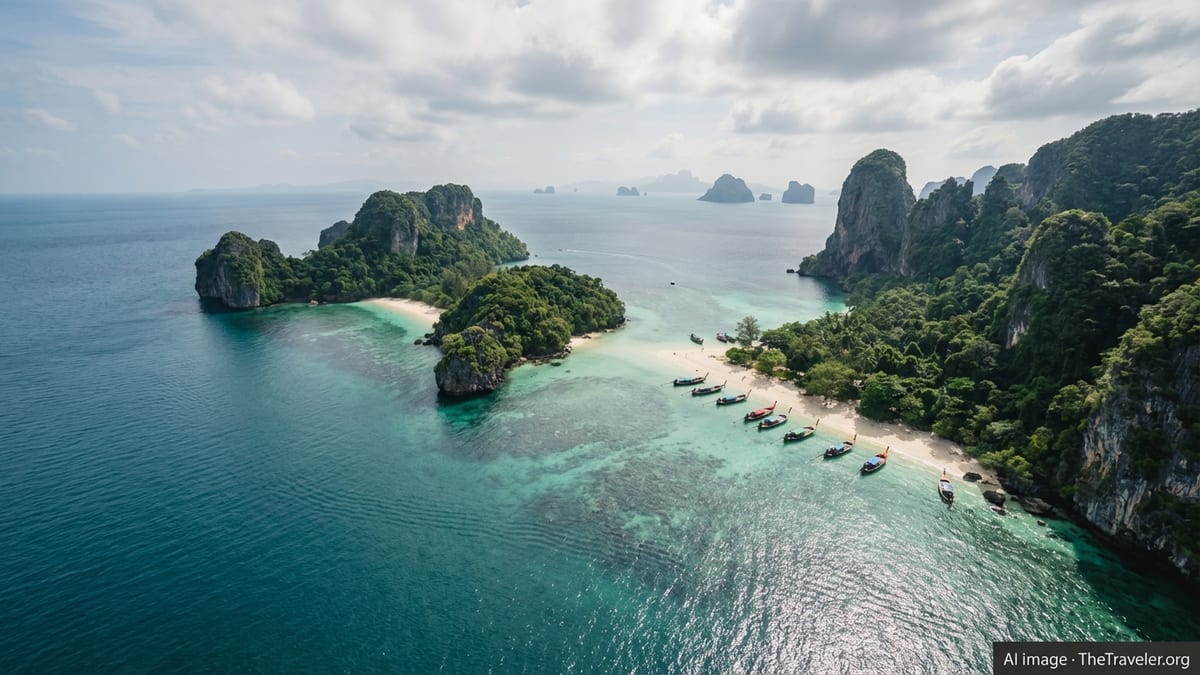
Krabi offers a more laid-back base than Phuket, with towering cliffs rising directly from the shoreline and long-tail boats crowding the sand at Ao Nang and Railay each morning. From here, island day trips weave through the Poda and Hong archipelagos, where strips of sand appear and disappear with the tide. One of the region’s most striking phenomena is the so-called separated sea, a sandbar that links small islands at low tide and allows visitors to walk between them over shallow water. When the sea level rises, the sand path vanishes again under the waves, leaving a cluster of emerald humps in open water.
Many tours from Krabi focus on snorkeling and beach time around smaller islands, where coral reefs ring bright, shallow bays. The Hong Islands are particularly popular among nature lovers, as they conceal lagoons that can only be entered by kayak or through narrow channels that open into calm, green pools encircled by cliffs. Here, paddling quietly allows you to hear birds in the forest and see roots and ferns clinging to the rock faces. Outside the lagoons, gentle beaches curve under jungle backdrops, offering opportunities to relax between swims or short walks along the shore.
For travelers who prefer a mix of sea and land, day trips that combine Krabi’s islands with the Railay Peninsula are a good option. Although technically part of the mainland, Railay is cut off by steep cliffs and feels like an island, with jungle trails, caves and climbing routes. Some itineraries allow time for short hikes to viewpoints and hidden lagoons, while others emphasize rock climbing or kayaking under the cliffs. Even if you are not a climber, simply drifting along the coast by boat at golden hour, when the sun catches the contours of the rock, can be a memorable experience.
Krabi’s marine environment is sensitive, and several coves and beaches have experienced pressure from heavy boat traffic. Many responsible operators now avoid feeding fish and discourage standing on coral or collecting shells. As a visitor, you can support these efforts by choosing tours that talk openly about conservation, limiting plastic waste and following leave-no-trace principles. The reward is a seascape that still feels wild in places, especially if you are willing to accept earlier starts, longer paddles and slightly fewer facilities in exchange for quieter corners.
From Koh Samui: Gulf-side Marine Parks and Quiet Coves
On Thailand’s east coast, Koh Samui sits in the Gulf of Thailand, ringed by smaller islands that can be reached on leisurely day trips. While the scenery here is softer than the jagged cliffs of the Andaman, it holds its own appeal for nature lovers. The waters can be calmer for much of the year, especially during periods when the Andaman is affected by monsoon swells, making this side of the country attractive for those who value mellow sea conditions. Coconut palms, coral-streaked shallows and low, forested hills set the tone for laid-back island-hopping.
One standout day trip from Koh Samui heads to a nearby marine national park made up of dozens of islands. This protected area is known for its clear water, snorkeling sites and hilltop viewpoints that take in a panorama of emerald humps scattered across the gulf. Typical itineraries involve an early boat ride, a guided hike up to a viewpoint, kayaking around the coastline and time to swim from a sandy beach. For reasonably fit travelers, the climb is a highlight, offering a bird’s-eye view over the archipelago. Those who prefer to stay at sea level can opt to paddle kayaks into coves and around rock formations instead.
Another popular option from Koh Samui focuses on neighboring islands such as Koh Phangan and smaller islets that dot the surrounding waters. While some visitors associate Koh Phangan with nightlife, large parts of the island remain tranquil, with jungle-covered hills and small bays that suit day visits centered on hiking or quiet beaches. Offshore, snorkeling trips explore coral gardens where visibility is often good, especially during dry months. With a bit of planning, you can choose itineraries that avoid peaks around major events, shifting the emphasis back to nature and local communities.
As with other coastal regions in Thailand, sustainable practice in the Gulf is an ongoing priority. Authorities occasionally restrict access to particularly stressed reefs or adjust rules on anchoring and fishing in marine parks. Conditions can vary between seasons, so recent local advice from tour desks or your accommodation is valuable. Checking forecasted wind and wave heights helps gauge whether a long day at sea will feel enjoyable or punishing. When the weather cooperates, however, Koh Samui’s surrounding seascape delivers a gentler version of Thailand’s island magic with plenty of scope for unhurried exploration.
From Bangkok: Rivers, Waterfalls and National Parks
Although many travelers think of Bangkok purely as an urban destination, it provides access to a surprising range of nature-focused day trips. Within a few hours’ drive, the landscape softens into rice paddies, orchards and low hills, while rivers wind past old market towns and forested reserves. One popular direction is toward Kanchanaburi, where riverside scenery combines with World War II history. Here, the journey itself can become part of the experience, as trains follow a route along cliff edges and across historic bridges toward waterfall areas that double as local picnic spots.
West and southwest of the capital, several large national parks protect forests, reservoirs and mountain ridges. Day tours often thread together short hikes to waterfalls with visits to viewpoints or wildlife-watching hides. In some parks, early morning or late afternoon is the best time to glimpse animals such as deer, macaques and a wide range of birdlife, though sightings are never guaranteed. Even without headline wildlife, walking under tall trees, listening to cicadas and swimming in cool pools can provide a bracing contrast to Bangkok’s heat and traffic.
Travelers who prefer softer adventures might consider trips that focus on river life and lowland greenery. Floating markets and riverside communities on the outskirts of Bangkok sometimes serve as jumping-off points for paddle excursions through canals lined with palms and fruit trees. In the opposite direction, toward the coast, mangrove forests offer chances to kayak among tangled roots and learn about conservation projects aimed at stabilizing shorelines. These excursions can be combined with local seafood lunches, making for day trips that blend gastronomy and nature rather than focusing solely on either.
While many Bangkok-based nature tours operate year-round, heavy rain can occasionally lead to temporary trail or waterfall closures, particularly during the wettest months. Roads can also be slower during holiday periods when city residents head out of town. Booking with experienced operators who monitor conditions and are transparent about travel times will make the long day more comfortable. If your schedule allows, consider spending one night near a national park instead of rushing back to the capital, so that a packed day trip for others becomes a less hurried overnight escape for you.
From Chiang Mai: Misty Mountains, Forest Temples and Waterfalls
Northern Thailand is a favorite region among nature enthusiasts, and Chiang Mai works well as a hub for day trips into mountains, forests and hill country. Within a short drive, roads start to twist upward toward cooler elevations, where pine and evergreen forests replace city streets and the air feels fresher. Many excursions include visits to high viewpoints for sunrise or sunset, when low clouds often gather in valleys and the landscape looks like an undulating green sea. For travelers accustomed to Thailand’s coastal heat, these conditions can feel surprisingly brisk at certain times of year.
Several national parks within reach of Chiang Mai feature waterfalls, cliff-top lookouts and short hiking trails suitable for day visitors. In some areas, simple infrastructure such as viewpoints, parking areas and marked paths make it easy to experience the scenery without technical hiking skills. In others, local guides lead the way along narrow forest tracks to remote cascades or hilltop clearings. Along the route, you might stop at small villages, roadside markets or coffee stands where beans from nearby hills are roasted and brewed on the spot, adding a cultural layer to the nature experience.
Beyond the forests themselves, northern day trips often weave in temples and cultural sites that take advantage of the surrounding topography. Forest monasteries sit among tall trees, with meditation halls and chedis overlooking valleys, while hilltop temples command sweeping views. Some itineraries also include hot springs, where pools fed by geothermal sources invite you to soak tired legs after walking. Responsible elephant experiences, focused on observation and gentle interaction without riding or performances, are also found in the wider region, though they require careful research to ensure that welfare standards are genuinely high.
Like much of Thailand, northern parks and viewpoints can become busy on weekends and national holidays, especially during cool-season peaks when local travelers come in search of chilly mornings and sea-of-mist views. Starting early, visiting on weekdays and being willing to walk a little farther than the average tour group will increase your chances of finding quiet corners. Packing a light jacket or sweater is wise outside of the hottest months, as temperatures can fall noticeably once the sun dips, especially at higher elevations.
Responsible Travel: Protecting Thailand’s Islands and Wild Places
As Thailand’s visitor numbers grow again, conversations about overtourism and environmental pressure are becoming more urgent. Several famous beaches and bays have periodically closed or restricted visitor numbers in response to reef damage, litter and shoreline erosion. National parks on land face their own pressures, including trail erosion, wildlife disturbance and the challenge of balancing local livelihoods with conservation goals. For island and nature lovers, the question is not whether to visit, but how to do so in a way that supports protection rather than degradation.
One of the simplest steps is to travel outside of absolute peak periods when possible and to look beyond the most heavily promoted names. Choosing a day trip that swaps a single famous beach for a circuit including lesser-known coves, for example, can spread visitor impact more evenly while still delivering the experiences you are seeking. Supporting operators who cap group sizes, avoid wildlife shows or rides and clearly explain park rules helps create demand for more responsible practices. If you are unsure, a brief conversation about how they handle trash, anchoring and reef protection can be revealing.
Packing thoughtfully makes a difference too. A refillable water bottle reduces reliance on single-use plastic, especially on boats and in national parks where waste disposal is challenging. Lightweight long-sleeved clothing and a hat cut down on the need for constant sunscreen use, and when sunscreen is needed, reef-friendly formulas are the better option for marine environments. Sturdy sandals or lightweight hiking shoes protect both your feet and fragile terrain, preventing slips that can damage vegetation along forest trails or coastal paths.
Equally important is the attitude you bring. Staying on marked paths, observing wildlife from a respectful distance, keeping noise levels low in forests and temples and packing out everything you bring in are simple habits that collectively matter. When visiting communities on day trips, ask before photographing people, buy local snacks or handicrafts where appropriate and be mindful of dress codes, particularly around religious sites. The more visitors treat Thailand’s islands and national parks as living places rather than theme parks, the better the chance that future travelers will experience the same sense of wonder.
The Takeaway
Thailand offers an exceptional range of day trips for island devotees and nature lovers, from coral-ringed islets and sheltered lagoons to misty mountains and cool forest waterfalls. With thoughtful planning, you can base yourself in a beach town or city and still reach wild-feeling places in a matter of hours, immersing yourself in marine life, jungle greenery or highland views without committing to long expeditions. Each region presents its own character, meaning repeat visitors can craft entirely different itineraries simply by shifting their base.
What ties these experiences together is the interplay between accessibility and responsibility. Boats and roads that bring you quickly to national parks and marine reserves also increase pressure on fragile environments, so the choices you make about when, where and how to travel matter. Opting for smaller groups, seeking out lesser-known stops, respecting local regulations and packing with the environment in mind all help to keep Thailand’s famous landscapes resilient.
For travelers willing to look beyond resort pools and city streets, the reward is a deeper connection with the country’s natural side. A dawn hike above sea-level clouds, a quiet paddle into a hidden lagoon or a swim beneath a forest waterfall can become the moments that define your trip. Plan carefully, travel lightly and let Thailand’s islands and green heart show you why a single day, well spent, can feel as rich as an entire holiday.
FAQ
Q1. What is the best time of year for island day trips in Thailand?
The driest months between roughly November and April usually offer calmer seas in the Andaman, while the Gulf of Thailand around Koh Samui often has better conditions in mid-year. Always check local forecasts because weather patterns can vary from one season to the next.
Q2. Do I need to book island and nature day trips in advance?
Advance booking is advisable in peak seasons and during major holidays, when popular tours can sell out. In quieter periods, it is often possible to arrange excursions a day or two ahead, but booking early still gives you more choice of operators and routes.
Q3. Are Thailand’s national parks suitable for first-time hikers?
Many national parks close to major hubs offer short, clearly marked trails and viewpoints that are accessible to beginners with basic fitness. More demanding treks are available, but you can usually select routes that match your comfort level and rely on local guides where needed.
Q4. How long do typical island day trips last?
Most organized island excursions run for eight to ten hours door to door, including transfers, multiple stops and lunch. Shorter half-day trips exist to nearby islands, particularly from Phuket, Krabi and Koh Samui, for travelers who prefer less time at sea.
Q5. What should I pack for a nature-focused day trip?
Essentials include lightweight clothing, a hat, sunscreen, insect repellent, a reusable water bottle and sturdy sandals or shoes suitable for getting wet or walking on uneven ground. A small dry bag is useful for protecting electronics on boats or in sudden showers.
Q6. Are island-hopping tours suitable for children and older travelers?
Many shorter routes to nearby islands are family friendly, with calm water and easy access from boat to beach. For longer trips with choppier sea crossings or steep hikes, it is worth discussing conditions with the operator to ensure they match everyone’s abilities and comfort levels.
Q7. How can I tell if a wildlife or elephant experience is ethical?
Look for operators that prioritize observation over direct contact, do not offer riding or performances and are transparent about rescue or conservation work. Independent reviews and recommendations can be helpful, but on-site cues such as chained animals or scripted shows are warning signs to avoid.
Q8. Do I need special insurance for these kinds of excursions?
Comprehensive travel insurance that covers boat trips, light trekking, snorkeling and any planned adventure activities is strongly recommended. Check policy details to confirm coverage limits and exclusions before booking higher-risk activities such as diving or rock climbing.
Q9. How much cash should I bring on a day trip?
Most organized tours include transport and basic meals, but you will often need cash for national park fees, snacks, drinks and tips. Bringing a modest amount of local currency in small notes is sensible, as card facilities can be limited on boats and in remote areas.
Q10. Can I visit multiple national parks or island groups from one base?
In several regions it is possible to join different day trips from the same base, such as combining various island routes from Phuket or mixing mountain and waterfall excursions from Chiang Mai. Just be realistic about travel times and leave yourself occasional rest days between intensive outings.