

More news on this day
Travellers flying through Thailand’s busiest airports are facing fresh disruption this week after a cluster of last-minute cancellations by Jetstar, Condor, Cathay Pacific and other carriers cut five key international services linking Bangkok and Phuket with Melbourne, Sydney, Kuala Lumpur, Hong Kong and additional Asian hubs.
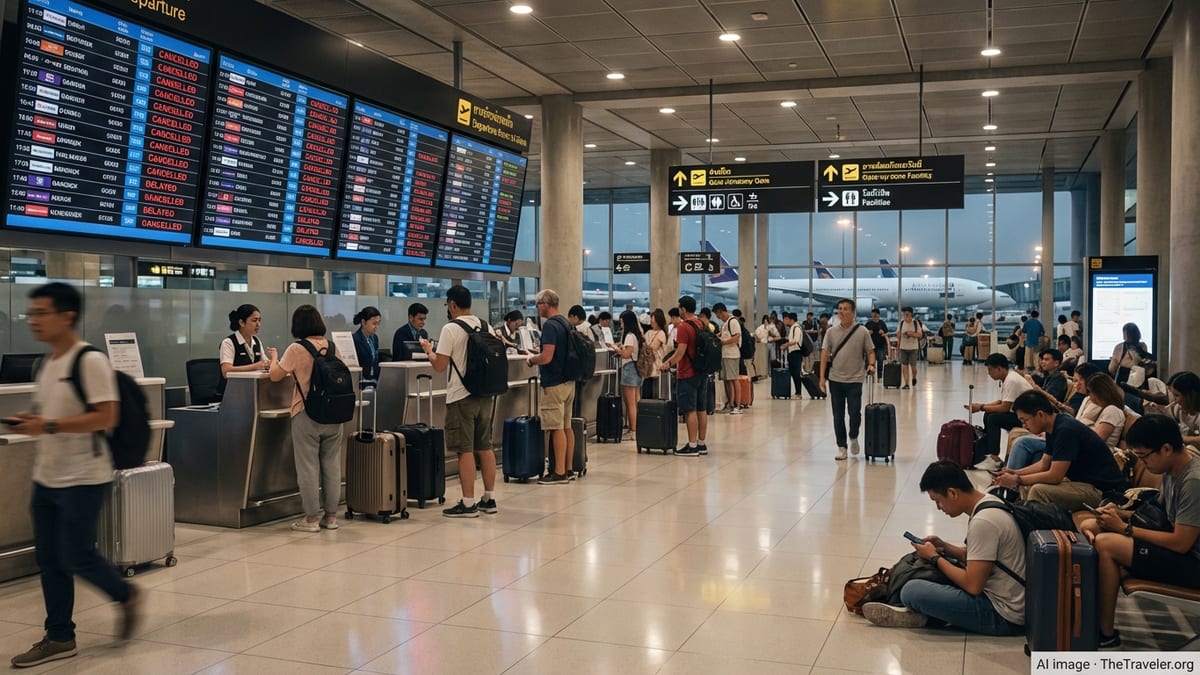
Five Key Flights Axed as Regional Pressure Peaks
According to recent operations data reviewed on February 21 and 22, 2026, at least five prominent flights touching Thailand were cancelled over a matter of hours, hitting outbound services from Bangkok’s Suvarnabhumi Airport and Phuket International Airport. While the total number is modest in pure numerical terms, the importance of the routes and their role in wider networks has amplified the impact on passengers and airline schedules.
The affected services include a Cathay Pacific link from Bangkok to Hong Kong, Jetstar-operated flights from Thailand to Melbourne and Sydney, regional services involving Kuala Lumpur, and long-haul leisure traffic to and from Europe, including Condor’s Thailand operations. Each cancellation has forced abrupt rebookings and missed connections at a time when Asia’s aviation system is already straining under heavy February traffic.
These latest moves follow a broader pattern of irregular operations across Asia, where recent days have seen thousands of delays and dozens of cancellations across hubs in Thailand, Japan, Indonesia, Vietnam, the Philippines and Hong Kong. Thailand, with its combination of high tourist volumes and dense regional schedules, has emerged as one of the most exposed points in this network.
Cathay Pacific’s Bangkok–Hong Kong Link Among Casualties
One of the most high-profile cancellations came on February 21, when a Cathay Pacific flight from Bangkok’s Suvarnabhumi Airport to Hong Kong was scrubbed at short notice, leaving Hong Kong-bound passengers stranded and scrambling for alternatives. The service, part of a heavily used corridor linking two major Asian financial and tourism centres, normally carries a mix of business travellers, holidaymakers and transit passengers connecting onward to North America, Europe and mainland China.
The cancellation added extra strain at an already busy moment in the travel calendar, with the post-Lunar New Year rush still in full swing. For many passengers, particularly those with onward long-haul tickets, a missed Bangkok–Hong Kong leg effectively meant the loss of an entire multi‑stop itinerary and the need to negotiate complex reissues and availability constraints with both Cathay Pacific and partner carriers.
Beyond the immediate inconvenience, the cancellation underlined how vulnerable the Hong Kong–Thailand link remains to disruption. Airlines are working with relatively tight crew and aircraft utilisation, which leaves little slack in the system when a delay or technical issue occurs. Once a single sector is cancelled, aircraft rotations and duty-time limitations can make it difficult to restore the schedule quickly.
Jetstar Cancellations Hit Melbourne and Sydney Connections
Low-cost carrier Jetstar has also been drawn into the disruption, with cancellations affecting flights connecting Thailand with Australia’s key east-coast gateways of Melbourne and Sydney. These services are popular with budget-conscious holidaymakers, backpackers and visiting friends and relatives traffic, and they also act as important feeders into domestic Australian networks operated by partner airlines.
Passengers booked on the affected flights reported being offered rebooking options on later Jetstar departures or, where capacity allowed, on services operated by full-service rivals. However, limited spare seats during a peak travel period have meant some travellers are waiting an extra day or more to travel, while others have been forced to accept rerouting via alternative Asian hubs, adding hours to journeys and increasing costs for food, accommodation and ground transport.
The cancellations are particularly sensitive for the tourism industries at both ends of the route. Thailand depends heavily on Australian visitors to fill hotels and tour bookings in Bangkok, Phuket and the islands, while Australian operators look to Thai travellers to support outbound leisure demand during school and public holiday periods. Any sustained perception of unreliability on these links risks nudging travellers toward competing destinations with more stable air connections.
Condor and Long-Haul Tourism Links Under Strain
European leisure carrier Condor, which has been rebuilding its Thailand network with flights from Frankfurt to Bangkok and Phuket, has also featured in the latest wave of schedule adjustments. While the airline has sought to maintain regular long-haul connectivity to underpin holiday traffic from Germany and neighbouring European markets, operational pressures and regional congestion have forced selective cancellations and retimings.
Condor’s Thailand services are strategically important because they provide direct, seasonal links that bypass other Gulf or Asian hubs, making them particularly attractive for package holidays and tour operators. When these non-stop flights are cancelled, travellers often have to be moved onto more complex itineraries involving additional stops, security checks and potential misconnection risks, eroding much of the convenience that justified the original booking.
Tourism officials in Thailand have repeatedly highlighted the value of reliable long-haul seats from Europe, noting that German visitors in particular tend to stay longer and spend more per trip than many other source markets. Disruptions on routes such as Frankfurt–Bangkok or Frankfurt–Phuket therefore have a disproportionate effect on hotels, resorts and local businesses that depend on predictable inflows of guests.
Kuala Lumpur and Regional Hubs Feel the Ripple Effects
Alongside the cancellations in and out of Thailand itself, regional connectivity has also been hit. Airlines serving the busy corridor between Bangkok and Kuala Lumpur, including Malaysia Airlines and other regional carriers, have cut individual services over recent days as part of broader schedule adjustments responding to congestion and crew-availability constraints.
These changes have complicated travel plans for passengers using Kuala Lumpur as either a primary destination or as a secondary hub for onward journeys to South Asia, Australia and the Middle East. Travellers who had planned tight same-day connections from Thailand through Kuala Lumpur to destinations such as Perth, Bengaluru or Jakarta have found themselves dealing with missed onward flights, overnight layovers and luggage separation issues.
The situation underscores the delicate balance that exists across the Southeast Asian aviation network. A cancellation of a single Thailand–Kuala Lumpur leg can cascade across several subsequent sectors, particularly when the same aircraft is scheduled to operate multiple flights in quick succession. For airlines still rebuilding from the pandemic, maintaining spare aircraft and crew to absorb such shocks remains a financial and logistical challenge.
Why Thailand Keeps Appearing at the Heart of Disruptions
Thailand’s airports have been prominent in recent disruption patterns for several reasons. Suvarnabhumi and Don Mueang in Bangkok, together with Phuket and other regional gateways, are handling sustained high passenger volumes aligned with the country’s strong tourism rebound. At the same time, staffing levels, ground-handling capacity and air-traffic management are still adjusting to post-pandemic realities.
Earlier technical and systems glitches at Thai airports, including outages that affected check-in and reservation platforms, forced operators to fall back on manual processing at times. Even short-lived technology issues can quickly lengthen queues, delay baggage handling and slow aircraft turnaround, eroding the buffers airlines rely on to keep tightly timed schedules on track.
Compounding these local factors are broader regional pressures. Weather disruptions, airspace restrictions and operational bottlenecks at other Asian hubs can delay inbound aircraft bound for Thailand, which in turn push back departures to Hong Kong, Kuala Lumpur, Melbourne and Sydney. Once the knock-on effects begin, recovering normal operations may take several rotations, especially on long-haul routes with aircraft that only operate one or two sectors per day.
What Affected Passengers Are Experiencing on the Ground
For travellers caught up in the latest cancellations, the immediate experience has been a familiar one: long queues at airline service desks, crowded departure halls and uncertainty about when they will actually depart. Some passengers in Bangkok and Phuket reported being notified of cancellations only after arriving at the airport, leaving limited time to arrange alternative flights or accommodation.
Rebooking options have varied significantly by airline and ticket type. Passengers on full-service carriers such as Cathay Pacific and Malaysia Airlines generally reported being reprotected on the next available flights, sometimes via alternative hubs. Those on lower-cost tickets with Jetstar and other budget operators, however, have in some cases faced additional fees for same-day changes or upgrades to alternative routes where economy cabins were already full.
Accommodation and meal support has been inconsistent. While some travellers received hotel vouchers and meal allowances after missing onward connections, others said they were told to claim costs through travel insurance or to seek goodwill gestures after the event. The mix of airline policies, codeshare agreements and booking channels has made it difficult for many passengers to understand their exact rights in the heat of the disruption.
Advice for Travellers With Upcoming Flights Through Thailand
Airlines and travel advisers are urging passengers with imminent travel plans through Bangkok, Phuket or other Thai gateways to build extra flexibility into their itineraries over the coming days. That includes allowing longer connection times, particularly when linking separate tickets or moving between different airlines and alliances, and avoiding the last flight of the day on key routes where possible.
Travellers are also being encouraged to monitor flight status closely through airline apps and airport information channels, and to ensure contact details on reservations are up to date so that last-minute changes can be communicated quickly. Those with fixed appointments, such as cruises, tours or business meetings, may wish to arrive a day early where budgets allow, reducing the risk that an unexpected cancellation will derail their plans.
Industry experts note that, although only a handful of flights have been cancelled outright in the current episode, the combination of widespread delays and targeted cancellations is enough to cause significant stress for passengers and crews. With February still shaping up as one of the busiest months of the regional travel season, the system is likely to remain sensitive to further shocks, whether from weather, technical issues or staffing shortages.
How Airlines and Authorities Are Responding
Airlines involved in the latest cancellations have emphasised that safety remains the overriding priority whenever schedule changes are made. Carriers such as Cathay Pacific, Jetstar, Malaysia Airlines and Condor are adjusting crew rosters, reviewing aircraft maintenance windows and fine-tuning timetables in an effort to reduce the likelihood of last-minute cancellations while still coping with high demand.
Airport operators and aviation authorities in Thailand and neighbouring countries are also working to smooth operations. Measures under discussion or already in place include more flexible slot management during peak periods, enhanced coordination between airlines and ground-handling providers, and investments in systems resilience to minimise the impact of future technology outages.
For now, however, travellers transiting through Thailand’s main gateways should remain prepared for occasional disruption. The latest cancellations, affecting routes to Melbourne, Sydney, Kuala Lumpur, Hong Kong and beyond, are a reminder that even as Asia’s aviation recovery gathers pace, the region’s air travel infrastructure is still in a fragile balancing phase where small disturbances can have outsized consequences.