


More news on this day
Thailand is working to calm concern in its crucial Chinese tourism market as planners advance a new conservation charge for visitors to Koh Chang alongside a broader foreign tourist fee, sharpening debate over how far the country can push environmental funding without denting demand.
Get the latest news straight to your inbox!
China Travel Advisory Collides With Thailand’s Tourism Priorities
Tensions around Chinese visitor sentiment have risen in recent weeks after Beijing issued a safety advisory highlighting scams and kidnapping risks linked to travel in Thailand. Publicly available coverage indicates that the notice prompted new scrutiny of how the kingdom balances its economic reliance on Chinese tourism with worries about crime and regulatory enforcement.
Thailand’s government has responded with a series of public messages emphasising that visitor safety remains a central policy focus. Reports from Bangkok-based outlets describe plans for tighter cooperation between security agencies, immigration police and tourism authorities, as well as closer coordination with Chinese counterparts targeting transnational scam networks.
The timing is sensitive. China has re-emerged as Thailand’s largest source market, with millions of arrivals helping to drive the recovery of a sector that accounts for a significant share of national output. Travel advisories that highlight perceived risks have the potential to slow bookings, particularly among first-time travellers from smaller Chinese cities who are more reliant on official guidance and social media sentiment when choosing destinations.
Within this context, new or higher travel-related charges are being watched closely in both countries. While Thai policymakers frame the fees as tools for sustainable tourism and infrastructure funding, some Chinese commentators have questioned whether added costs and perceived safety concerns might push budget-conscious travellers to competing destinations in the region.
Koh Chang Conservation Fee Becomes a Flashpoint
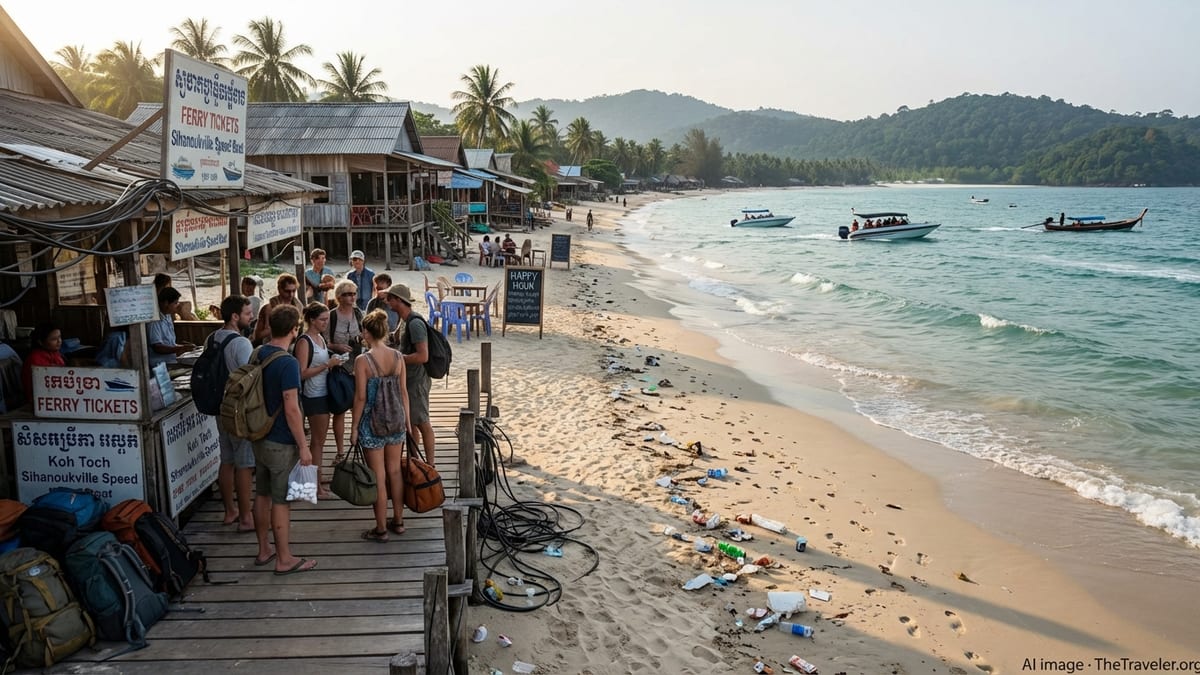
The latest point of contention is a proposed 340 baht charge for non-Thai visitors heading to the popular island of Koh Chang and parts of the surrounding Mu Ko Chang National Park archipelago. Coverage on Thai travel news platforms describes the planned levy as a conservation-oriented fee intended to support marine protection, beach maintenance and waste management around the rapidly developing island.
Existing park admissions already differentiate between Thai nationals and foreigners, and public documents indicate that officials see a dedicated Koh Chang charge as a way to align visitor contributions more closely with the real costs of destination upkeep. Advocates argue that years of strong growth in arrivals have strained coral reefs, mangrove areas and basic services, especially during peak season when boat traffic increases around snorkeling and diving sites.
The 340 baht level, roughly equivalent to under 10 US dollars at current exchange rates, has nevertheless drawn criticism in Chinese-language discussion forums and Thai social media threads that focus on the combined effect of multiple fees. Some commentators link the Koh Chang proposal with other planned charges and suggest that visitors could feel singled out at a time when political narratives around foreign influence and lawbreaking are also in the spotlight.
Local business voices reported in domestic media are divided. Operators who cater to higher-spending package tourists and long-stay guests tend to support the conservation framing, noting that environmental degradation could do far more damage to Koh Chang’s appeal than a modest per-head fee. Smaller guesthouse owners and budget tour providers express concern that the additional cost could discourage price-sensitive travellers, particularly backpackers and group tourists from China and other Asian markets.
National 450 Baht Tourist Fee Adds to Cost Concerns
Parallel to the Koh Chang initiative, Thailand is moving ahead with plans for a nationwide foreign visitor fee of 450 baht. Information published by government-linked portals and local newspapers shows that the charge is under public consultation and would initially be collected from air arrivals, with land and sea borders following after a transition period.
According to policy outlines made available in recent weeks, revenue from the 450 baht levy would flow into a dedicated tourism promotion fund. The money is earmarked for destination development, environmental rehabilitation and a visitor insurance component designed to relieve pressure on public hospitals that currently absorb unpaid medical costs incurred by foreign tourists.
Business groups in Bangkok and major resort areas have generally backed the concept, citing the example of dozens of countries that operate similar schemes. However, hospitality associations have warned in public commentary that the timing and cumulative impact of new charges must be carefully managed so Thailand remains competitive against regional rivals such as Vietnam, Malaysia and Indonesia.
For Chinese travellers, the key question is how the national fee might intersect with local conservation charges like the proposed Koh Chang levy. Travel industry analysts quoted in recent coverage note that while a total of several hundred baht is unlikely to deter higher-income visitors, it could influence destination choices for families and tour groups comparing packages across Southeast Asia.
Bangkok Signals Reassurance to Beijing
Amid these debates, Thai diplomats and tourism officials have engaged counterparts in Beijing to address the recent Chinese advisory and to underline continued efforts to safeguard visitors. Reports from regional news outlets describe meetings in early November where Thai representatives challenged what they saw as an overly negative portrayal of conditions on the ground, while acknowledging real concerns about fraud and illegal activities.
Publicly available statements from Bangkok stress that tourism policies are not aimed at any single nationality. The messaging instead highlights a broader drive to regulate foreign-owned businesses operating outside legal frameworks, update visa rules and improve screening at entry points, all presented as measures that should ultimately benefit legitimate travellers.
Chinese travel agencies and online platforms are closely watching these developments. Industry commentary indicates that clear communication around both security steps and any new fees will be critical in shaping booking trends for the upcoming high season, when cooler temperatures in much of China typically support a surge in outbound tourism to beach destinations like Koh Chang, Phuket and Pattaya.
For now, booking data referenced in local coverage suggest that Chinese arrivals continue to recover, but at a slower pace than Thai planners had hoped earlier in the year. Analysts point to a combination of economic headwinds in China, lingering safety perceptions and rising travel costs as factors that could limit growth.
Sustainability Goals Meet Market Realities on Koh Chang
The debate surrounding the Koh Chang fee reflects a broader shift in Thailand’s tourism strategy, as outlined in official visitor-economy planning documents. Authorities have repeatedly stated in public materials that they aim to move beyond headline arrival numbers and focus more on visitor spending quality, environmental resilience and benefits to local communities.
Sustainable tourism plans for the Koh Chang archipelago emphasise managing carrying capacity in fragile marine zones, strengthening waste and water systems, and enforcing regulations on boat operators and coastal construction. Proponents of the 340 baht conservation charge argue that earmarked funding is essential if these ambitions are to translate into practical improvements visible to residents and visitors alike.
At the same time, the island remains heavily dependent on tourism jobs and small businesses that operate on thin margins. Travel industry observers note that any missteps in how the fee is communicated, collected or reinvested could damage confidence among both travellers and local stakeholders. Clear transparency around how funds are used, along with visible environmental projects, is seen as one way to maintain public support.
For Chinese holidaymakers considering Koh Chang, travel advisories, social media narratives and pricing all feed into destination choices. Thailand’s effort to reassure Beijing while pressing ahead with conservation and national tourist levies illustrates the delicate balance facing a country that wants to protect its natural assets without undermining a vital source of visitors.