


More news on this day
The U.S.-flagged residential cruise ship MV Odyssey has departed Cambodia’s Sihanoukville Autonomous Port without any passengers on board, days after more than 200 residents were abruptly ordered to disembark when the operator halted its multi-year global voyage over soaring fuel costs.
Get the latest news straight to your inbox!
A Sudden End to a Multi-Year “Life at Sea” Voyage
Publicly available information shows that the MV Odyssey, operated by Florida-based Villa Vie Residences, had been marketed as a years-long around-the-world journey combining full-time shipboard living with slow travel. The vessel, with a capacity of about 650 passengers, departed on its global itinerary roughly two years ago and was promoted as an opportunity to “live at sea” while circumnavigating the globe.
According to published coverage from international outlets, the voyage came to an abrupt halt in late October 2026 while the ship was docked at Sihanoukville Autonomous Port on Cambodia’s Gulf of Thailand coast. On October 28, approximately 200 to 230 residents were informed that operations were being suspended and that they would need to leave the ship, in some cases within a few hours, taking all of their belongings ashore.
Reports indicate that the decision followed what passengers have described in media interviews as weeks of financial uncertainty, including repeated requests for additional funds to cover fuel and operating expenses. The operator’s public statements cited a sharp and unexpected rise in fuel prices as the primary reason for suspending the remaining segment of the planned three-year itinerary.
Media reports and open-source commentary suggest that many residents had invested substantial sums for long-term or “lifetime” stays on board, treating the Odyssey as a floating home rather than a conventional cruise. The sudden disembarkation in Cambodia effectively ended that experiment, at least for now, with no clear timetable for a resumption of service.
Ship Departs Sihanoukville Without Passengers
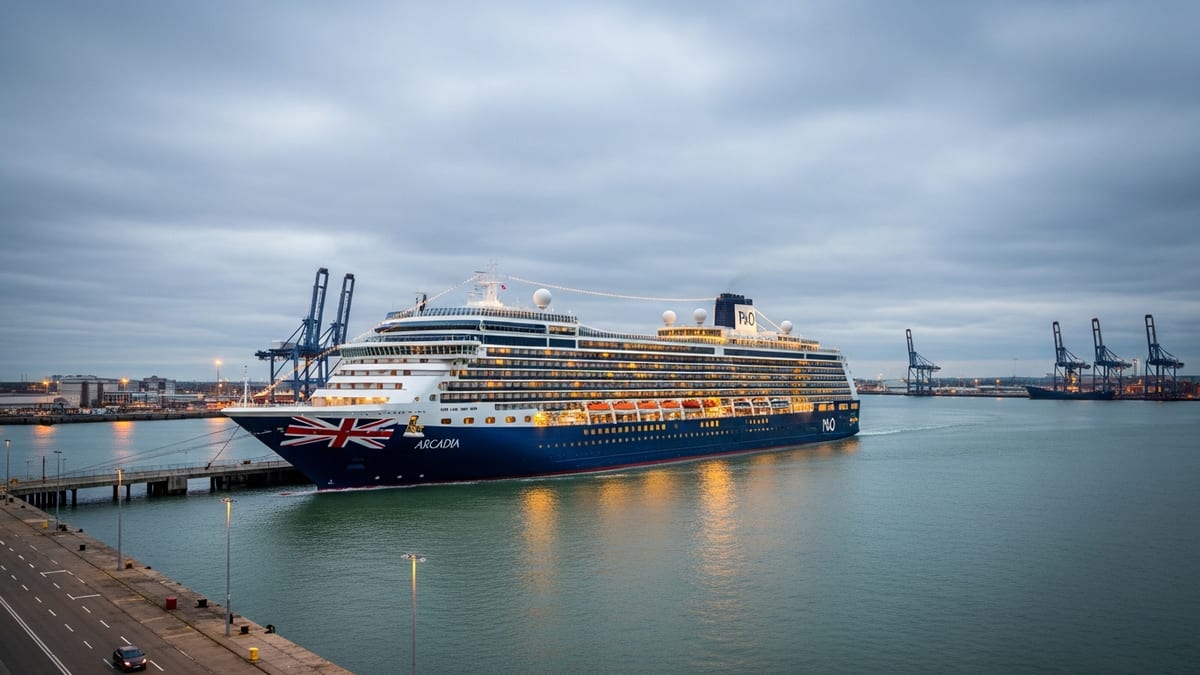
After several days moored at Sihanoukville with only crew remaining on board, the MV Odyssey left the port on November 4, 2026. Drone images and port-side video published by international news organizations show the vessel departing the Cambodian coast without any of its former residents, who remained on land arranging onward travel.
Cambodian media and regional coverage describe local officials visiting the ship during its layover and confirming publicly that the vessel would be leaving empty. The voyage out of Sihanoukville marked a significant shift in the story: the ship itself continued on, while those who had signed on for long-term residence were left to navigate accommodation and repatriation by themselves.
Information published by business and maritime outlets indicates that a lender linked to the project has now taken control of the vessel. Some reports suggest the Odyssey is expected to head from Cambodia toward Singapore for lay-up or further inspection, though as of early November no final publicly confirmed schedule for its next port call has been detailed.
The vessel’s departure without passengers effectively transforms it, at least temporarily, from a residential cruise ship into an asset in transition, with its future use and ownership structure subject to ongoing financial and legal developments that have not yet been fully disclosed.
Stranded Passengers Face Unexpected Costs and Logistics
The disembarkation order in Sihanoukville left hundreds of passengers suddenly responsible for finding hotels, flights, and short-term housing in a provincial coastal city that, while familiar with cruise stopovers, is not accustomed to absorbing an entire ship’s residential population at once. Travel coverage from outlets such as The Guardian, as well as regional broadcasters, describes residents rapidly packing multiple suitcases and even household items accumulated during years at sea.
According to publicly available reporting, many travelers had to pay out of pocket for immediate hotel stays in Sihanoukville or Phnom Penh, while others booked one-way flights to hubs such as Bangkok, Singapore, and European or North American cities. Some passengers indicated in media accounts that they were using personal savings or credit cards to cover emergency transport, since comprehensive refunds or alternative accommodation arrangements from the operator had not yet been finalized.
Coverage by financial and retirement-focused publications notes that certain residents had invested six-figure sums for long-term or “lifetime” stays. With operations suspended, those individuals are now attempting to recover funds through the company’s stated remediation process or, where applicable, through card chargebacks and insurance claims. As of early November 2026, publicly accessible information does not show a clear, system-wide refund schedule.
Online discussion forums, travel blogs, and social media posts from self-identified passengers also highlight varied responses: some travelers have chosen to remain in Southeast Asia temporarily, while others have rushed home to reassess long-term plans that had centered on life aboard the Odyssey.
Regulatory and Consumer-Protection Questions
The Odyssey incident has drawn attention to how residential cruise projects are structured and regulated. Unlike traditional point-to-point cruises, many life-at-sea concepts operate as a hybrid of real estate, hospitality, and transportation, with residents purchasing units or long-term leases rather than single itineraries.
Analyses in business and maritime media point out that this model can blur the lines between consumer protection regimes for cruise passengers and those that apply to property or timeshare-style investments. Questions now circulating in industry commentary include what financial safeguards are in place if operations are suspended, how funds are held, and what rights residents have if an advertised multi-year itinerary ends early.
Cruise-industry research shows that unexpected suspensions or diversions are not unprecedented, but the Odyssey case stands out because of the long-term residential framing and the scale of personal belongings that passengers had on board. Observers note that regulators and consumer advocates in multiple jurisdictions may examine whether existing rules adequately cover similar ventures that market themselves as full-time floating communities.
Public information at this stage does not indicate any formal enforcement actions directly tied to the Odyssey shutdown, but legal experts quoted in news features suggest that contract disputes and potential group claims are likely, particularly from residents who paid for extended or lifetime access that they can no longer use.
Impact on Cambodia’s Cruise Reputation and Regional Travel
Sihanoukville, the main deep-water port of Preah Sihanouk province, has worked in recent years to increase its attractiveness as a cruise destination, receiving periodic calls from international lines. The unexpectedly long stay of the MV Odyssey and the sudden influx of stranded passengers placed the Cambodian port in the global spotlight for reasons unrelated to typical shore excursions.
Regional travel media note that local authorities and tourism stakeholders moved quickly to emphasize that the shutdown was driven by the operator’s finances and fuel costs rather than by safety or port-state control issues in Cambodia. Published images show the ship docked normally at the Sihanoukville Autonomous Port, which continues to handle container traffic and occasional cruise calls from other operators.
For travelers currently planning cruises in Southeast Asia, the episode serves as a reminder to review the financial footing and operational history of smaller or newer residential-style projects, especially those promising multi-year itineraries. More established cruise brands calling at Cambodian ports have so far continued their schedules, and there is no widely reported indication that standard regional itineraries have been disrupted as a result of the Odyssey case.
For Cambodia’s tourism sector, the departure of the MV Odyssey without passengers closes a short but intense chapter that brought international media and several hundred long-term seafarers to its shores. What remains is a combination of local economic aftereffects, individual traveler stories of disruption, and a broader industry debate over how life-at-sea ventures should be structured to protect residents when financial headwinds arise.