

Relocating to Thailand requires more than comparing salaries or climates. A realistic decision depends on understanding how complex it is to navigate the country’s systems in practice. A “relocation complexity score” attempts to quantify that difficulty by examining the administrative, procedural and structural frictions an expat encounters when establishing and maintaining life in Thailand. This article deconstructs those dimensions to provide decision-grade insight into Thailand’s overall relocation complexity profile.
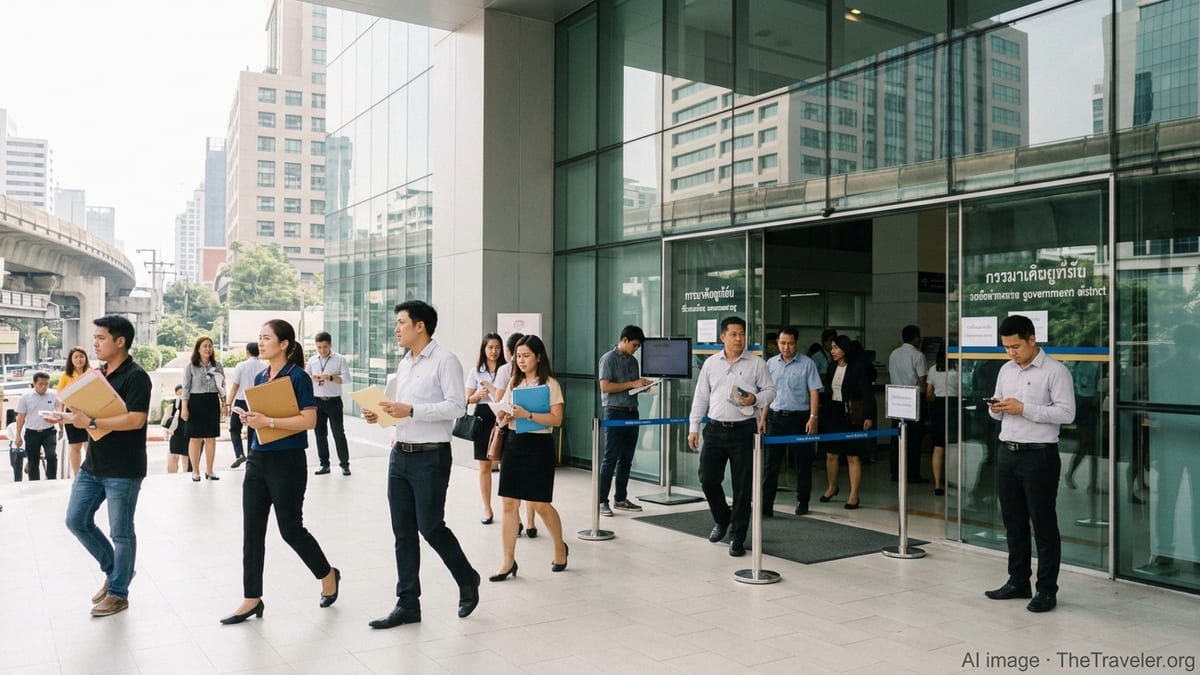
Defining a Thailand Relocation Complexity Score
A relocation complexity score measures the practical difficulty of settling and operating daily life in a host country. For Thailand, this focuses on how predictable, transparent and time-efficient it is for an expat to complete key administrative tasks such as obtaining work authorization, registering residence status, interacting with government offices, and moving goods and documents across borders. The score is not a judgment on quality of life, but strictly an assessment of bureaucratic and systemic friction.
Key inputs to such a score typically include indicators derived from international benchmarks on logistics and administrative performance, observed processing times, level of digitization in public services, language barriers, and the degree of discretion exercised by officials in routine procedures. For Thailand, these inputs show a mixed picture: relatively strong infrastructure and logistics capabilities contrasted with moderate bureaucratic complexity and inconsistent implementation on the ground.
For practical relocation planning, expats can think of Thailand’s relocation complexity as “moderate”: not as streamlined as the most digital and rules-based jurisdictions, but substantially more manageable than highly fragile or administratively chaotic states. However, the complexity score varies by task type. Business-related logistics and physical mobility score relatively well; procedural clarity, dependence on in-person visits and documentation requirements increase the difficulty of many personal administrative processes.
Structural Indicators Shaping Complexity
International indices help place Thailand’s relocation complexity in context. On the World Bank Logistics Performance Index 2023, Thailand records an overall score around the mid-3 range on a 1-to-5 scale, ranking in the mid-30s globally and among the better performers in Southeast Asia. Customs efficiency and infrastructure receive scores in the low to mid-3 range, indicating reasonably predictable border clearance and transport systems rather than systemic bottlenecks. This suggests that, at a structural level, Thailand is capable of moving goods and documents with relative reliability compared with many regional peers.
Breaking down the same index, Thailand is evaluated across customs, infrastructure, international shipments, logistics quality, tracking and tracing, and timeliness. Scores in each of these dimensions cluster close to the overall score, with infrastructure and tracking often slightly higher and customs slightly lower. This pattern indicates a system that is not severely constrained by hard infrastructure, but where procedural clarity and enforcement practices at borders can still introduce variable friction. For relocating expats moving household goods or relying on shipped documents, this translates into generally workable timelines with occasional additional steps or inspections.
These structural indicators do not directly measure the expat’s experience with everyday bureaucracy, but they provide an important baseline. A country that demonstrates moderate to strong logistics capabilities and reasonably efficient customs processes usually has the institutional capacity to support reforms such as digital government services and streamlined administrative workflows. In Thailand’s case, recent government initiatives targeting digitalization and administrative simplification are building on this base, gradually reducing the underlying complexity of certain relocation-related procedures.
Bureaucracy, Discretion and Administrative Friction
Administrative complexity in Thailand is significantly influenced by the interaction of formal rules and informal practices. Legal requirements are often detailed and document heavy, and multiple agencies may share partial jurisdiction over a single procedure. At the same time, local interpretations, unwritten expectations and the discretionary power of officials can shape how rules are applied in practice. This combination increases perceived complexity because outcomes may differ between provinces, or even between offices in the same city, despite identical legal frameworks.
Perceptions of corruption and opaque processes contribute to this complexity. Regional governance assessments and corruption perception indicators consistently place Thailand in the middle of global rankings, suggesting that while the state apparatus is not among the world’s most opaque, expats should expect a non-trivial risk of informal payments being solicited, slower processing when documentation is incomplete, and heavier reliance on intermediaries or “agents” in some transactions. This environment raises the cognitive load for newcomers, who must distinguish between legitimate facilitation services and unnecessary intermediaries that add cost but not value.
For relocation planning, this means that Thailand’s complexity score is elevated by variability and unpredictability. A given process, such as obtaining a local driver’s license or registering an address, may be straightforward in one jurisdiction with clear checklists and quick appointments, but substantially more complex elsewhere, requiring repeated visits and additional supporting documents. Organizations relocating staff to Thailand often respond by engaging local specialists to reduce this variance, which improves individual outcomes but can mask the underlying structural complexity that independent expats will still face.
Digital Government and Process Modernization
Thailand’s trajectory on digital government is an important modifier of its relocation complexity score. The Digital Government Development Agency and related bodies have been tasked with expanding e-government services, standardizing data and improving connectivity between agencies. United Nations e-government surveys over the past decade show Thailand improving from a lower mid-table position toward the global median and beyond, with particular progress in online service delivery rather than fully integrated back-end systems.
Concrete examples relevant to expats include the gradual replacement of paper-based forms with digital platforms. For instance, arrival and immigration procedures are moving toward online systems, including the phased introduction of a digital arrival card for foreign nationals that is intended to replace paper cards at entry points. Similarly, certain immigration appointments and certificates can now be requested or scheduled through online portals, although coverage is not uniform across the country and technical reliability can vary.
In the employment domain, the Ministry of Labour has launched an online e-Work Permit platform that digitizes large parts of the work permit lifecycle. The system enables registration, document upload, status tracking and in many cases reduces the need for repeated in-person submissions. The government has framed this as part of a broader initiative to improve administrative efficiency and transparency in labor-related processes. However, implementation is still in transition, and some employers and foreign workers report parallel use of traditional procedures during the rollout period.
The net effect of digitalization on relocation complexity is twofold. On one hand, online platforms decrease the time and uncertainty associated with queuing at government offices and provide clearer, standardized lists of required documents. On the other hand, transitional phases often introduce duplicate steps and inconsistent instructions between legacy and new systems. For the purpose of a complexity score, Thailand is moving from a primarily paper-based environment toward a hybrid digital model, gradually reducing complexity but not yet delivering the fully integrated, low-friction experience seen in top-ranked e-government countries.
Logistics, Documentation Flows and Everyday Procedures
Beyond headline indices, the mechanics of how documents and goods move within Thailand strongly influence the lived relocation complexity. The country’s logistics performance rank, in the thirties globally, indicates competitive capabilities in infrastructure, tracking and timeliness of shipments. For expats, this translates into relatively reliable courier and postal services, broadly functional tracking systems, and reasonable customs clearance times for personal shipments, especially when using experienced international movers that understand local requirements.
However, even with relatively capable logistics, procedures involving government-issued documents can remain intricate. Many processes still require official translations into Thai, legalized copies, and physical stamps or signatures. While courier services can move paperwork quickly between cities, expats may find that an administrative sequence involves multiple agencies, each with distinct documentation rules. This multiplies the number of steps and appointments required, elevating the practical complexity score regardless of underlying transport efficiency.
Specific pain points often reported by expats include obtaining residence certificates, driving licenses, and document certifications necessary for banking or telecom contracts. Some of these processes are gradually being simplified or partially digitized, but they still tend to require a combination of online form submission and in-person verification, sometimes at different offices. The need to coordinate logistics for original documents, notarized translations and appointment confirmations remains a recurrent friction point that keeps Thailand’s relocation complexity higher than its logistics infrastructure alone would suggest.
On balance, Thailand’s strong physical logistics and mid-range customs performance provide a solid foundation for expats moving possessions and handling international documentation. The more significant complexity lies in multi-step, multi-agency domestic procedures where paper requirements and variable interpretations remain prevalent. Planning extra lead time for such processes is a rational response to this structural feature of the Thai administrative environment.
Language, Information Clarity and Use of Intermediaries
Language plays a pivotal role in Thailand’s relocation complexity. While English is widely present in commercial and tourist environments, much official documentation, online guidance and in-office communication remains Thai-first. Official websites may provide partial English translations, but not always at the same level of completeness or currency as Thai content. Form fields can be inconsistently translated, and some agency portals exist only in Thai. This asymmetry significantly increases complexity for expats without Thai language proficiency.
Information clarity is further affected by the fragmentation of official guidance. Different agencies or even sub-offices may circulate slightly different document checklists or timelines. When combined with limited English-language support, this leads many expats to rely on informal online forums, peer networks or commercial agents to interpret and reconcile conflicting instructions. Dependency on unofficial information sources can, in turn, increase the risk of outdated or inaccurate advice, compounding the underlying complexity.
As a result, a secondary ecosystem of visa, relocation and documentation services has developed in major urban centers. These intermediaries often provide genuine value by pre-screening documents, booking appointments and liaising with officials. However, their prevalence is itself a signal of systemic complexity: in environments where official procedures are transparent, predictable and well communicated in multiple languages, the need for such services is substantially lower. In Thailand, a realistic complexity score for non-Thai-speaking expats must therefore assume either investment in language support or additional financial cost for professional assistance.
For organizations relocating multiple employees, the complexity introduced by language and information gaps can be partially mitigated through centralized internal expertise and preferred local partners. Independent expats, however, should factor in learning curves and potential delays associated with clarifying requirements, interpreting Thai-language documents and resolving discrepancies between online guidance and office practice.
The Takeaway
Thailand’s relocation complexity score can be characterized as moderate: structurally capable, logistically competitive and increasingly digital, but still encumbered by document-heavy procedures, variable implementation and language-driven information asymmetries. For expats, this means that relocating to Thailand is operationally feasible with planning, but unlikely to deliver the frictionless administrative experience associated with the most streamlined jurisdictions.
From a structural standpoint, Thailand’s solid performance in logistics and infrastructure supports reliable movement of goods and documents, reducing one dimension of relocation risk. At the same time, mid-range scores on governance and administrative efficiency, combined with persistent reliance on stamps, in-person verifications and Thai-first documentation, contribute to a higher everyday complexity for non-Thai speakers. Recent digitalization initiatives in immigration, labor and general e-government are gradually lowering this barrier, but they have not yet fully transformed the expat experience.
For decision-makers, the implications are clear. Relocating to Thailand is practical, but requires budgeting for additional time, procedural learning and, in many cases, professional assistance during the first year. Companies should anticipate the need for structured support in navigating multi-agency processes and managing documentation flows. Individual expats should assume that tasks which are single-step and online in some countries may require multiple appointments and supporting documents in Thailand. Understanding these dynamics upfront helps transform Thailand’s relocation complexity from a disruptive surprise into a manageable planning parameter.
FAQ
Q1. How difficult is Thailand’s relocation complexity compared with other Southeast Asian countries?
Thailand generally sits in the middle to upper tier in the region, with better logistics and infrastructure than several neighbors but more administrative friction than the most streamlined city-states. Expats can expect processes that are workable, yet more time consuming and document heavy than in the most efficient jurisdictions.
Q2. Does Thailand’s growing digital government significantly reduce relocation complexity yet?
Digital platforms are starting to reduce complexity, especially for work permits and some immigration processes, but coverage is uneven. Many procedures still require in-person visits and paper documents, so the overall impact, while positive, is only partial at this stage.
Q3. How much does language contribute to relocation complexity in Thailand?
Language is a major factor. Many official forms, notices and online systems are Thai-first, and English translations are sometimes incomplete or outdated. Non-Thai-speaking expats often need translation help or professional assistance, which increases both time and cost.
Q4. Are customs and logistics bottlenecks a major concern for expats moving household goods?
Customs and logistics generally function at a moderate to good standard. While inspections and documentation requirements exist, Thailand’s logistics performance indicates that significant systemic bottlenecks are not the norm, particularly when experienced movers handle compliance steps.
Q5. Why do so many expats in Thailand use agents or intermediaries for paperwork?
The combination of detailed documentation rules, variable local interpretations and limited English-language guidance creates uncertainty. Agents help by clarifying requirements, preparing documents and liaising with officials, trading additional cost for reduced time and risk.
Q6. Are relocation-related procedures consistent across all Thai provinces?
No. While national regulations are formally uniform, implementation can differ between provinces and even between offices. These local variations can affect required documents, appointment availability and processing times, contributing to perceived complexity.
Q7. Has the introduction of digital arrival and work permit systems eliminated paper forms?
Not yet. Digital systems are expanding, but many expats still encounter parallel paper requirements and legacy processes during the transition. In practice, a hybrid model prevails, where online submission is followed by in-person verification or additional hard-copy documentation.
Q8. How predictable are processing times for common administrative tasks?
Processing times are broadly predictable but can vary with office workload, completeness of documentation and local practices. Expats should plan buffers rather than relying on minimum published timeframes, especially for tasks that involve multiple agencies or translations.
Q9. Does perceived corruption significantly affect everyday administrative interactions for expats?
Perceived corruption raises concerns about transparency and fairness, but most routine expat interactions can be completed through standard channels when documentation is in order. The main impact on complexity is a general sense of opacity and the occasional presence of unnecessary intermediaries.
Q10. What practical steps can expats take to reduce Thailand’s relocation complexity impact?
Effective steps include obtaining clear written checklists from relevant offices, allowing generous lead times, using certified translators, consolidating appointments when possible, and, where budget allows, engaging reputable relocation or legal service providers for high-stakes procedures.