

More news on this day
Thailand is sharpening its competitive edge ahead of Songkran 2026 with steep airfare discounts, extra domestic and regional flights, and new festival programming designed to pull millions of travelers back into the kingdom’s peak holiday period.
Get the latest news straight to your inbox!
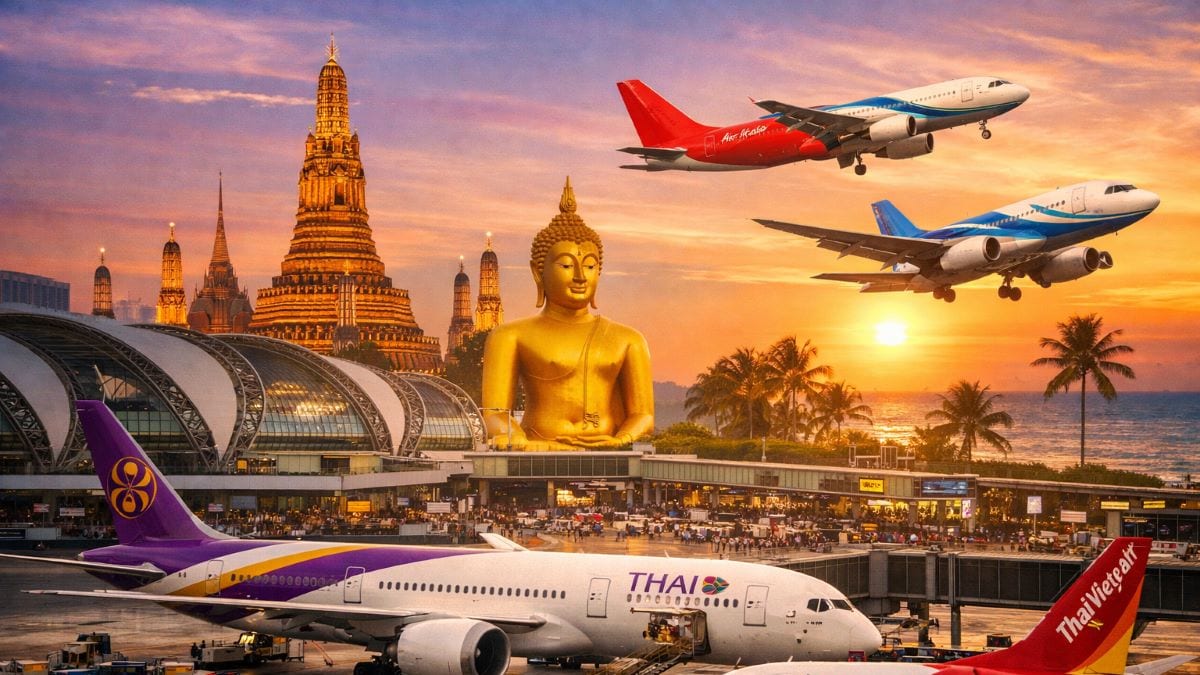
Image by Latest International / Global Travel News, Breaking World Travel News
Airfare cuts and seat boosts aim to unlock pent-up demand
Publicly available information from Thailand’s aviation and tourism sectors indicates that airlines serving the kingdom are leaning heavily on promotional pricing and added capacity in the run-up to the April 13 to 15 Songkran holiday window. Carriers have been rolling out limited-time sale fares on domestic and short-haul international routes, targeting travelers from key markets across Asia alongside Thai residents returning home for the New Year water festival.
Domestic low-cost operators have already been experimenting with aggressive price reductions and tactical capacity shifts since late 2025, a pattern that analysts say is now being extended into the Songkran 2026 period as airlines fight for market share on trunk routes such as Bangkok to Chiang Mai, Phuket and Khon Kaen. Trade press coverage highlights campaigns with sharply discounted base fares on selected flights and added frequencies during peak outbound and return days around the long weekend.
On the full-service side, Thai Airways and regional competitors are using Songkran to consolidate their presence on high-yield routes into Bangkok and major resort gateways. Fleet renewal and network adjustments announced for 2025 and 2026 have created room for more wide-body and narrow-body rotations into Thailand during peak leisure windows, with Songkran flagged by industry watchers as one of the key stress tests for the country’s aviation recovery.
Sector research circulated in March points to a coordinated push between airports, airlines and tourism planners to keep average fares in check during the holiday while still filling a larger number of seats. Capacity is being steered toward routes with strong holiday and festival demand, with additional flights scheduled on popular domestic corridors and selected regional links from cities in neighboring countries.
Songkran positioned as centerpiece of 2026 tourism strategy
The renewed airfare competition is unfolding against a broader national strategy to turn Songkran into a global marquee event. Thailand’s Tourism Authority has framed the festival as one of the country’s most powerful cultural assets, aligning it with the “New Thailand” vision and a 2026 tourism campaign that emphasizes high-value experiences over pure visitor volume.
Government communication channels describe Songkran as a flagship in a calendar of soft-power events that also includes heritage festivals, sports gatherings and large-scale concerts. The objective for 2026 is to use these anchor moments, and Songkran in particular, to drive longer stays, wider dispersal of visitors beyond Bangkok and Phuket, and higher average daily spending, especially among regional and long-haul markets.
Forecasts released by Thai tourism analysts ahead of the holiday suggest that Songkran 2026 could surpass the estimated 28.7 billion baht in tourism receipts attributed to the 2025 festival period. Rising travel demand from India, China and Southeast Asian neighbors, combined with more accessible domestic fares, is expected to help lift both international arrivals and domestic trip numbers.
Promotional activity in the first quarter of the year has already featured Songkran-themed marketing at overseas travel fairs, including campaigns aimed at millennial and family segments. These efforts are being complemented by airline seat sales and tour packages that bundle discounted flights with hotel stays and festival experiences in Bangkok, Chiang Mai, Phuket, Pattaya and secondary cities.
Expanded flights spread benefits beyond Bangkok and major hubs
Alongside cheaper tickets, the Songkran 2026 push includes efforts to direct more flights and visitors into regional destinations. Tourism-focused reporting indicates that secondary cities and emerging beach areas are experiencing stronger advance bookings and search interest, a trend linked to both domestic fare promotions and a deliberate effort to ease pressure on traditional hotspots.
Pattaya, Hua Hin, Koh Samui and coastal provinces along the Gulf of Thailand are cited as early winners, with hoteliers and local businesses preparing for a surge in domestic travelers using discounted air connections to reach nearby airports before continuing by road or ferry. On the Andaman coast, Phuket and Krabi are expected to leverage additional flights and competitive fares to attract both holidaymakers and short-break visitors combining Songkran celebrations with beach escapes.
Upcountry cultural centers such as Chiang Mai, Khon Kaen and Ayutthaya are also in focus. Campaigns promoted through official channels emphasize traditional processions, merit-making ceremonies and heritage-focused water celebrations, positioning these cities as alternatives for travelers seeking a more cultural interpretation of Songkran. Airlines have responded by maintaining or increasing frequencies on key northern and northeastern routes during the festival window.
Industry observers note that dispersing Songkran demand more widely can help smooth congestion in Bangkok while spreading tourism income into provincial economies. Additional flights to regional airports, backed by joint promotions with tourism offices and private-sector partners, are seen as critical tools for achieving that goal in 2026.
Infrastructure, pricing and sustainability under scrutiny
The sharp increase in festival travel is putting Thailand’s transport infrastructure and pricing practices under the microscope. Past holiday periods have drawn criticism over last-minute fare spikes and overcrowded terminals, prompting calls from consumer groups and economists for more transparent and predictable pricing mechanisms during peak seasons.
For Songkran 2026, publicly available commentary from analysts suggests that airports and carriers are under pressure to match airfare discounts with operational readiness. This includes ensuring sufficient check-in capacity, baggage handling resilience and coordination with ground transport providers to move passengers smoothly between airports and city centers during the busiest days.
The sustainability of low fares is another concern. While short-term discounts and extra flights can stimulate demand and support the broader tourism revival, rising fuel costs and currency movements continue to weigh on airline balance sheets. Some market reports indicate that carriers are leaning on targeted promotions around Songkran while planning more gradual fare increases later in the year to protect yields.
Environmental considerations are entering the conversation as well. National tourism strategies for 2026 emphasize responsible and high-value tourism, and industry discussions increasingly reference the need to balance higher flight volumes with carbon-reduction goals and community impact in heavily visited destinations.
Travelers urged to plan early as competition for seats heats up
With Songkran 2026 set against this backdrop of discounted fares and added flights, competition for the most convenient departure times and popular city pairs is intensifying. Booking data referenced in local media suggests that prime-time flights into Bangkok, Chiang Mai and Phuket around April 11 to 13 are filling up weeks in advance, even as airlines add capacity and roll out new promotions.
Travel advisors and tour operators are encouraging both domestic and international travelers to secure tickets early, noting that the most attractive promotional fares are often tied to advance purchase windows and carry change restrictions. Flexible travelers willing to consider secondary airports or off-peak departure times may find better availability, particularly on domestic routes where multiple carriers are active.
Accommodation markets in key Songkran hubs are also tightening. Reports from hotel and short-stay platforms indicate rising occupancy and firmer rates for mid-range and upscale properties in central Bangkok, beach resorts and historic cities. Travelers who lock in discounted flights but delay booking rooms may find themselves paying higher prices or compromising on preferred locations.
Despite these pressures, the convergence of airfare cuts, extra flights and expanded festival programming is being viewed within Thailand’s travel industry as a pivotal opportunity. If Songkran 2026 delivers on expectations, it could set the tone for the country’s broader tourism ambitions through the rest of the year, reinforcing Thailand’s reputation as one of Asia’s most accessible and experience-rich holiday destinations.