

More news on this day
Holidaymakers eyeing Southeast Asia now face a more complicated landscape, as Thailand rolls out stricter entry formalities just as regional tensions and shifting policies in Cambodia and Vietnam unsettle cross-border itineraries.
Get the latest news straight to your inbox!
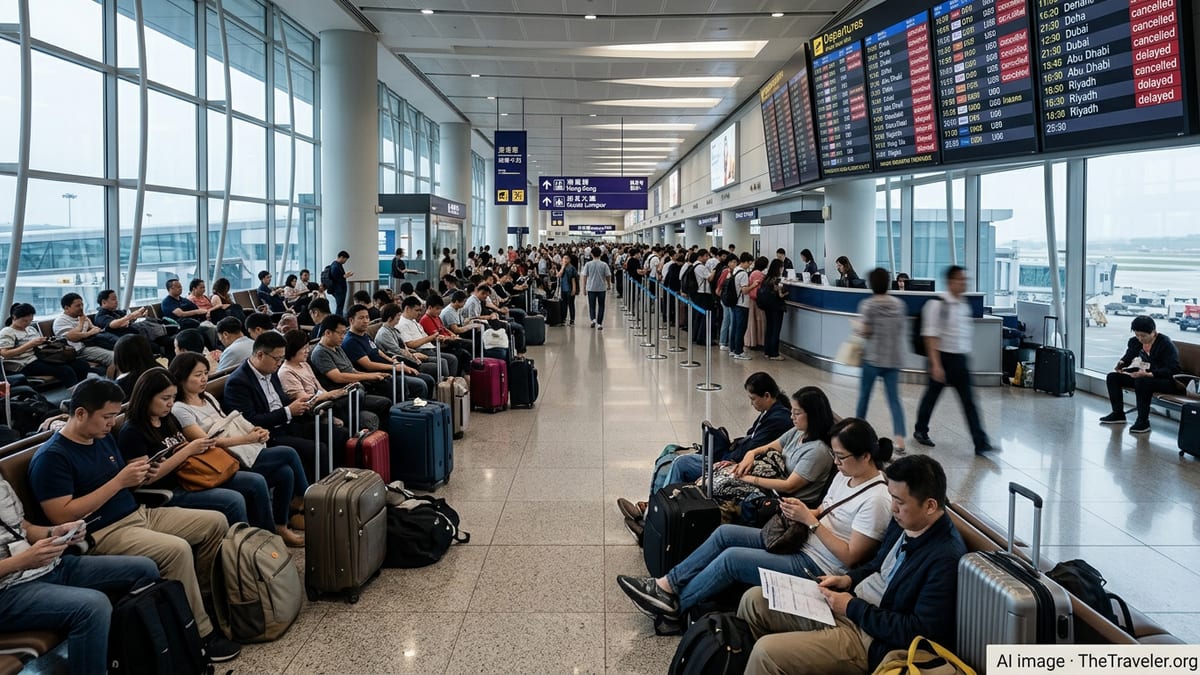
Thailand’s New Digital Gatekeepers for Foreign Visitors
Thailand is moving ahead with a full digital overhaul of its border procedures, centering on a mandatory online arrival form for all foreign visitors. Publicly available information indicates that the Thailand Digital Arrival Card, a replacement for the long-standing paper TM6 form, will be required for travelers entering by air, land, or sea beginning in 2025. The system asks for advance details on travel plans and basic health information, effectively turning pre-registration into the new norm for arrivals.
In parallel, Thailand is preparing to introduce an Electronic Travel Authorization for many visa-exempt nationalities. Under this framework, travelers who previously relied on simple visa-free entry will have to secure online clearance before boarding flights or crossing land borders. Authorities have promoted the change as a way to speed up airport queues and tighten screening, but it adds another time-sensitive step that holidaymakers must complete accurately before departure.
These measures arrive as Thailand considers a broader review of its generous visa-exemption regime. Recent parliamentary discussions, as reported in local media, point to a push to distinguish between short-stay leisure travelers and those perceived as long-term or higher-risk visitors. While no sweeping cutback on visa waivers has been finalized, the policy debate has already created uncertainty among tour operators that cater to multi-country trips across mainland Southeast Asia.
For most tourists, the immediate impact is logistical rather than prohibitive. Trips remain possible, but the days of turning up at a Thai border with minimal paperwork are ending. Failing to complete the digital arrival card or, where required, the new authorization in advance could now be enough to derail a long-planned holiday.
Border Tensions Disrupt Overland Routes to Cambodia
While Thailand fine-tunes its digital controls, travelers are also confronting a more fragile geopolitical backdrop along the Thai-Cambodian frontier. Travel advisories and industry notices describe a deterioration in relations that has led to tighter checks at key crossings and, in some cases, the suspension of non-essential movements. One insurance circular issued in mid-2025 cited a Thai announcement that effectively halted non-essential overland travel into Cambodia, highlighting the risk of sudden policy reversals for those relying on cross-border buses and private transfers.
The knock-on effects are visible in Cambodia’s tourism figures. Recent coverage of Angkor Wat ticket sales points to a double-digit decline in early 2026, with tensions along the border singled out as one factor damping demand. Cambodian industry groups have called for stronger marketing and reassurance campaigns to counter perceptions of instability, while also stressing that major destinations such as Siem Reap and Phnom Penh continue to operate normally for air arrivals.
For travelers, the distinction between air and land entry has become critical. Flying directly into Cambodia remains broadly straightforward under the country’s long-standing visa-on-arrival and e-visa systems. Overland routes via Thailand, on the other hand, are more vulnerable to abrupt restrictions, longer security screenings, and schedule disruptions as officials respond to the political climate.
Those planning classic Bangkok-to-Angkor Wat itineraries by road may find their options shrinking or shifting at short notice. Tour companies are increasingly steering clients toward direct flights to avoid the risk that a land border closure or policy change could upend tightly timed holiday plans.
Cambodia’s Mixed Signals: Visa Perks and Safety Concerns
Complicating the picture further, Cambodia is simultaneously tightening and relaxing its approach to foreign visitors. On one side, tourism advocates emphasize that basic entry rules remain relatively liberal, with most nationalities eligible for visas on arrival or online. Cambodia is also preparing a trial visa waiver for Chinese citizens in 2026, aiming to ride the wave of resurgent outbound travel from China and reinforce its role in the regional tourism circuit.
On the other side, Cambodian media and specialist travel outlets have highlighted growing security concerns, particularly around peak festival periods. In the run-up to Khmer New Year in April 2026, several foreign governments issued reminders about petty crime, overcrowding, and road safety risks, prompting renewed debate over how the country can protect visitors without dampening its hard-won tourism rebound.
Industry figures in Phnom Penh link recent headwinds to a combination of factors that go beyond border politics. They point to global economic uncertainty, high flight costs, and the lingering reputational damage from high-profile crackdowns on scam operations and illegal online casinos. Border friction with Thailand is one element in a wider set of challenges that continues to weigh on demand for temple, beach, and eco-tourism trips.
The result is a patchwork of signals for would-be visitors. Generous visa policies and targeted waivers for key markets coexist with cautious safety messaging and regional travel advisories. For many travelers, especially those unfamiliar with the region, this can create the impression of drastic restrictions even where airports and main tourist areas remain open.
Vietnam Tightens Its Own Screening While Chasing Growth
Vietnam, a mainstay of Southeast Asia travel circuits, has also been revisiting its entry regime as tourism numbers climb back toward pre-pandemic levels. Over the past two years, the country has expanded visa-free access for select European markets and extended e-visa eligibility, while at the same time investing in stricter security screening and data-sharing at major gateways such as Hanoi and Ho Chi Minh City.
Reports from regional airlines and tour operators describe a country trying to walk a fine line between openness and control. Digitalized e-visa procedures and online payments make it easier to secure official permission before arrival, but they also leave less room for last-minute itinerary changes or border runs that once underpinned backpacker-style travel across Vietnam, Cambodia, and Thailand.
Vietnam’s adjustments are not on the same scale as a full border closure, yet they add to the cumulative administrative weight on travelers who hope to visit multiple countries in a single trip. A typical route that once involved crossing borders by bus or boat with minimal advance paperwork now demands careful sequencing of visa applications, proof-of-funds checks, and evidence of onward travel.
For tour planners, this more managed environment means building in extra time buffers and clearer instructions for clients. For independent travelers, it increases the risk that a miscalculated visa expiry date or missing document could curtail their journey well before the final beach or city stop.
Are Holiday Plans Really at Risk, or Just More Complicated?
The convergence of Thailand’s new digital entry systems, tighter scrutiny at its borders with Cambodia, and evolving visa and screening rules in Vietnam is reshaping how visitors move around mainland Southeast Asia. For some, especially those relying on spontaneous overland routes or informal travel arrangements, these changes will feel like drastic restrictions that undermine the region’s long-standing reputation for border-light backpacking.
For most holidaymakers with pre-booked flights and hotels, however, the emerging picture is one of added complexity rather than outright cancellation. Commercial flights into Bangkok, Phnom Penh, Siem Reap, Hanoi, and Ho Chi Minh City are still operating, and each country continues to publicly court tourists as a pillar of economic recovery. The main variables are now timing, documentation, and the degree of flexibility built into an itinerary.
Travel specialists recommend that visitors pay less attention to past experiences and more to the fine print of current entry rules. That may mean completing Thailand’s digital arrival card and, where applicable, an electronic authorization well before departure, choosing direct flights into Cambodia rather than relying on Thai land borders, and confirming Vietnam’s latest e-visa and visa-exempt provisions before locking in multi-stop journeys.
The stakes are high for a region that increasingly depends on tourism revenues. Policy shifts in Bangkok, Phnom Penh, and Hanoi are being watched closely by airlines, hoteliers, and travelers alike, all of whom are adjusting to an era in which successful holidays are less about hopping borders on a whim and more about navigating a fast-changing web of digital forms and geopolitically sensitive frontiers.