


Wise has become a go-to card for frequent travelers and digital nomads who want better exchange rates and fewer bank surprises. Yet even savvy travelers routinely misuse it, losing money to avoidable fees, card declines, and account hiccups. Understanding where people go wrong with Wise abroad can easily save you the cost of a decent hotel night on a single trip.
Get the latest updates straight to your inbox!
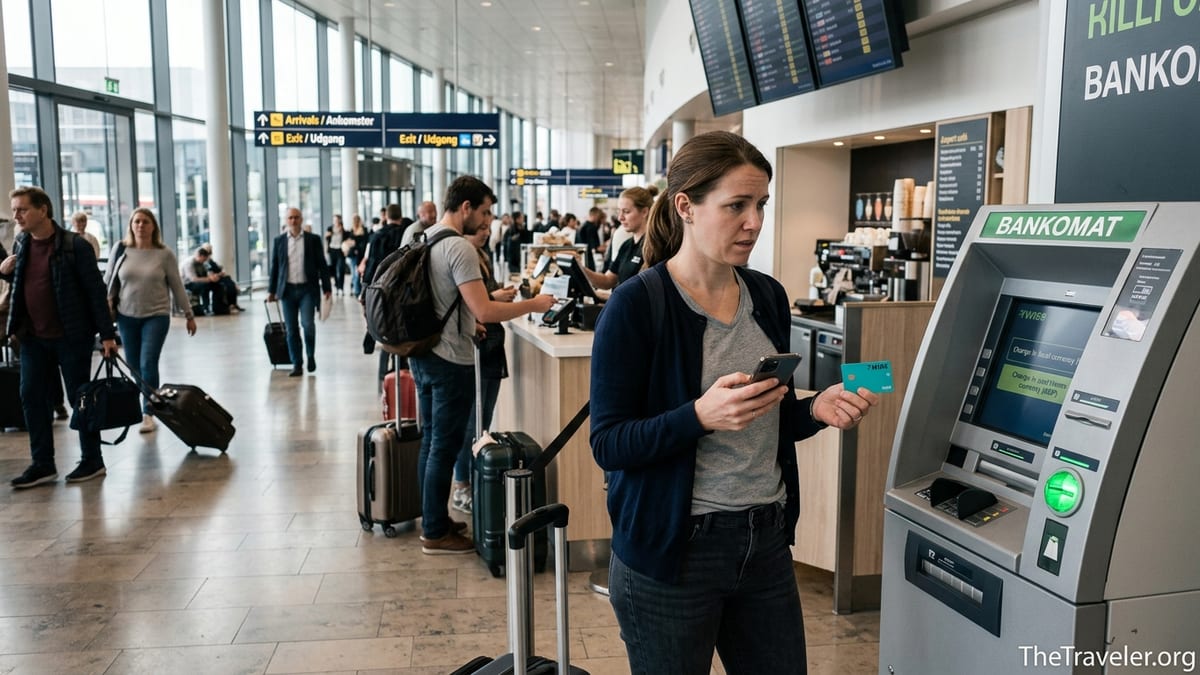
Misunderstanding Wise Fees and ATM Limits
Wise markets itself on transparent pricing, but that does not mean all the costs are obvious at a glance. In 2026 the company updated its ATM withdrawal structure, shifting free allowances and fees depending on the region where your card is issued. For example, a customer with a North American-issued card typically gets a small amount of ATM withdrawals free each calendar month and then pays both a fixed fee and a percentage for additional cash. What catches many travelers out is that those fees sit on top of whatever the local ATM operator itself charges, which can easily add several dollars per withdrawal in tourist areas.
A common scenario looks like this: An American traveler lands in Lisbon, uses a Wise card at a central city ATM, takes out the equivalent of 40 USD, and gets hit three times. First, the ATM adds its own local fee. Second, the traveler has already used their monthly free Wise allowance back home, so Wise charges its own fixed-plus-percentage fee on top of the withdrawal. Third, because the withdrawal is small, the fixed portion of the fee makes the effective cost unusually high. That traveler walks away thinking Wise is “expensive,” when in reality the problem was the combination of low withdrawal amount and ignoring the monthly allowance they had already used.
The solution is to check your specific ATM allowance and fee schedule in the Wise app under your card settings before you travel, then adjust your behavior. If you are in a country that still leans heavily on cash, such as parts of Southeast Asia or Eastern Europe, it is usually cheaper to make fewer, larger withdrawals that stay within your free or low-fee monthly band rather than many small withdrawals. In practice, withdrawing the equivalent of 200 to 300 USD at once at a reasonably secure ATM can cost less over a two-week trip than taking out 40 USD every couple of days.
It is also important to remember that Wise spending in shops and restaurants is often free of foreign transaction charges, while cash withdrawals are where the fees quickly add up. Travelers who insist on using cash for everything sometimes end up paying more in ATM and conversion costs than they would have with a good no-foreign-transaction-fee credit card for most purchases and Wise cash only for situations where cards are not accepted.
Falling for Dynamic Currency Conversion Traps
One of the biggest and most expensive mistakes Wise users make abroad is accepting dynamic currency conversion, or DCC, at ATMs and card terminals. DCC is the “helpful” feature where a machine offers to charge your card in your home currency instead of the local one. At first glance this feels reassuring: an American in Rome sees a restaurant bill of 60 euros and the terminal says “Pay 60 EUR or 70.50 USD.” Many travelers instinctively choose the USD option because it feels familiar and transparent.
The problem is that the DCC rate is almost always worse than the rate Wise would use. Wise generally converts at or near the mid-market rate and adds a clearly displayed fee. DCC, by contrast, lets the merchant or ATM provider set their own exchange rate with a generous margin built in. In real terms, that American diner in Rome might be overpaying by 5 to 7 percent compared with simply letting Wise handle a euro transaction. Over a two-week holiday of hotel bills, train tickets, and dinners, that difference can quietly run into triple digits in dollars.
DCC traps are particularly aggressive in some European and Asian tourist hubs. ATMs in central Prague, Bangkok, or Barcelona often present the “home currency” option in large, friendly text while burying the “proceed with local currency” option on a smaller button or behind a “continue without conversion” prompt. Travelers unfamiliar with the language or in a rush often tap the default highlighted option, unknowingly agreeing to a poor conversion rate. The same is true at hotel front desks, duty-free shops, and even ride-hailing kiosks at airports.
When you are using a Wise card, the safest reflex is simple: always choose to be charged in the local currency of the country you are in. At an ATM in Tokyo, pick Japanese yen, not U.S. dollars or euros. At a card terminal in Paris, insist on being charged in euros. If an employee tries to steer you toward your home currency or tells you it is “better,” politely decline and ask them to retry the charge in the local currency. Wise is designed to give you a fair exchange; letting DCC override that undermines the very reason you chose the card.
Not Preparing the Right Currencies Before Arrival
Another frequent mistake is landing in a new country with either the wrong Wise balance loaded or no local currency balance at all, then scrambling at the first ATM or shop. Wise can auto-convert funds from any of your balances into the needed currency at the time of purchase, but that does not mean you should always rely on this feature without preparation. Auto-conversion still involves a conversion fee, and it may not use the currency route you would have picked if you had planned ahead.
Consider a traveler who lives in the United States, earns in dollars, and is flying to Japan via a layover in London. They top up their Wise account in USD only, assuming the card will “just work” everywhere. At Heathrow they grab a coffee and sandwich priced in pounds, then in Tokyo they pay for a train ticket in yen and withdraw some cash at an ATM. Wise converts from USD for each purchase and the withdrawal, applying separate conversion fees and possibly using different liquidity routes. If the traveler had instead converted a chunk of their balance to GBP before landing in London and JPY before landing in Tokyo, they could have consolidated conversions into fewer, larger transactions, often at a slightly lower effective fee.
On top of that, exchange rates move constantly. Wise lets you monitor live mid-market rates in the app and set up conversions when rates are more favorable. A traveler planning a summer trip to the eurozone might watch the USD/EUR rate for a few weeks and convert a portion of their spending money when the dollar is relatively strong instead of leaving all conversions to the days of travel. While this is not speculative investing, simply being mindful of rate trends and avoiding last-minute conversion at the airport can make a noticeable difference on a 2,000 USD holiday budget.
A practical routine is to check Wise a few days before you travel, identify which currencies you will actually need, and pre-load reasonable amounts into those balances. For a two-week trip through Italy and Croatia, that might mean converting a few hundred euros and a smaller amount of Croatian kuna equivalent, while leaving a reserve in your home currency for flexibility. If your itinerary changes or you overshoot in one currency, you can always convert back or between balances later, but starting with a sensible local-currency cushion makes your on-the-ground spending smoother.
Ignoring Card Limits, Security Controls, and Backup Options
Wise cards are debit cards with configurable limits and built-in security features, which is a strength but also a common source of confusion on the road. Many travelers do not realize that card limits are split between contactless payments, chip-and-PIN transactions, and ATM withdrawals. They only discover this the hard way when a hotel deposit gets declined at check-in or an ATM refuses a perfectly reasonable cash request, even though there is enough money in the Wise account.
Imagine a digital nomad arriving in Buenos Aires after a long flight. They try to withdraw the equivalent of 250 USD in Argentine pesos to pay their apartment deposit in cash. The ATM declines the transaction. The traveler checks their Wise app and sees plenty of balance, but buried in the card settings is a lower daily ATM limit that they never adjusted. After several attempts at different ATMs, they are frustrated and worried about how to pay the landlord. In another scenario, a traveler in rural Spain trying to pay for fuel discovers that they had toggled their card to “online payments only” as a security measure long ago and forgot to switch it back before driving into the countryside.
Before a trip, it is worth spending five minutes in the Wise app reviewing your card limits and security toggles. Increase or decrease daily ATM and spending limits to realistic values for your destination, making sure they align with typical hotel deposits, car rental holds, and cash needs. Check that card-present payments are enabled. If you are worried about security, use lower limits rather than disabling features entirely so you do not strand yourself when a merchant refuses online or contactless payments.
Another mistake is treating Wise as your only card abroad. While Wise is a strong primary tool for everyday purchases and small ATM withdrawals, it is not a full replacement for a traditional credit card in every situation. Many rental car agencies, for example, strongly prefer or require a credit card for deposits, and some hotels still place large holds that are more comfortably handled on a credit line. Travelers in forums have reported stressful moments when their Wise card was declined by a specific merchant or network glitch, but they had no backup option. A practical setup is to carry Wise as your main spending card, a no-foreign-transaction-fee credit card for larger holds and emergencies, and at least one traditional debit card from your home bank as a final safety net.
Using Wise in Ways That Risk Compliance Flags
Like any regulated financial service, Wise has rules about how its accounts and cards can be used. One underappreciated risk is treating Wise as an all-purpose offshore bank replacement or using it for activities that look suspicious to compliance systems. Travelers who hop between countries, withdraw large amounts of cash in high-risk jurisdictions, or funnel funds between accounts in ways that resemble money laundering can find themselves facing unexpected account reviews, freezes, or even closures.
Real-world threads on travel and finance forums feature stories of users who used Wise heavily for peer-to-peer trades, unofficial currency exchanges, or business activity through a personal account, only to later have transfers delayed while Wise asked for documentation. In some cases, the user was on a long trip and suddenly could not access part of their balance while support reviewed unusual patterns. Even where Wise ultimately released the funds, the stress of dealing with compliance questions from a hotel lobby or a coffee shop in another time zone is not something you want on a short vacation.
For the average holidaymaker or remote worker, the fix is to keep Wise usage straightforward and clearly personal. Paying for hotels, restaurants, trains, and everyday purchases with your Wise card is fine. Transferring money to yourself and close family is usually uncontroversial. Problems are more likely when personal accounts start acting like unlicensed remittance services or informal business bank accounts. If you run a business, consider Wise’s dedicated business products rather than routing everything through a personal profile. And if you receive a request for documents or clarifications from Wise while abroad, respond promptly and clearly so any review is resolved as quickly as possible.
It is also sensible to avoid carrying your entire travel budget in one place. If, for whatever reason, a Wise account is temporarily limited while you are traveling, having some funds held in a separate bank account or on another card saves you from being stranded. Spread your risk across Wise, a traditional bank, and maybe a small emergency cash reserve in a major currency like euros or U.S. dollars where it is safe to store it.
Forgetting Local Payment Culture and Acceptance Gaps
Wise is built on major card networks, but that does not guarantee universal acceptance, and it certainly does not smooth over all local payment quirks. Travelers often assume that if a destination is “card-friendly,” any international Visa or Mastercard debit will be treated exactly like a domestic card. In reality, acceptance can be patchier, and behavioral norms vary from country to country. This can make a Wise card feel unreliable in situations where the real issue is local infrastructure or merchant habits.
Take Japan as an example. Many urban merchants now accept international cards, but some smaller shops and rural businesses prefer cash, and certain domestic-only terminals still reject foreign-issued cards. Travelers have reported that their Wise card worked flawlessly at major chains, convenience stores, and train kiosks but was declined at older ATMs or small family-run restaurants. In parts of Germany and Austria, some mid-range hotels and traditional restaurants still favor local debit schemes or cash, even when tourist marketing suggests otherwise. In smaller towns in Latin America, card readers may intermittently drop network connections, leading to declines that have nothing to do with your Wise balance.
Local expectations about tipping, splitting bills, and preauthorizations also matter. In the United States, for instance, restaurant terminals often place a temporary hold higher than the base bill to accommodate tips, which can bump against your available balance or card limits. In European cities, contactless payments might be widely accepted for small purchases but less reliable for large hotel bills. In some countries, such as Mexico or Thailand, card skimming has historically been an issue at certain types of businesses or ATMs, prompting some travelers to restrict their Wise card usage to reputable chains and bank-owned cash machines.
To avoid unpleasant surprises, research the basic payment culture of your destination and adapt your Wise strategy accordingly. If you are heading to a mostly cash-based destination, use Wise primarily for ATM withdrawals but factor in the higher fees and cash security issues. If you are visiting a country where mobile wallets dominate, such as China, remember that a Wise card may only be indirectly usable via international-friendly apps, and you might still need a backup card. When you arrive, start with small test transactions: make a minor purchase at a supermarket, withdraw a small amount from a central bank ATM, and note which network logos appear on successful terminals. That early reconnaissance quickly tells you where your Wise card will shine and where it may struggle.
The Takeaway
Wise can be an excellent tool for travelers: clear exchange rates, competitive fees, and a single card that works across dozens of currencies. But the benefits are not automatic. Travelers lose money or encounter headaches when they treat Wise as a magic “no-fee travel card” rather than a powerful but nuanced financial product with its own limits and rules. The most common mistakes center on ATM usage, dynamic currency conversion, poor preparation of balances, misunderstandings about card limits and security, compliance risks, and mismatched expectations with local payment cultures.
If you take a few concrete steps before each trip, you can avoid most of these pitfalls. Check your current ATM allowances in the Wise app and plan your cash strategy. Pre-load reasonable balances in the currencies you will actually need. Always choose to pay or withdraw in the local currency rather than your home currency. Adjust card limits to realistic levels, leave some redundancy across multiple cards, and keep your Wise usage clearly personal and transparent. Combined with basic awareness of how people pay in your destination country, these habits turn Wise from a potential source of surprises into a reliable, money-saving ally every time you cross a border.
FAQ
Q1. Is it cheaper to withdraw cash with Wise abroad or to pay directly by card?
In most cases it is cheaper to pay directly by card, because Wise typically does not charge an extra foreign transaction fee on card purchases, while ATM withdrawals can incur both Wise withdrawal fees after your free allowance and separate charges from the local ATM operator.
Q2. How can I avoid bad exchange rates when using Wise overseas?
Always choose to pay or withdraw in the local currency of the country you are in and let Wise handle the conversion. Avoid dynamic currency conversion offers that quote prices in your home currency at ATMs, shops, or hotels, because those rates usually include a hidden markup.
Q3. Should I convert money into local currency in Wise before my trip?
Pre-converting at least part of your balance into the main currency or currencies you will use often makes sense. It lets you lock in a rate you find acceptable and reduces the number of separate conversions during your trip, though you should still be prepared to convert more on the fly if your plans change.
Q4. What happens if my Wise card is declined while I am abroad?
If a transaction is declined, first check the Wise app for alerts, available balance, and card limits. Many declines are caused by hitting daily ATM or spending limits, disabled card-present payments, or network issues at the merchant. If everything looks normal and the card still fails, use a backup card and contact Wise support through the app.
Q5. Is it safe to use Wise as my only card when traveling?
Relying on any single card is risky. Wise is best used as part of a small toolkit that includes at least one backup credit or debit card and, where appropriate, a modest emergency cash reserve. That way, if your Wise card is lost, stolen, or temporarily limited, you still have access to funds.
Q6. How do Wise’s ATM limits work on a trip with lots of cash needs?
Wise typically offers a limited amount of free or low-fee cash withdrawals each month, then charges a fixed and percentage fee on further withdrawals. The exact thresholds depend on where your card was issued. For cash-heavy trips, it is cheaper to plan fewer, larger withdrawals that stay within or just above your allowance, rather than many small ones.
Q7. Can Wise close or restrict my account while I am abroad?
Wise, like other regulated financial services, can temporarily review or restrict accounts if activity appears unusual or potentially against their terms. This is more likely if you use a personal account for business-like transfers, large unexplained movements, or flows that resemble informal remittance services. Keeping usage straightforward and responding promptly to any document requests reduces this risk.
Q8. Will every shop and ATM accept my Wise card in foreign countries?
No card has universal acceptance. Wise runs on major networks, but individual merchants or ATMs may only support domestic cards or specific schemes. Certain rural areas, smaller businesses, and older terminals might reject foreign-issued cards. Testing your card with small purchases and using bank-branded ATMs in central locations usually yields better results.
Q9. Is Wise better than a traditional bank card for travel?
Wise often offers more transparent exchange rates and lower foreign transaction costs than many traditional banks, especially for multi-currency spending. However, some banks provide strong travel credit cards with no foreign transaction fees and valuable protections. For many travelers, the best setup is a combination of a Wise card for everyday spending and a good credit card for larger purchases and deposits.
Q10. What should I do in the Wise app before flying to another country?
Before departure, review your ATM and spending limits, enable card-present payments, pre-load reasonable amounts in the main local currency or currencies you will use, and double-check that your contact details and phone number are up to date so you can receive security alerts and two-factor messages while abroad.