

More news on this day
Columbia Metropolitan Airport is entering 2026 on the heels of back to back record passenger years, as new airlines, routes and facilities convince more South Carolinians to start their trips at CAE instead of driving to larger hubs.
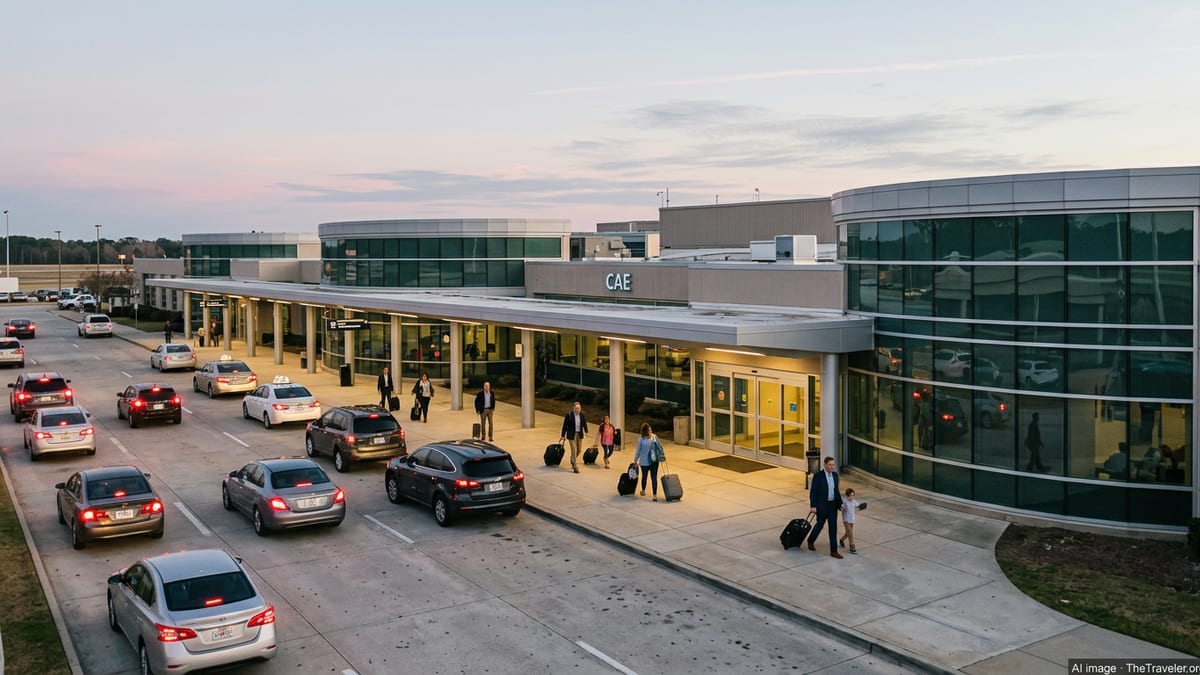
Back to back records reshape CAE’s profile
Columbia Metropolitan Airport reported record breaking passenger traffic in both 2024 and 2025, cementing its position as a growing regional gateway rather than a purely feeder airport. Airport officials said more than 1.3 million travelers flew in or out of CAE in 2024, edging past the previous high set before the pandemic. Early totals for 2025, published in a February 2026 airport update, confirm that last year’s volumes surpassed the 2024 mark, giving CAE two consecutive all time records.
The sustained growth is notable in a U.S. market where overall airline traffic has cooled slightly from the post pandemic surge. Federal aviation data for late 2025 show national enplanements down on a year earlier, even as they remain above 2019 levels. Against that backdrop, CAE’s gains stand out as a local success story driven by aggressive route development, careful cost control and a focus on easing the airport experience for passengers who once defaulted to Charlotte or Atlanta.
Airport leaders say the momentum has carried into early 2026, supported by forecasts that enplanements will rise again this year by roughly 5 percent. That projection, included in the Richland Lexington Airport District’s latest financial documents, reflects expectations of higher seat capacity from legacy carriers as well as the first full year of operations for newly arrived discount airlines.
For travelers, the headline is simple. The odds of finding a convenient, competitively priced itinerary out of Columbia are better than they have ever been, and that is changing long standing habits in the region’s business and leisure markets.
Low cost carriers tip the scales for price sensitive flyers
One of the most visible changes at CAE over the past year has been the arrival of Allegiant Air and Spirit Airlines, which both launched operations in 2025. Their entry expanded the airport’s carrier roster beyond the long dominant trio of American, Delta and United, bringing an ultra low cost model to a market that previously relied almost entirely on network airline pricing.
The new entrants immediately focused on leisure demand, adding nonstop flights from Columbia to popular Florida destinations including Orlando Sanford, mainstream Orlando and Fort Lauderdale, as well as service to Newark. Allegiant’s broader 2025 expansion campaign, which introduced dozens of new nonstop routes around the country, specifically highlighted Columbia as a beneficiary of its push into smaller and midsize cities.
Fare watchers say the added capacity has begun to pressure prices on some routes, particularly for travelers who are flexible on dates and can work within low cost carrier fee structures. That has made CAE more attractive for families and vacationers who might previously have driven to larger airports to chase cheaper tickets.
The presence of discount airlines has also put subtle competitive pressure on the legacy carriers that still carry the bulk of Columbia’s business traffic. While American, Delta and United remain focused on feeding their hubs in Atlanta, Charlotte, Dallas Fort Worth, Chicago, New York, Philadelphia and Washington, they are now doing so in a market where more residents are willing to compare prices and schedules across a broader set of options.
More nonstop choices and better connectivity
Route development has been another key factor behind CAE’s rising appeal in 2026. United Airlines has moved to resume nonstop service between Columbia and Newark Liberty International Airport, with flights scheduled to return in January 2026. Aviation schedule data also indicate that American Airlines will start a new weekly Columbia to Miami link in May 2026, adding a nonstop connection to one of the Southeast’s busiest international gateways.
Those additions build on existing shuttle style links to major hubs such as Atlanta, Charlotte, Chicago and New York LaGuardia, which give local travelers access to hundreds of onward connections with single ticket itineraries. Airport planners have also made no secret of their interest in securing future nonstops to Boston, Denver, Las Vegas and Nashville, cities repeatedly cited by business groups and tourism officials as high value targets for direct service.
Even before those ambitions are realized, the current schedule is widening enough that more Midlands travelers can find a workable departure time without resorting to long drives and overnight stays at out of town airports. Combined with modest but steady frequency increases on core hub routes, the net effect is a perception that CAE is no longer a niche option, but a practical first choice for many itineraries.
The connectivity story extends beyond passenger flights. UPS maintains a significant presence at CAE, operating a large distribution and reconciliation center on airport property. While cargo operations do not directly show up in passenger totals, they support runway investments, airfield maintenance and a level of airline engagement that indirectly benefits the commercial schedule.
Terminal upgrades and a smoother passenger experience
On the ground, Columbia Metropolitan has spent the past several years refreshing the terminal and parking infrastructure with a focus on reducing the small frictions that once pushed travelers toward bigger airports. Recent financial disclosures point to continued capital spending in 2024 and 2025 on concourse improvements, technology upgrades and customer facing amenities, matched by conservative debt levels to keep airline costs in check.
Parking has been a particular focus as volumes have grown. CAE has added capacity and adjusted lot layouts to ease congestion during peak periods, looking to preserve one of its signature advantages over larger hubs, the short walk from car to check in. Inside the terminal, incremental changes such as upgraded security lanes, expanded food and beverage offerings and refreshed seating areas are designed to make early morning departures and tight connections less stressful.
Regular passengers say those investments are noticeable in shorter lines, clearer wayfinding and a generally calmer atmosphere, even as traffic sets new records. For business travelers who value time and predictability, that environment can outweigh the broader selection of flights available at larger airports a two or three hour drive away.
Airport executives argue that this focus on experience is essential to sustaining growth. If the terminal feels strained or chaotic as numbers climb, they risk losing exactly the customers who have been convinced to switch to CAE in recent years.
Regional dynamics favor staying local in 2026
Columbia’s airport resurgence is also being helped by broader trends in the aviation and travel industries. The International Air Transport Association’s latest figures show global passenger demand growing again at the start of 2026, with airlines increasing seat capacity at the fastest pace since 2024. That expansion is giving carriers more flexibility to add or restore service at secondary markets like Columbia that were squeezed when aircraft and crews were in short supply.
At the same time, higher fuel, labor and regulatory costs are encouraging airlines to look for markets where they can command solid yields without the intense competition seen at large hubs. Columbia’s mix of government travel, university related demand and a diverse regional economy fits that profile, giving airlines confidence that new routes can perform without deep discounting.
For travelers across the Midlands, the result is a recalibration of old habits. Where driving to Charlotte or Atlanta once felt like the default for many trips, more residents are now checking CAE first, and often finding schedules and fares that meet their needs. As 2026 unfolds, airport officials hope that pattern will keep building on the record breaking foundation laid over the past two years.