


Arizona rewards curious travelers with red rock deserts, cool pine forests, Indigenous cultural sites, and some of the most iconic landscapes in the United States. It also punishes the unprepared. From brutal summer heat and sudden monsoon storms to sprawling distances and fragile desert ecosystems, the state can turn a dream trip into a rescue scenario surprisingly fast. Understanding what not to do is just as important as knowing where to go. These 12 mistakes are among the most common missteps visitors make in Arizona today, and how to avoid them will help keep your trip both unforgettable and safe.
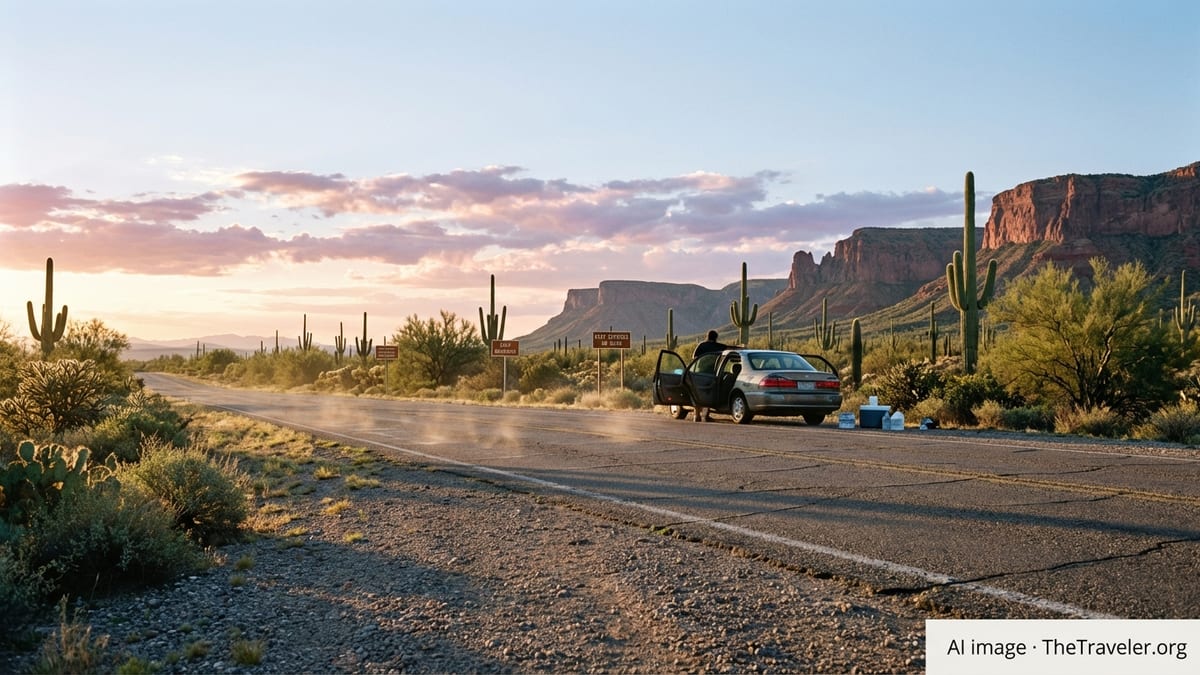
Ignoring Arizona’s Extreme Heat
Underestimating the heat is the single most dangerous mistake travelers make in Arizona. Triple-digit temperatures are common from late spring through early fall, and canyon or low-desert temperatures can run far hotter than what you see in a city forecast. In places like the Grand Canyon’s inner gorge or desert trails near Phoenix and Lake Mead, shade can be minimal and heat reflects off rock, amplifying the stress on your body. Even fit, experienced hikers and walkers have suffered heat stroke and dehydration after only a few hours outside in full sun.
Many serious heat incidents happen in late morning and afternoon, when visitors are still on the trail or highway as temperatures peak. Authorities routinely warn against hiking during the hottest part of the day, especially below canyon rims or on exposed desert routes. Planning activities at sunrise or in the early evening, taking long midday breaks indoors, and treating any forecast near or above 100 degrees as a serious hazard rather than a novelty can dramatically reduce your risk.
Hydration in this climate requires more than casually sipping from a small bottle. Travel and park officials advise drinking water regularly before you feel thirsty and pairing it with salty snacks or electrolyte drinks so your body can actually make use of the fluid. In hot conditions, hikers may need roughly a liter per hour of intense activity, and turning around once you have used half your water is widely recommended. Skipping these precautions, or assuming that your usual routine from cooler states will be enough, is a common and potentially life-threatening error.
Underestimating Desert Hiking and Canyon Trails
Arizona’s trails can look straightforward on a map yet be physically punishing in reality. Many visitors are surprised to find that hiking into canyons is easy at first because it is downhill, but the return is a steep climb in far hotter conditions. Rangers at the Grand Canyon use the phrase “down is optional, up is mandatory” for good reason. Elevation changes, loose rock, and relentless sun quickly turn a casual outing into an exhausting, sometimes dangerous effort if you misjudge your fitness or start too late in the day.
Another mistake is assuming that popular trails are automatically safe. Busy routes near Phoenix, Sedona, Tucson, and Lake Mead see rescues every warm season, often involving visitors who set out with limited water, no sun protection, and no appreciation for how exposed and remote they can feel once they are more than a mile from the trailhead. Recent rescue operations involving large groups, including children, have highlighted how quickly trouble can escalate when groups are underprepared for desert heat and terrain.
To avoid becoming part of these statistics, research elevation gain and typical conditions for any hike, not just the distance. Start well before sunrise on hotter days, build in generous turnaround times, and be willing to shorten or cancel a hike if the forecast or your energy levels are not on your side. Sturdy footwear, a wide-brimmed hat, sun-protective clothing, and carrying more water than you think you need are not overkill here. Ignoring these basics is one of the most common and preventable travel mistakes in Arizona.
Booking Summer Trips Without Respecting the Season
Many travelers schedule Arizona vacations in June, July, or August without realizing how severe conditions can be. In low desert cities and canyon bottoms, daytime highs often surge past 105 degrees, and exposed rock landscapes can feel even hotter. Heat waves have become more frequent and intense, raising the likelihood of park trail closures, extreme heat advisories, and wildfire-related access issues. Visitors who assume summer operates like a typical warm-weather travel season often find themselves trapped indoors for much of the day or scrambling to change plans at the last minute.
Summer also overlaps with Arizona’s monsoon period, which usually begins in June and stretches into September. While the storms can bring dramatic skies and cooler moments, they also create hazards that can shut down trails and roads with little warning. Flash floods in slot canyons, dry washes, and low-lying roads are a recurring risk. Planning a long hike or scenic drive in remote canyon country without checking the daily forecast and local advisories is a serious misstep that can put you in direct conflict with fast-rising water and lightning.
If your schedule is flexible, consider visiting in late fall, winter, or early spring, when temperatures are generally milder and hiking is more comfortable at lower elevations. If summer is your only option, build your itinerary around early-morning and evening activities, plan rest time in air conditioning midday, and be prepared for temporary closures or adjustments due to heat or storms. Failing to align your expectations with the realities of Arizona’s summer climate leads to disappointment at best and emergencies at worst.
Misjudging Monsoon Storms and Dust
Arizona’s monsoon storms are beautiful to watch from a safe place but dangerous to underestimate. From roughly mid-June through September, intense thunderstorms can build quickly on hot afternoons, bringing pounding rain, powerful winds, frequent lightning, and sudden sharp drops in visibility. Travelers unfamiliar with the monsoon often treat these as brief summer showers and push ahead with hikes, scenic drives, or slot canyon explorations. That is a major mistake. Flash floods can sweep through canyons and washes within minutes, sometimes triggered by storms many miles away.
Road travel is equally vulnerable during monsoon season. Heavy rain can create slick conditions and ponding, while walls of dust from haboobs can reduce visibility to near zero along major highways and rural roads. State safety officials emphasize that drivers should never try to outrun a large dust storm, and should instead pull well off the roadway to wait it out. Continuing at speed into deteriorating visibility or attempting to cross flooded roadways exposes you and others to serious, sometimes fatal collisions or washouts.
The best strategy is to treat any forecast of thunderstorms, flash flooding, or blowing dust as a signal to reconsider or adjust your plans. Start hikes early so you are off exposed ridgelines and out of canyons by midday, study terrain maps for potential escape routes, and always respect trail or road closures. When driving, check road conditions and weather along your route before departure, and be ready to stop if a storm develops. Misreading monsoon hazards as a bit of dramatic scenery is a mistake you cannot afford in Arizona.
Driving Long Distances Without Preparation
On a map, Arizona’s attractions look clustered, but on the ground, distances are big. Driving from Phoenix to the Grand Canyon, from Tucson to Monument Valley, or between lesser-known parks involves hours across sparsely populated high desert, often with limited services. Travelers routinely underestimate fuel needs, vehicle strain, and their own fatigue. Running low on gas or experiencing a breakdown in extreme heat far from services can escalate into a risky situation quickly, especially if you are traveling with children or older adults.
State transportation and safety agencies stress the importance of preparing both your route and your vehicle. That means topping off fuel before crossing long rural stretches, carrying extra drinking water for all occupants, and keeping your vehicle in good working order, especially the cooling system and tires. Having a basic roadside kit, including sun protection and some nonperishable snacks, is wise. Relying solely on navigation apps can also be a mistake, as cellular coverage drops to zero in many scenic and tribal areas, leaving travelers without guidance when they need it most.
Another oversight is failing to factor in elevation changes and weather into drive times. Climbing from desert basins into pine forest plateaus can strain engines and lead to slower travel than you expect. Summer construction zones, wildfire activity, and winter snow in high country can all alter conditions, too. Build extra time into every leg of your itinerary, tell someone your route and expected arrival time, and avoid driving late at night when wildlife collisions are more common. Treat Arizona road trips with the same seriousness you would give to a long-distance backcountry hike.
Overpacking Your Itinerary and Skipping Local Advice
Arizona has a way of tempting visitors into overly ambitious plans. In one day, you might want to see a sunrise at the Grand Canyon, explore a slot canyon, visit a historic mining town, and catch sunset in the desert. On paper, it looks like a full but doable day. In reality, heat, altitude, two-lane roads, and limited services slow everything down. Overpacked itineraries leave no room for delays due to weather, road closures, or simple fatigue, increasing the risk of rushed decisions on the road or trail.
Another related mistake is bypassing visitor centers, ranger stations, and local tourism offices. These front-line experts are often the first to know about changing trail conditions, temporary closures, fire restrictions, wildlife activity, and realistic hiking options for your group’s fitness level. Travelers who skip this step sometimes end up on trails that are too steep, too long, or simply unsafe given the day’s weather. They also miss out on lesser-known alternatives that might fit their time frame and abilities better than the marquee sights.
Instead of trying to “do it all,” build your plans around a few key experiences and leave margin for rest and discovery. Stop at visitor centers early in the day to ask about conditions and get route suggestions. Listen carefully to rangers when they recommend turning around early, starting at dawn, or choosing a different hike; those suggestions are based on real incidents and rescues, not on trying to limit your fun. Respecting local knowledge is one of the simplest ways to convert a stressful itinerary into a safe, memorable one.
Disrespecting Desert Ecosystems and Cultural Sites
Arizona’s landscapes may look rugged and indestructible, but many desert ecosystems are surprisingly fragile. Cryptobiotic soil, delicate desert plants, and archaeological sites can be damaged with a single careless step. Visitors who leave established trails, cut switchbacks, carve graffiti into rock, or collect artifacts contribute to erosion and long-term harm that often cannot be repaired. In popular areas, the cumulative effect of many small impacts is visible in trampled vegetation, widening informal paths, and damaged rock surfaces.
The state is also home to many Indigenous nations, sacred sites, and cultural landscapes that deserve particular care. Some locations that are well known online may sit within tribal lands or near sensitive areas where photography, drone use, or access is restricted. Treating these places as simple backdrops for social media photos, entering closed areas, or ignoring posted guidelines can be deeply disrespectful and sometimes against the law. Travelers who do not take time to understand local rules and cultural context risk both fines and strained relationships with the communities they are visiting.
Responsible travel in Arizona means staying on marked routes, following Leave No Trace principles, and honoring all signage related to cultural or ecological protection. Pack out all trash, avoid disturbing wildlife, and never remove rocks, pottery, or other objects you find. When visiting tribal lands or cultural sites, follow local protocols, ask before photographing people, and remember you are a guest. Skipping these courtesies may not lead to an immediate safety incident, but it undermines the very places you came to experience.
Being Unprepared for Altitude, Sun, and Seasonal Variability
Many travelers equate Arizona exclusively with low desert, yet large portions of the state sit at higher elevations. Flagstaff, the Mogollon Rim, the White Mountains, and the South Rim of the Grand Canyon all climb well above 6,000 feet. At these heights, the air is thinner, the sun feels sharper, and weather can shift quickly from warm to chilly. Visitors coming from sea level sometimes underestimate how altitude will affect their breathing, energy levels, and hydration needs, particularly on hikes or ski trips.
Sun exposure is another often-overlooked variable. Clear air and high elevation can lead to severe sunburns even on cooler days, and reflected light off rock, sand, or water intensifies the effect. Skipping broad-spectrum sunscreen, a hat, or sunglasses because the air feels pleasantly cool is a mistake that can leave you uncomfortable for days. In winter and shoulder seasons, travelers may also be caught off guard by snow or ice in the high country, even when desert valleys remain warm and dry. Trails and roads at elevation can remain slick long after a storm passes.
Plan for Arizona by thinking in layers and ranges, not a single climate. Pack clothing that can handle hot afternoons and cool nights, including a lightweight insulating layer and wind or rain protection. Build extra time into your plans on the first day or two at higher elevations so your body can adjust. Respect any signs or advisories about icy trails, closed routes, or severe UV indices, no matter how clear the sky looks. Assuming that “it is just Arizona desert” is a mistake that can cut short both winter and summer adventures.
The Takeaway
Travel in Arizona is at its best when approached with humility. The state’s heat, distances, storms, and terrain do not bend to the average vacation schedule, and recent seasons have underlined that reality through high-profile rescues, trail closures, and wildfire disruptions. Almost all of the common travel mistakes here share a single root cause: underestimating the environment and overestimating how far you can safely push in it. Choosing earlier start times, packing more water, driving more conservatively, and asking more questions at visitor centers might not look glamorous on an itinerary, but they are exactly what helps travelers come home with only stories and photos, not emergency room bills.
With realistic expectations and respect for local expertise, Arizona rewards you richly: cool pine breezes after desert heat, distant lightning storms watched from safe shelter, canyon sunsets that deepen in color as the air cools. Avoiding these 12 mistakes will not remove all risk from your trip, but it will place you on the right side of the balance between adventure and safety. That balance is where Arizona shines its brightest.
FAQ
Q1. Is it safe to hike in Arizona in summer?
Hiking can be safe if you start very early, choose shorter and shadier routes, carry ample water and electrolytes, and avoid the midday heat. On especially hot days, it is wiser to skip strenuous hikes altogether and focus on indoor or high-elevation activities.
Q2. How much water should I carry for a day hike in Arizona?
Guidance varies by person and conditions, but many Arizona park and safety agencies recommend roughly a liter per hour of strenuous hiking in hot weather, often with electrolyte snacks or drinks. Always turn around when you have consumed about half of your water.
Q3. When is the best time of year to visit Arizona for outdoor activities?
For most low and mid-elevation outdoor activities, late fall, winter, and early spring offer more comfortable temperatures. Higher-elevation areas can be pleasant in late spring and early fall, though snow and storms are still possible, so checking conditions in advance is essential.
Q4. What should I do if I get caught in a monsoon storm while driving?
If heavy rain or dust drastically reduces visibility, slow down, pull completely off the roadway when safe, turn off your lights, and wait for conditions to improve. Do not stop in travel lanes or attempt to drive through flooded areas, even if the water looks shallow.
Q5. Are Arizona’s national and state parks suitable for children and older adults?
Yes, many viewpoints, short trails, and visitor centers are well suited for families and older travelers. The key is choosing age-appropriate activities, avoiding peak heat, staying hydrated, and consulting rangers for accessible options and current conditions.
Q6. How far in advance should I book lodging near major parks like the Grand Canyon?
For peak seasons and popular areas, it is wise to book several months in advance, especially for lodging inside or near parks. In summer or during holiday periods, last-minute rooms near major attractions can be scarce or expensive.
Q7. Do I really need sun protection on cooler or cloudy days in Arizona?
Yes. High elevation and clear desert air mean ultraviolet exposure can be intense even when temperatures feel mild or skies are partly cloudy. Sunscreen, sunglasses, and a hat are recommended year-round.
Q8. Is it safe to rely on my phone’s navigation in remote parts of Arizona?
Cell coverage drops off quickly in many rural, canyon, and tribal areas. Always download offline maps in advance and carry a paper map for long drives or backcountry areas in case your device loses signal or power.
Q9. What should I know about visiting tribal lands and Indigenous sites in Arizona?
Tribal lands are sovereign, and visitors must follow local regulations regarding access, photography, and guiding services. Check entry requirements, respect closed areas, and consider hiring local guides to learn about the culture and history appropriately.
Q10. How can I reduce my impact on Arizona’s desert environments?
Stay on established trails, pack out all trash, avoid disturbing wildlife, and never remove rocks, plants, or cultural items. Follow posted rules in parks and on tribal lands, and choose operators and accommodations that emphasize responsible, low-impact travel.